
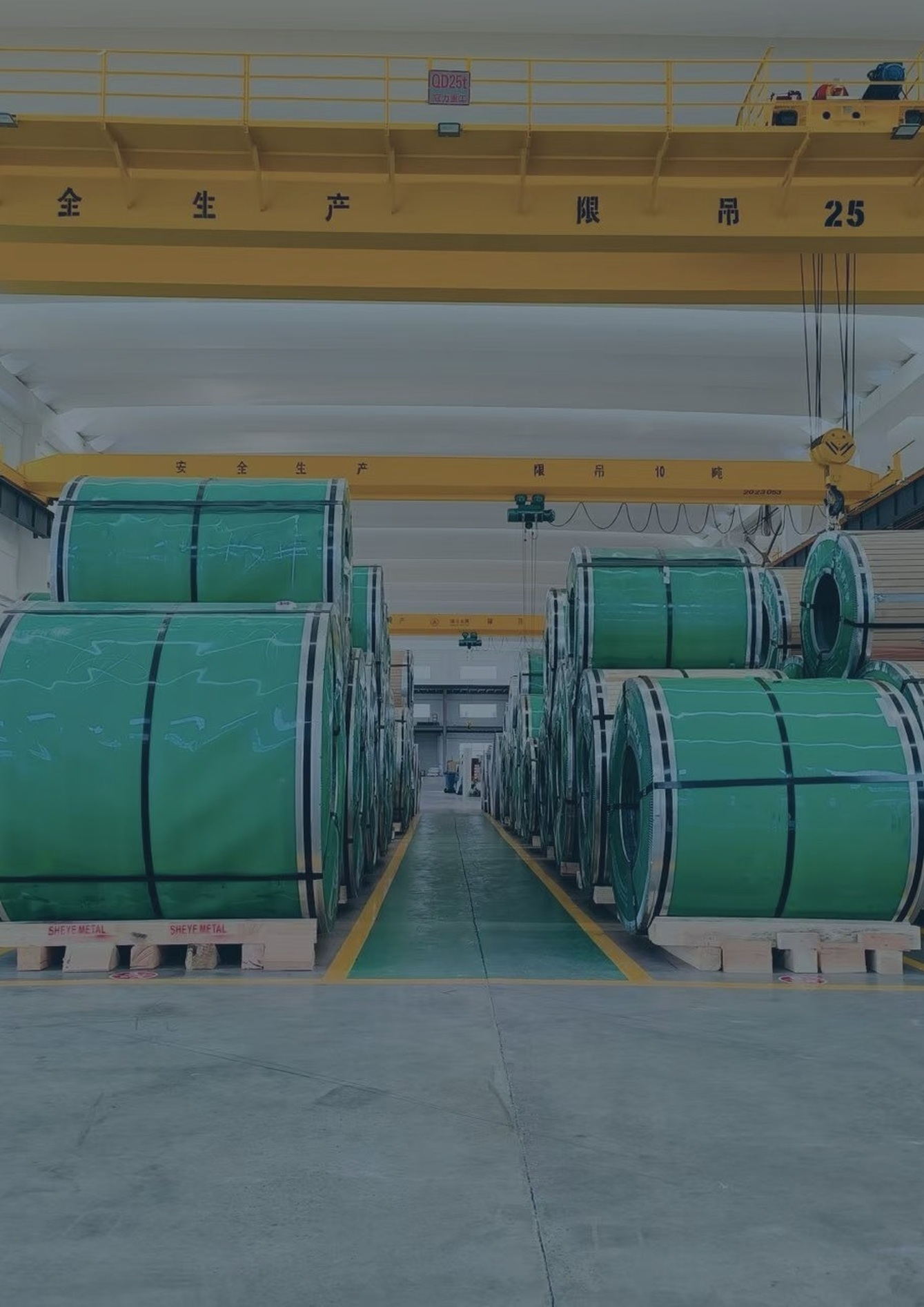
Soft mother coils. Defined for your rolling route.
TISCO 301S soft stainless steel mother coils for precision re-rolling, with a defined nitrogen range and closely specified chemistry under Q/太新038-2008. We coordinate the feedstock selection, MD30 priorities and processing controls with your final strip requirements.
The supplied TISCO specification defines 301S with N 0.04–0.07%, Mn 1.60–1.90% and Ni 6.10–6.40%. These are grade limits, not a prediction of final spring strength or rolling yield. Coordinate the target composition and MD30 basis with your reduction and annealing route. 301S is distinct from the high-temperature grade 310S.
| Supply item | Available route / ordering requirement |
|---|---|
| Product | Cold-rolled stainless steel mother coil for precision re-rolling |
| Common supply thickness | 0.25–3.0 mm |
| Common mother-coil widths | 1000 mm / 1219 mm |
| Slit widths | Other widths slit from 1219 mm mother coils; confirm finished width and yield for each order |
| Delivery condition | Soft; solution-treated and pickled |
| Surface | 2B, with surface acceptance and interleaving agreed for the order |
| Mill sourcing | TISCO / TTSS routes; confirm the named producing mill, grade specification and MTC for each order |
| Edges & downstream processing | Mother coil or slit coil; agree mill edge / slit edge, finished width, burr, camber and winding requirements |
| Coil weight & inside diameter | Confirm for the source coil, slitting route and customer payoff equipment |
| Dimensions & tolerances | Nominal size and any tighter actual-gauge targets are agreed before the order |
Sheye Metal’s current 301S supply range is 0.25–3.0 mm × 1000 / 1219 mm, or other slit widths produced from 1219 mm mother coils. Supplied thickness is grade-specific; the customer’s final strip or foil gauge after re-rolling is a separate requirement. The supplied 2008 TISCO enterprise specification lists a cold-rolled dimensional scope of 0.6–3.0 mm. Sheye Metal’s current 301S offer extends to 0.25 mm; orders below that source scope require agreed mill and order-specific acceptance requirements, rather than a change to the historical specification.
Grade chemistry & comparison
Chemical composition limits in mass percent (wt%). Values are specification limits, not typical values for a particular heat.
| Element | Limit / range (wt%) |
|---|---|
| Carbon (C) | 0.11–0.14 |
| Silicon (Si) | 0.30–0.60 |
| Manganese (Mn) | 1.60–1.90 |
| Phosphorus (P) | ≤0.045 |
| Sulfur (S) | ≤0.030 |
| Chromium (Cr) | 16.30–16.90 |
| Nickel (Ni) | 6.10–6.40 |
| Molybdenum (Mo) | ≤0.40 |
| Copper (Cu) | ≤0.50 |
| Nitrogen (N) | 0.04–0.07 |
Reference: Q/太新038-2008, Table 1. For 301S, P≤0.045% and S≤0.030% are the upper limits confirmed by Sheye Metal for the source cells that omit the ≤ symbol. The order and mill certificate confirm the supplied heat.
| Item | SUS301 | 301S | 301B |
|---|---|---|---|
| Specification basis | JIS G 4305 | TISCO enterprise specification | TISCO enterprise specification |
| Ni (wt%) | 6.00–8.00 | 6.10–6.40 | 6.60–6.90 |
| Mn (wt%) | ≤2.00 | 1.60–1.90 | 0.65–0.90 |
| N (wt%) | No numeric limit in cited table | 0.04–0.07 | ≤0.03 |
| Soft-state HV reference | ≤218 | ≤220 | ≤220 |
Select the designation required by your purchasing specification. 301S and 301B are TISCO enterprise grades, not separate JIS grade symbols. If an ASTM or JIS requirement also applies, identify the exact grade, standard edition and required tests for mill confirmation; chemical overlap alone does not establish full compliance.
Mechanical properties in the supplied soft condition
The following values describe annealed / soft feedstock. They do not specify the strength of a half-hard, full-hard or finished spring strip after the customer’s rolling process.
| Property | Reference value |
|---|---|
| Tensile strength, Rm | ≥520 MPa |
| Elongation, A | ≥40% |
| Brinell hardness | ≤187 HB |
| Rockwell hardness | ≤95 HRB |
| Vickers hardness | ≤220 HV |
| 0.2% proof strength, Rp0.2 | No numerical requirement in Table 2 of the supplied enterprise specification |
Reference: Q/太新038-2008, Table 2. Its merged cells apply these limits to SUS301T, 301S and 301B. The standard permits one suitable hardness test method to be selected according to dimensions and condition; the three scales are not a requirement to perform all three tests.
Do not substitute the SUS301 JIS proof-strength value for an unlisted enterprise-standard requirement. If proof strength or a narrower hardness window matters to your mill, include it as an additional test and acceptance condition for confirmation.
Surface quality, interleaving & inclusion ratings
Surface finish, hardness condition and internal cleanliness describe different properties. A 2B finish alone does not define a hardness value, a roughness limit or an inclusion rating.
| Item | Requirement / scope |
|---|---|
| Cold-rolled surface | 2B. Agree visible-surface acceptance, roughness where needed and protection for subsequent rolling. |
| Paper / interleaving | New paper, or carefully trimmed and cleaned paper confirmed suitable for the application. New-paper-only requirements can be specified. |
| Oxide inclusion rating | ≤2 grade — supplied enterprise specification, clause 4.5 |
| Sulfide inclusion rating | ≤2 grade — supplied enterprise specification, clause 4.5 |
| Acceptance evidence | Mill certificate plus the order’s agreed chemical, mechanical, surface and inspection records |
Clause 4.4 requires a cold-rolled 2B surface without obvious scratches, pits, laminations or other defects impairing use. Clause 4.5 specifies oxide and sulfide inclusion ratings of ≤2, but does not identify an ASTM E45 / ISO 4967 conversion. Confirm the assessment method and sampling basis; these ratings are not chemical percentages.
The same source also lists a hot-rolled route at 3.0–6.0 mm × 1000 / 1219 mm, No.1 surface, without severe roughness, scratches, perforations, dents or other defects impairing use. Hot-rolled sheet/coils are exempt from the inclusion inspection in clause 4.5. This source range is available for enquiry and is not a statement of routine stock for this page.
The enterprise specification permits mill-edge delivery (EM). Dimensional deviations may be agreed with the mill; otherwise its reference is GB/T 708 for cold-rolled or GB/T 709 for hot-rolled products. Delivery is solution-treated and pickled. Testing, inspection, packing, marking and certificates follow its referenced GB/T 3280 or GB/T 4237 route as applicable.
What makes a mother coil suitable for precision re-rolling?
Define the feedstock around your rolling process
The starting coil influences rolling force, tension, shape control and the surface carried through later passes. We review your intended final gauge, temper and application so the feedstock enquiry includes the conditions that matter on your mill.
Match the input to the final product
Share the final thickness, required strength or hardness, forming requirements and end use. These help us identify the chemistry, incoming condition, actual gauge and processing controls that should be discussed for the order. A grade name alone does not describe all of these variables.
Allow for a narrower process window at thin gauges
As rolling approaches thin strip and foil, variations in the starting material become harder to accommodate through successive passes. Entry gauge, local hard points, surface defects and edge condition deserve particular attention when defining material for demanding reduction schedules.
Compare the cost through to usable output
Evaluate feedstock together with setup time, speed reductions, strip breaks, trimming losses, surface downgrades and final yield. Trial results help identify which starting-material controls are worth specifying for your process. Improvements and achievable combinations remain subject to the material and rolling route.
Eight conditions to review before precision re-rolling
Our feedstock review considers dimensional, metallurgical and processing conditions together. The inspection scope and acceptance criteria are agreed for the order so the resulting evidence addresses the customer's rolling and end-use requirements.
Gauge profile
Review longitudinal thickness variation and the profile across the width, including crown, edge drop, wedge and periodic deviations. These affect the entry conditions for the reduction schedule and help explain differences in rolling response between edge and centre material.
Entry shape
Consider edge wave, centre buckle, one-sided wave, rib wave and camber. Describing the starting shape helps the customer assess the correction required during subsequent rolling and distinguish an incoming material issue from a process adjustment.
Hardness and structure
Consider consistency from the head through the middle to the tail, together with annealing condition, grain structure and work-hardening behaviour. Required tests and sampling locations should be specified for the application; a single hardness result does not establish whole-coil uniformity.
Steel cleanliness
Discuss inclusion cleanliness when the final product is sensitive to local defects. At very thin gauges, inclusions can contribute to pits, holes, cracks or strip-break initiation. Any numerical cleanliness requirement needs an agreed assessment method and acceptance criteria.
Surface condition
Review scratches, dents, pits, roll marks and differences in roughness. Starting-surface defects may remain visible or affect later processing after multiple passes, making the inspection record useful when selecting material for appearance-sensitive or thin-gauge applications.
Edge condition
Review burrs, microcracks, notches and edge thinning, together with the intended slitting and trimming route. Local edge discontinuities can concentrate stress. Edge acceptance should reflect the customer's reduction plan and downstream use.
Coil build
Consider telescoping, layer offset, looseness, coil-core roundness and winding tension. These conditions affect payoff and tracking, so a suitable slit width needs to be considered alongside the physical condition of the finished coil.
Batch consistency
Retain the mill, production route, heat and mother-coil identity when comparing deliveries. Linking trial results to these records helps distinguish repeatable material behaviour from changes between sources, production routes or batches.
From the final strip target to the steelmaker
Coordinate requirements through TISCO and TTSS channels
We use TISCO and TTSS sourcing and order-coordination channels to communicate the re-roller's requirements upstream. The discussion brings together grade, actual entry gauge, chemistry priorities, intended application and feedback from previous coils.
Turn a process requirement into a mill enquiry
A useful mill enquiry explains the final rolling target and the input conditions needed to support it. We bring the customer's priorities into the order discussion and seek confirmation of the available production route, material window and delivery combination.
Review hot-rolled coil and slab options
Where the supply route permits, coordination can extend to hot-rolled coil and slab selection. This allows upstream material considerations to be discussed before the cold-rolled feedstock is selected and slit. Availability and the level of mill-side control are confirmed for the particular order.
Keep the source and route visible
Heat, mother-coil and production-route records provide a basis for comparing trial material with later deliveries. If supplier qualification requires distribution credentials or other supporting documents, specify the required current documentation during the commercial review.
Agree a chemistry and MD30 window for the application
Chemistry coordination starts with the required rolling and forming response. We discuss the customer's priorities with the mill and assess a suitable window for the selected grade and production route.
Start with strength, work-hardening and forming needs
Provide the final strength or hardness target, reduction route, forming needs and end use. These establish the context for reviewing chemistry. The approved grade specification remains the starting point, with any additional element controls written separately into the order requirements.
Coordinate a customer-approved MD30 target
MD30 is used as an indicator of austenite stability and the tendency for strain-induced martensite. Any target must be selected for the grade, application and customer process, with the evaluation basis agreed. We do not apply a single MD30 value or formula to every feedstock order.
Confirm feasibility before committing the combination
Chemistry priorities, actual gauge, source route and delivery requirements are reviewed together with the mill. Confirmation of one item does not mean every requested limit can be supplied simultaneously. Trial-coil feedback can help refine the next enquiry and material-selection window.
Target actual entry gauge and review slab-sequence position
Nominal thickness and a broad standard tolerance may not fully describe the starting condition needed for a specific pass schedule. We use the customer's reduction plan to discuss actual gauge targeting and, where feasible, upstream slab selection.
Discuss the required actual thickness
Tell us the intended entry gauge and the variation your process can accommodate. We coordinate with the mill to target actual coil thickness near the agreed requirement. The feasible target and tolerance are confirmed for the order; they are not inferred from the nominal size alone.
Request middle-sequence slabs where available
Where technically feasible, we coordinate the selection of slabs from the middle of the casting sequence for hot rolling, with the aim of reducing exposure to head- or tail-sequence variability. This is a mill-confirmed selection request, not an unconditional source guarantee.
Keep sequence and coil position distinct
Casting-sequence information describes the upstream slab. Edge or middle strip position and front or rear coil sections describe the later processing location. Keeping these separate helps customers connect trial performance to the correct stage of the material history.
Assess low-boron and other trace-element requirements separately
Some precision re-rolling applications call for tighter trace-element control than a general grade description provides. Low-boron requirements can be assessed with the customer and steelmaker as an additional order-specific control.
Define the reason for the control
Discuss the final gauge, annealing route, forming requirements and any observed variation between heats. These establish the context for deciding whether a boron limit or another residual-element control should be included in the specification. Low boron is not automatically preferable for every route.
Keep the grade name separate from an element limit
The designation 301B does not, by itself, specify a quantitative boron requirement. Any boron target must be stated separately with its acceptance and reporting basis. A grade suffix should not be substituted for an agreed chemical limit.
Confirm feasibility and analytical reporting
A proposed trace-element window is assessed together with chemistry, MD30 priorities and the steelmaker's production route. If a customer requests a description such as boron-free, the enquiry must define the analytical detection limit. The agreed limits and reporting requirements belong in the order specification.
Inspection evidence, tied to the coil
Verify material identity and retain a comparison sample
Incoming verification aligns the physical coil with its records before processing. PMI, document checks and representative samples each provide a different part of the evidence needed for material approval and later review.
Check major alloying elements and grade match
PMI is used to check the principal alloying elements and reduce material mix-up risk. Its reported result supports the grade-verification process. It does not establish inclusion cleanliness, grain structure or metallurgical uniformity throughout the coil.
Keep elemental requirements explicit
If the application requires a particular element limit, analytical method or detection limit, include it in the technical enquiry. A general PMI grade check should not be treated as a complete certificate for every specified or trace element.
Connect the coil to its documentation
The mill test certificate, heat number, mother-coil number, processing order and finished-strip labels are checked for consistency. This connection allows an inspection finding or trial result to be traced to the relevant source material and processing order.
Retain and share representative samples
Representative samples are retained during processing for later comparison or dispute review. Where required, feedstock samples can be sent to the customer for laboratory review or trial confirmation. Sample quantity, identification and any special retention requirements should be agreed for the order.
Record repeated edge–middle–edge dimensional checks
For each mother-coil slitting order, our feedstock control plan includes at least three representative edge–middle–edge dimensional checks. Results are recorded against the order's measurement plan and agreed dimensional requirements.
Repeat the comparison during processing
The checks compare representative edge and middle positions and are repeated at least three times per mother-coil slitting order. The measurement plan defines the relevant dimensions and inspection locations. These are recorded checks; they should not be represented as continuous measurement of every point.
Review dimensions together with the slit edge
Slit-width control is accompanied by attention to burrs, microcracks, edge thinning and cutting stability. The processing route and acceptance criteria are selected for the incoming material and the customer's next operation, with required tolerances confirmed before processing.
Preserve position when building the finished coil
Coil build is reviewed for offset, telescoping, tension and sidewall condition. Identification retains whether a finished strip came from an edge or middle position and from a front or rear section, supporting later comparison with the customer's rolling results.
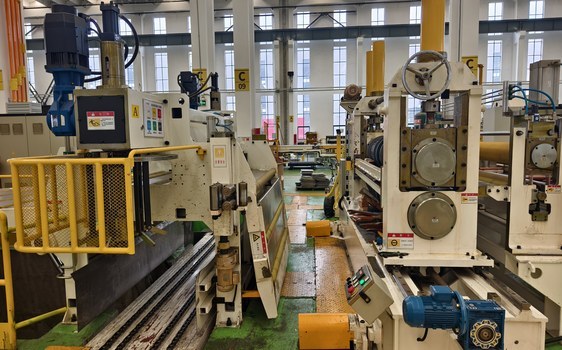

Review both surfaces with CCD records and human QC
The feedstock inspection route combines continuous online CCD recording of both surfaces with human quality review. Together, these provide coil-wide surface evidence and an inspection decision that can be reviewed before shipment.
Record surface position and distribution
Upper- and lower-surface CCD records help locate visible indications and show how they are distributed along the coil. Position maps, images and coordinate details make it possible to return to the relevant area when assessing a finding.
Add an inspector's assessment
Quality-control personnel record defect type, severity, location and proposed disposition. This adds the process judgement needed to interpret an image in relation to the customer's surface and downstream processing requirements.
Make the pre-shipment evidence usable
Surface images and position information can be reviewed alongside dimensional records and the related inspection decision. Required report scope, detection capability and customer review points are agreed for the order, with human QC interpreting the findings against the intended application.

CCD evaluates surface indications. It does not replace the metallographic examination needed to establish an internal inclusion rating. Grade-specific chemical and mechanical approval relies on the agreed mill / laboratory evidence.
Protect the surface. Preserve the material identity.
Control the paper that contacts the coil surface
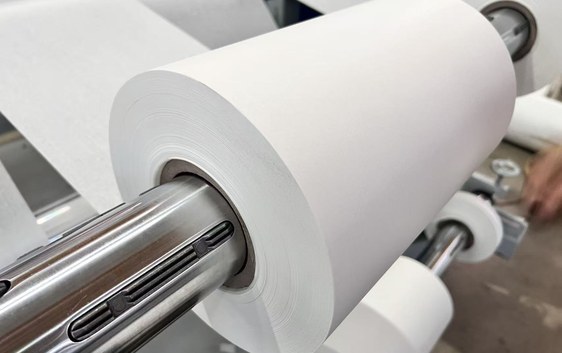
Interleaving is part of the surface-protection route. Paper selection, trimming, cleanliness and continuous feeding are considered together to limit abrasion, lint imprint and metal-to-metal contact during recoiling.
Use new or confirmed suitable paper
We use new paper or paper that has been carefully trimmed, cleaned and confirmed suitable for the intended application. The requirement should be stated in the order where a customer specifies new paper only or has particular surface-sensitivity concerns.
Match interleaving to the finished strip
Wide interleaving paper can be slit and trimmed to suit the finished steel-strip widths. Continuous feeding during recoiling helps maintain separation between layers and reduces avoidable rubbing of the protected surfaces.
Agree protection with the downstream process
Tell us how the material will be uncoiled, handled and cleaned before rolling. Surface acceptance and paper requirements can then be considered with the processing route and packing plan, including any customer restriction on the interleaving used.
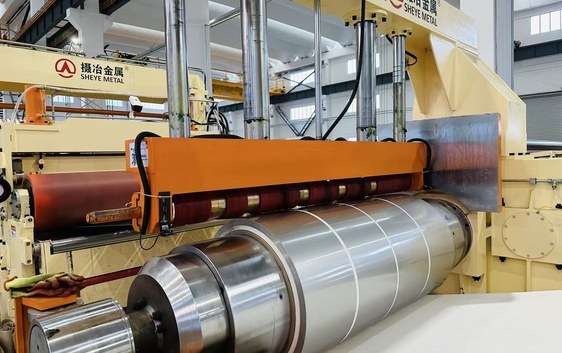
Give every finished slit coil a traceable identity
Each finished strip retains a connection to its mother material, processing position and quality evidence. This helps the customer connect a trial result or production issue to the relevant source and location.
Heat, mother coil and slab information
The traceability record connects the finished slit coil with its heat and mother-coil numbers and the corresponding upstream slab information. The scope of slab details follows the mill records available for the order and should be agreed during technical review.
Edge or middle position and front or rear section
Position records identify where the finished strip came from across the mother-coil width and within the relevant front or rear processing section. These details help compare edge material with middle material and investigate a location-specific difference in rolling behaviour.
Reports and retained samples
Dimensional evidence, surface findings, inspection decisions and retained samples are associated with the material identity. The customer's own laboratory and trial records can use the same finished-coil identifier to keep the later comparison connected.
Use the record to refine repeat orders
Feedback tied to a known heat, mother coil and strip position is more useful than a general comment on a grade. It helps us discuss whether the next order should retain the same source route or adjust a chemistry, gauge, edge or inspection requirement.
Review before shipment. Deliver with traceable records.
Resolve identified nonconformities before export
When processing identifies a defect outside the customer's agreed acceptance criteria, the affected material can be segregated and retained in China for review before shipment. The next action follows the evidence and the customer's confirmed decision.
Identify and segregate the affected material
CCD findings, dimensional checks and human QC provide the basis for identifying material that needs a disposition decision. Keeping the affected material separate supports a controlled review of the shipment and its related inspection records.
Let the customer review the relevant evidence
Reports, images and samples can be provided for pre-shipment assessment where required. The discussion identifies whether the material is acceptable for the intended process and records the agreed handling of the finding.
Review domestic disposition and replacement options
Where appropriate, the material can be assessed for another domestic use while the export delivery is replaced or rematched. The final shipment combination, availability and timing follow the agreed disposition and the customer's confirmed delivery requirements.
Consider the full cost of the decision
Resolving an identified issue before export can avoid sending material that the customer already regards as unsuitable, along with unnecessary freight and overseas handling. This approach supports a purchasing decision based on usable output and total processing cost.
- Detect
- Segregate
- Customer decision
- Domestic disposition
- Replace / rematch
Prepare finished coils for ocean transport
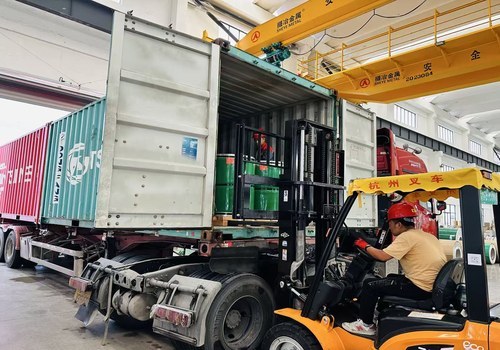
Water-resistant ocean packing and in-house container loading form the final stage of the feedstock route. The protection and load arrangement are matched to the finished coils and the customer's handling requirements.
Protect against moisture and handling damage
The packing plan addresses moisture exposure, impact and edge damage during international transport. Required packing details are agreed with the coil dimensions, weight and destination handling conditions so the receiving team can prepare for the delivered load.
Plan orientation and securing for the load
Coil orientation and the container-loading arrangement are selected for the shipment, with securing intended to limit movement. Share any unloading or storage constraints so they can be considered before the finished material is packed and loaded.
Keep the delivery connected to its records
The shipment retains the finished-coil identification needed to connect received material with the agreed inspection information and source records. The customer can use these identifiers when planning incoming checks, trial rolling and subsequent production feedback.
Your technical enquiry & trial feedback
What to send for a useful technical quotation
An enquiry is most useful when it describes both the incoming material and the result required after re-rolling. Share the information below so we can review source options, processing controls and the evidence needed for your approval.
Grade and current feedstock
State the requested grade and governing specification, the current mill or feedstock source, and any source-consistency requirement. If an existing material performs well or causes difficulty, identify the relevant heat or coil and include the available mill certificate.
Entry dimensions and coil requirements
Provide the incoming thickness, desired actual gauge, slit width and coil weight. Include the tolerances and any special coil-build or handling requirements needed for the material to enter your process.
Final gauge, temper and application
Explain the intended final thickness, strength or hardness, forming needs and end use. Where available, include the reduction plan, pass schedule and annealing conditions relevant to choosing or comparing the starting material.
Chemistry and MD30 priorities
List any agreed MD30 target and its evaluation basis, element-specific limits or trace-element concerns. Distinguish mandatory acceptance criteria from preferences so the mill can assess a feasible combination for the order.
Surface, edge and approval evidence
Specify the finish, surface and edge acceptance criteria, interleaving requirement and traceability detail. Tell us whether you need samples or inspection information for review before shipment, and which records are required for incoming approval.
Trial results and repeat-order learning
Share current trial issues or process data using the finished-coil identifier wherever possible. Rolling behaviour, surface findings and usable-yield feedback help us refine the next material selection, mill enquiry and control plan. Any revised combination of targets is reviewed for the next order.
START A TECHNICAL REVIEW
Define your next 301S trial coil.
Send the entry dimensions, final strip target and required mill specification. We will review the source, processing route and approval evidence with you.
Technical references & order basis
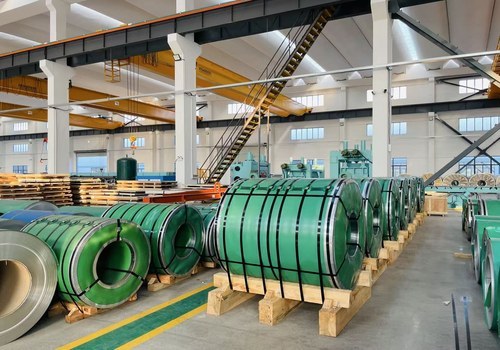
Prepared from Sheye Metal’s Precision Re-rolling Feedstock Solutions brochure (bilingual V4, pages 1–13), the supplied TISCO enterprise specification and original Japanese standards / steelmaker references. Factory photographs show the processing route; they are not a grade-specific certificate or test report.
- TISCO Q/太新038-2008, published and implemented 30 April 2008, replacing Q/太新039-2004: dimensions §3; chemistry Table 1; mechanical properties Table 2; surface §4.4; inclusions §4.5; delivery §4.6; inspection and documentation §5.
- Japanese Standards Association: JIS G 4305:2021 — cold-rolled stainless steel plate, sheet and strip; reaffirmed in 2025.
- Nippon Steel S012 — SUS301 composition and mechanical reference tables, printed page 3.
- Nippon Steel S008 — cold-rolled stainless sheet, SUS301 properties and surface-finish descriptions.
- NAS stainless-strip grade reference — SUS301 annealed hardness scales.
The supplied 2008 enterprise document is identified by its actual revision. Confirm the current applicable mill specification and any supplementary ASTM/JIS requirements when ordering. A TISCO specification is not automatically attributed to every TTSS delivery. The agreed order, inspection plan and material certificate define acceptance.