
Begin with the downstream process
A precision stamping line, a bellows producer and a roll-forming line can ask different things of the same stainless steel grade. The inquiry should define thickness, finished width, acceptable burr, camber, inside diameter and coil weight. The incoming grade, temper and strength also influence which route is suitable.
Select a route, then control the whole run
Sheye operates three complementary slitting lines. The narrow-strip line covers a different incoming width and thickness window from the wide-coil lines. Knife clearance, tooling, tension, surface film and interleaving are reviewed together. The narrow-strip line can be reviewed for widths from 12 mm and tolerances up to ±0.03 mm; this depends on the material and confirmed order conditions.
Look beyond a single width reading
Clean edges are important, but downstream feeding also depends on recoiling geometry. Sidewalls, telescoping, camber and winding need to match the customer’s requirements. Inspection and package identification should keep the finished strip connected to the original coil and work order.
What to include in your inquiry
Send the grade and standard, thickness, slit width, quantity, tolerance priorities, surface requirements, finished inside diameter, maximum coil weight and destination. If the application is especially sensitive to burr or camber, identify the acceptance method before production.
This article draws on the Sheye Metal corporate, processing and quality brochure. Capability limits and acceptance criteria are confirmed for each order.
View the source brochure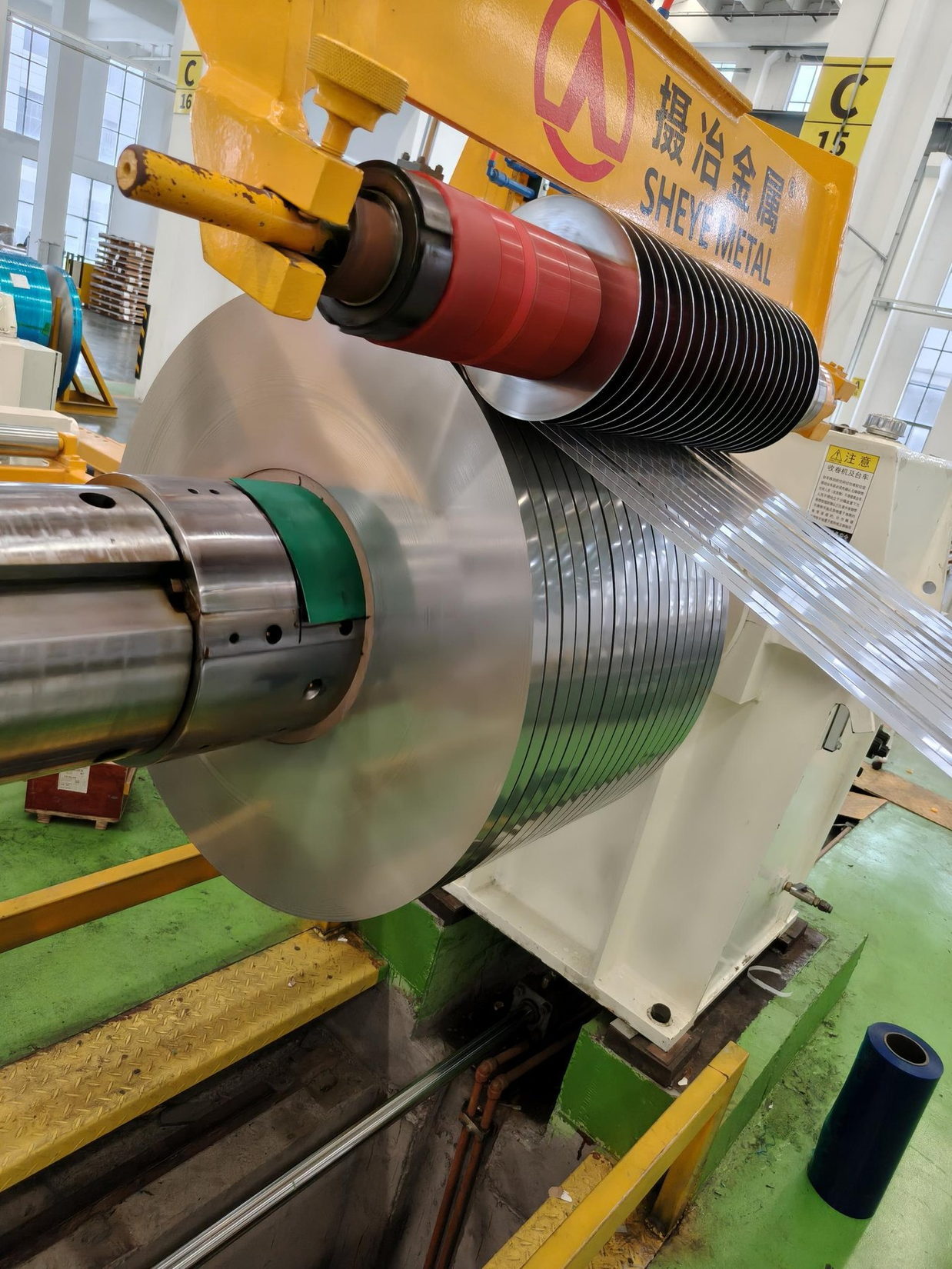
RELATED CAPABILITY
Precision slitting
Three complementary lines. One coordinated plan for width, edge and winding.
Explore the process