
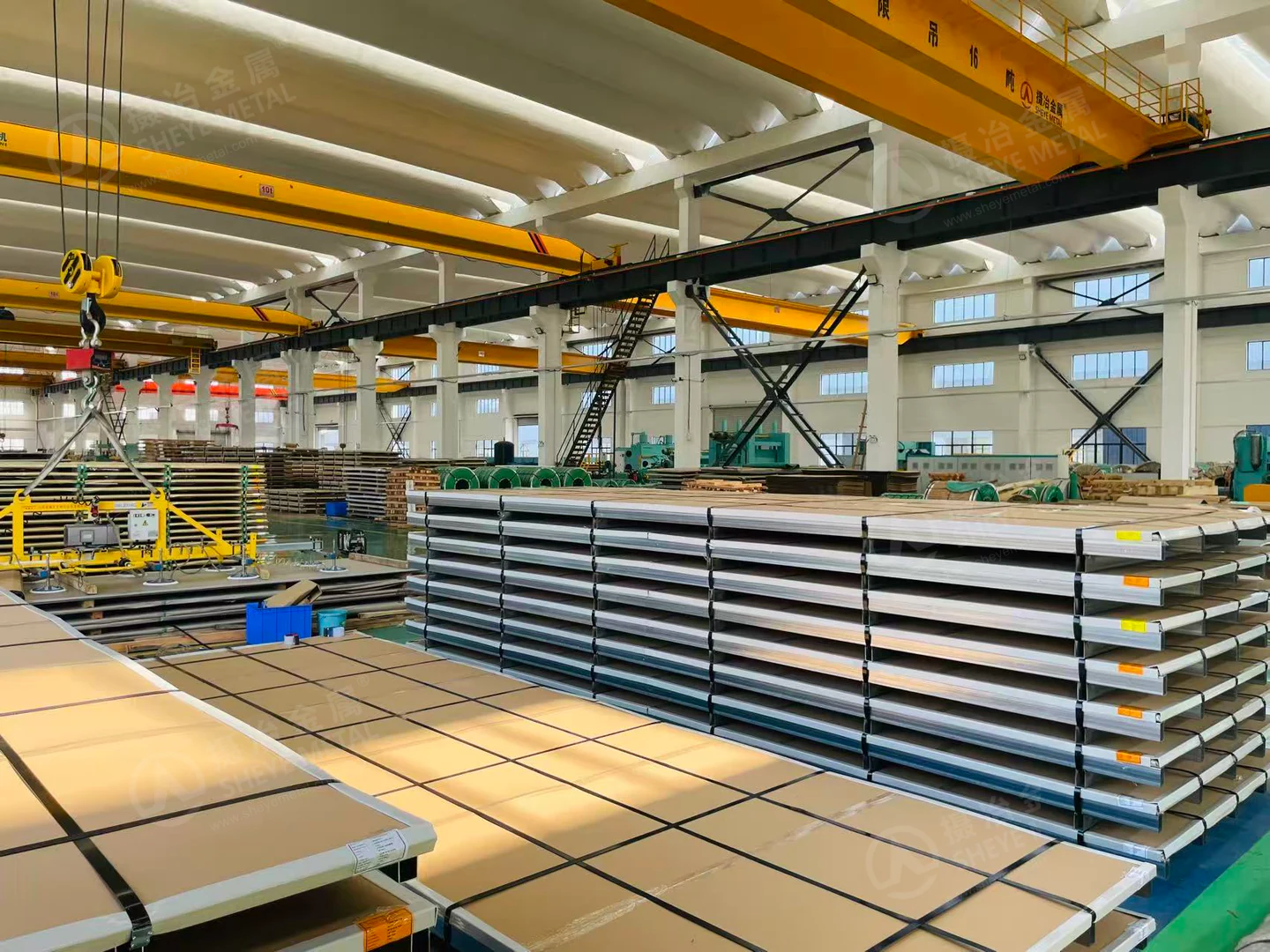
Sheye Metal supplied an Australian customer with 2000mm wide stainless steel sheet in 304, with a 2B finish and protective film. The ordered size was 3 × 2000 × 6000 mm. The material was processed from TISCO cold rolled coil, checked on the line and packed on galvanized steel frames to support the six-metre sheets during handling.
This case follows the material from its parent-coil label through dimensional inspection and stacking. It also explains what buyers should specify when ordering a 2000 x 6000 stainless steel sheet, from thickness tolerances to film and packing requirements.
The Australian order: 304 2B, 3 × 2000 × 6000 mm
| Item | Requirement or record |
|---|---|
| Product | Cold rolled 304 stainless steel sheet |
| Surface | 2B, with the protective film specified for the order (FLPE) |
| Nominal finished size | 3 mm thick × 2000 mm wide × 6000 mm long |
| Parent-coil mill | TISCO |
| Customer destination | Australia |
| Inspection | Coil-label verification, visual surface and marking checks, thickness, width, length and diagonals |
| Packing | Galvanized steel frames with protective wrapping and straps |
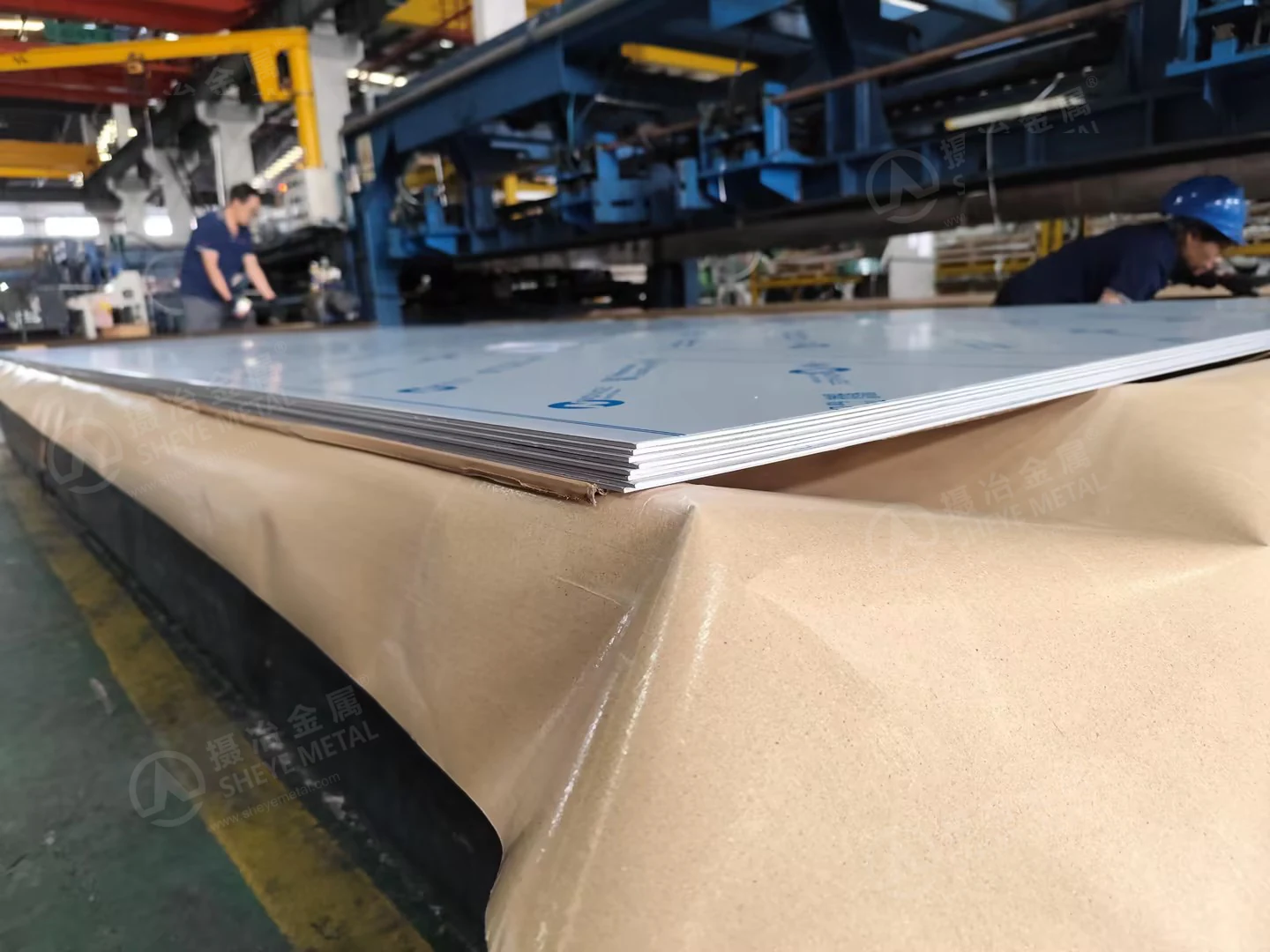
The protective film covers the 2B surface while the sheets are processed and handled. The supplied photographs show Novacel branding and wording for fibre and CO₂ laser processing. Film type, adhesion and compatibility with the buyer’s cutting process should be included in the order specification.
Matching the TISCO coil label and mill certificate
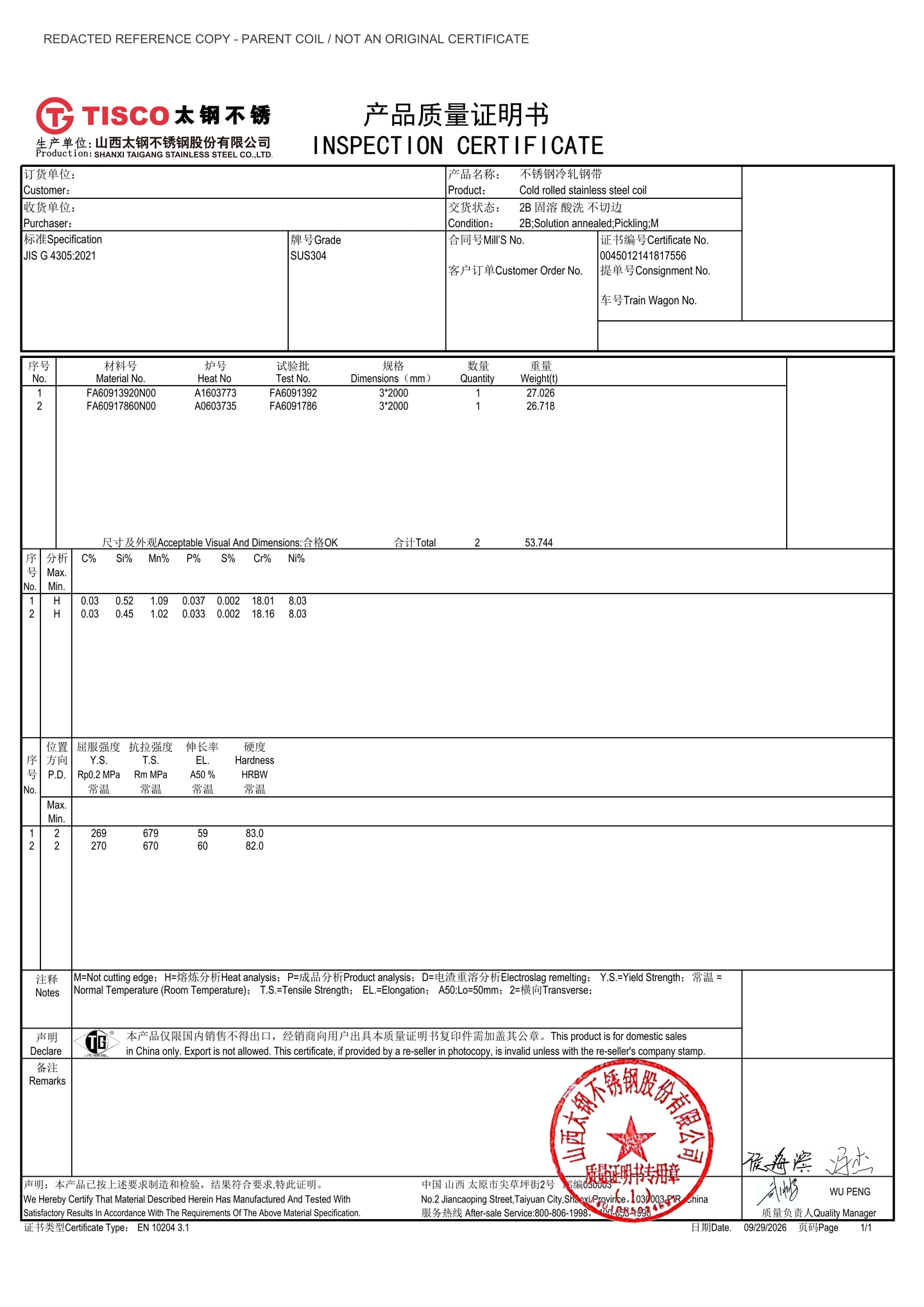
The photographed coil label identifies SUS304, 2B finish and JIS G 4305:2021. Its material number, FA60913920N00, and heat number, A1603773, match the first line of the supplied TISCO mill test certificate. The certificate contains a second coil and heat; the results quoted here belong only to the matching first line.
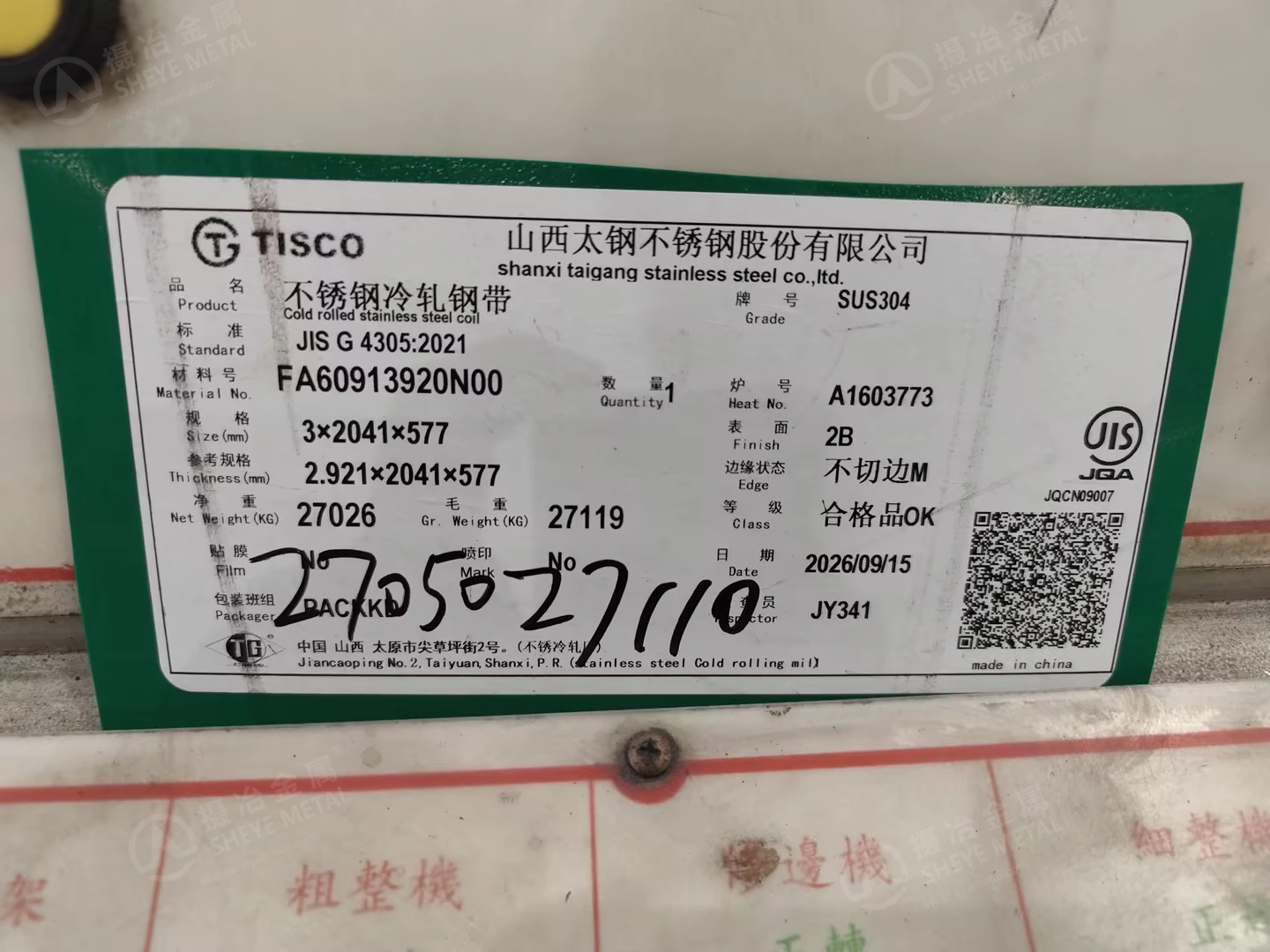
The source records use different width entries. The untrimmed coil label records 2041 mm, while the certificate lists 3 × 2000 mm. The finished order is 2000 mm wide and 6000 mm long. The coil and heat numbers establish the document link; the finished-sheet width and length are checked separately during processing.
| C | Si | Mn | P | S | Cr | Ni |
|---|---|---|---|---|---|---|
| 0.03 | 0.52 | 1.09 | 0.037 | 0.002 | 18.01 | 8.03 |
| Property | Certificate result | Test context |
|---|---|---|
| 0.2% proof strength, Rp0.2 | 269 MPa | Room temperature; transverse |
| Tensile strength, Rm | 679 MPa | Room temperature; transverse |
| Elongation, A50 | 59% | 50 mm original gauge length; transverse |
| Hardness | 83.0 HRBW | Room temperature; original certificate scale |
These are parent-coil test results. The certificate does not provide a separate mechanical test for every cut sheet, and its coil weight is not the quantity of this Australian order.
In-process checks on the 2000 mm wide sheets
Sheye Metal’s quality team checks the coil label against the production order, visually inspects the surface and checks identification markings. Thickness and finished dimensions are measured during processing so the material can be assessed against the agreed order requirements before packing.
Thickness at the photographed points
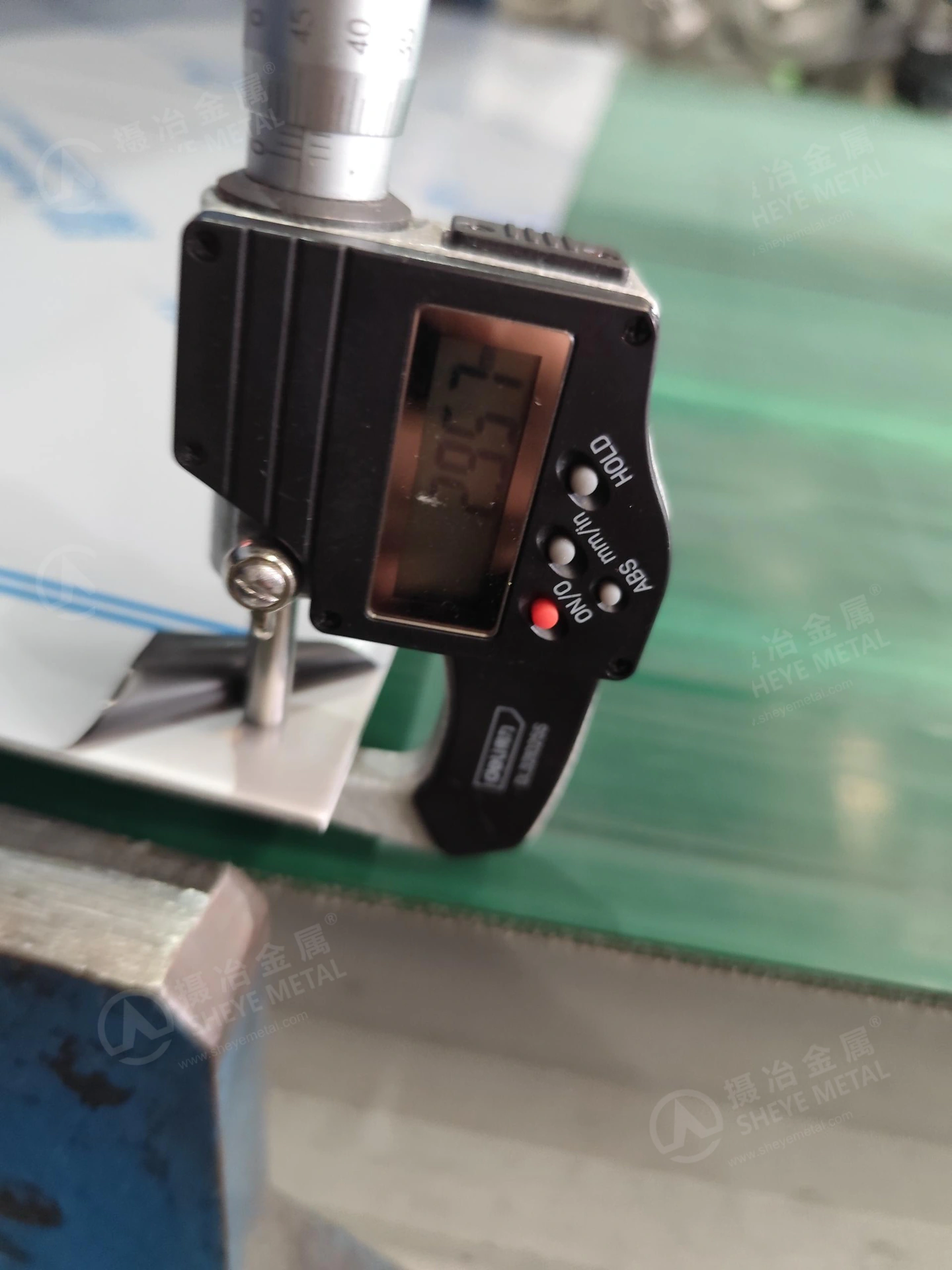
The micrometer photograph below records 2.957 mm at one location on the nominal 3 mm sheet. Acceptance depends on the agreed thickness tolerance, measurement method and inspection plan. This point reading does not establish the thickness variation of the entire coil or every finished sheet.
Width, length and both diagonals
The edge measurements document checks against the ordered 2000 mm width and 6000 mm length. Measurements in both diagonal directions help check the rectangular cut before the sheets are stacked. The photographs show the measurement setup; an exact diagonal difference or squareness tolerance should come from the inspection record.
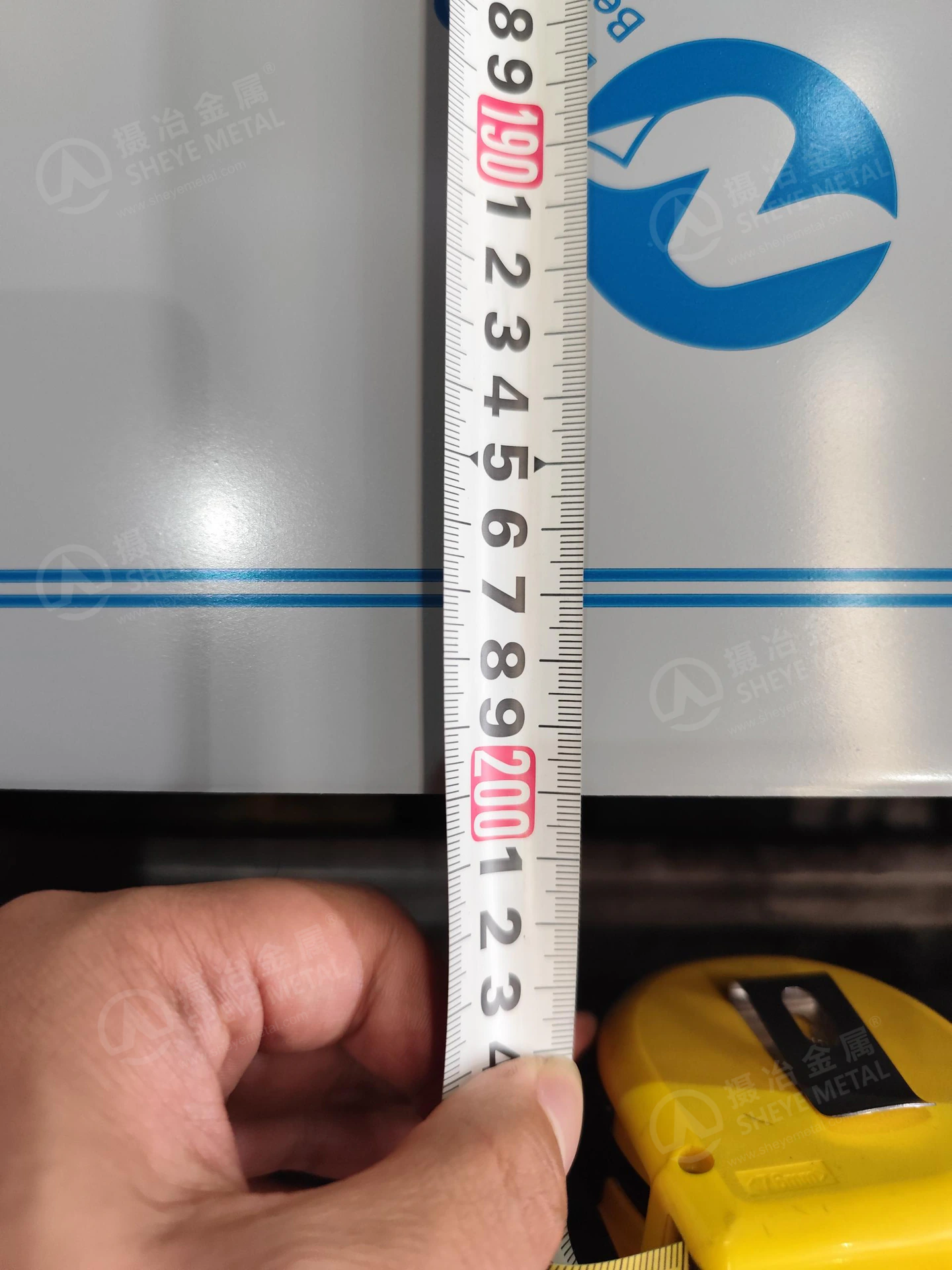
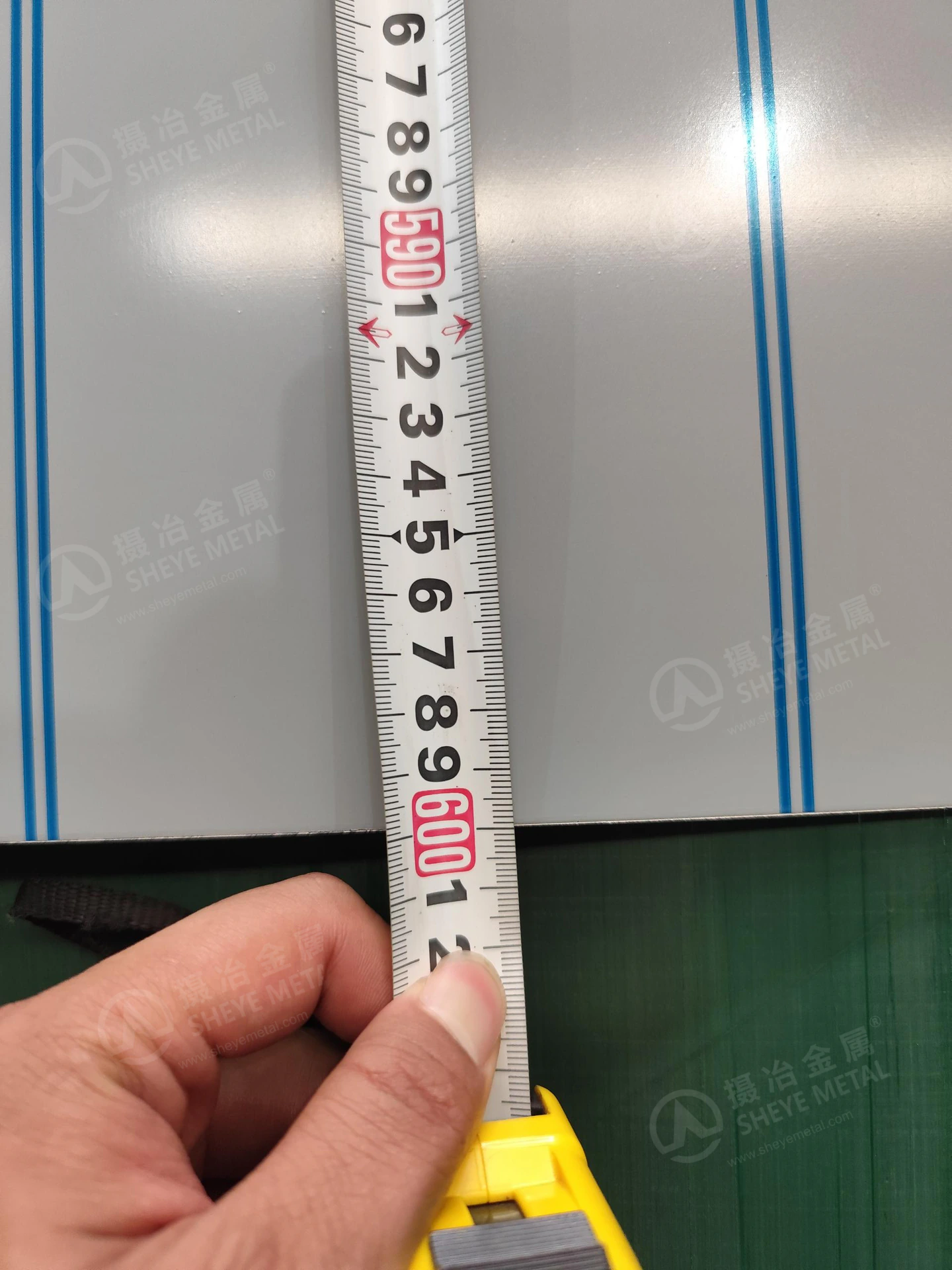
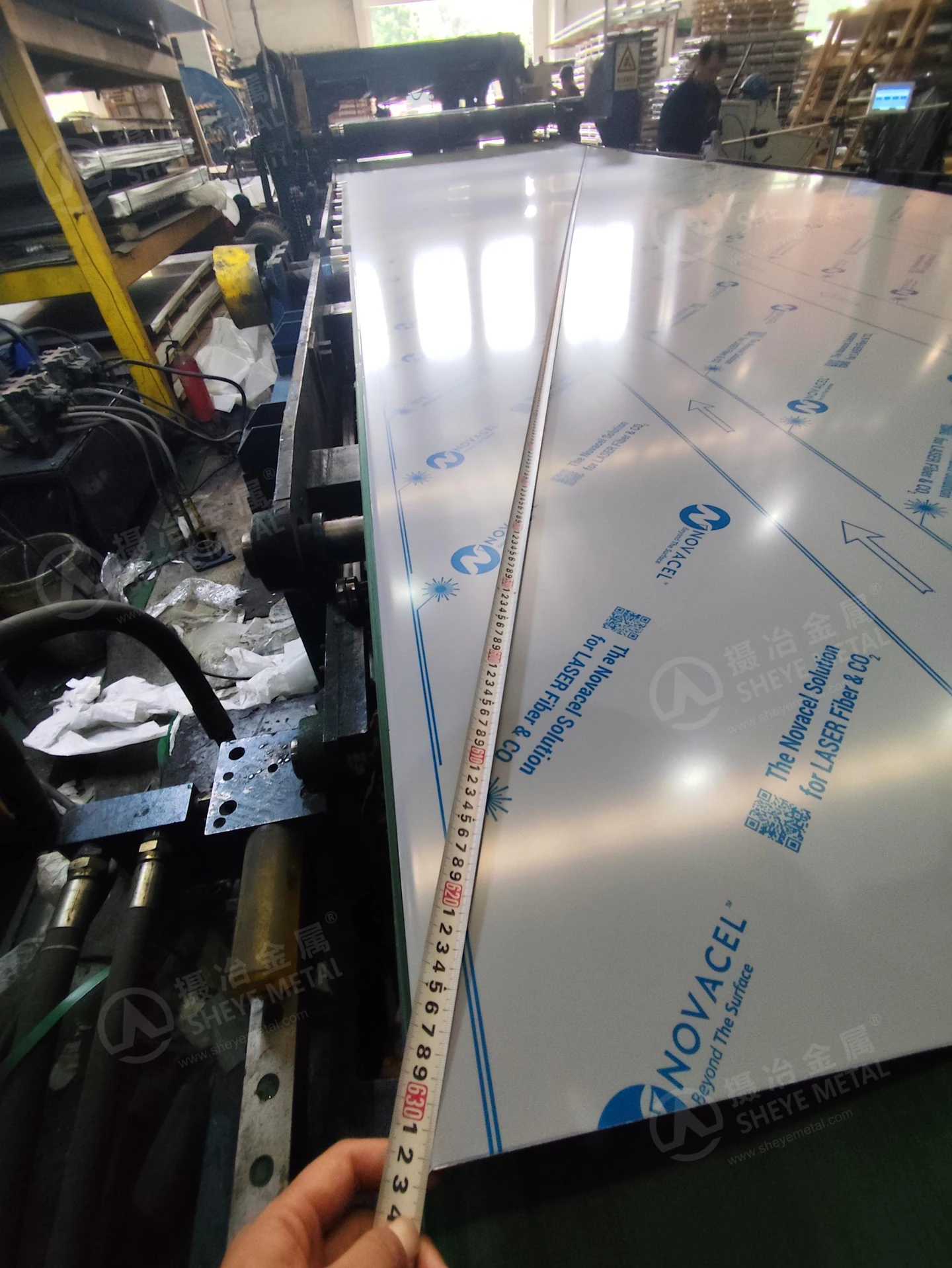
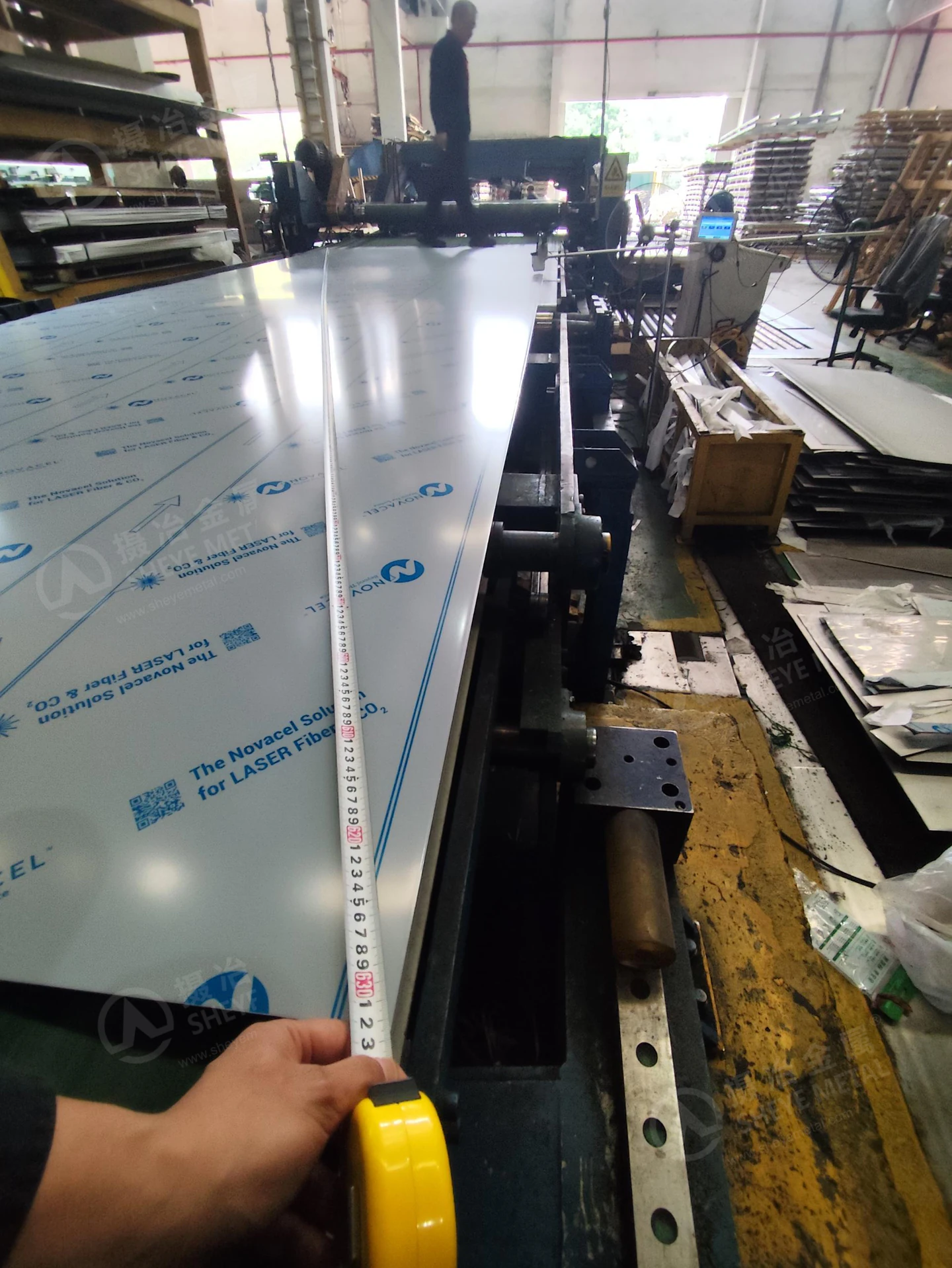
Buyers can specify the required dimensional tolerances, measurement positions and inspection records when enquiring. The Sheye Metal quality page describes the wider inspection and traceability process.
Cut-to-length and stacking video
The production recording accompanies the still photographs and shows the supplied sheets during processing and stacking. It gives the buyer a view of how the wide, film-covered sheets move through the line.
Where a 2m wide stainless steel sheet saves work
A wider starting sheet gives the fabricator more room to arrange blanks. When the part layout fits the extra width, fewer offcuts and fewer starting sheets may be needed. The gain depends on the actual part sizes, cutting allowance, edge trimming, grain direction and whether offcuts can be reused. A nesting comparison is needed before attaching a percentage saving to an order.
Large equipment panels and commercial kitchen assemblies can also benefit from fewer joints. A component that fits within the usable width of a 2000 mm sheet can be cut from one piece; making that same component from narrower stock may require a welded strip. Avoiding that joint removes the associated fitting, welding and finishing work and gives the fabricator a continuous surface.
The finished part must still allow for edge trimming and any forming requirements. Two blanks that each need a finished width of exactly 1000 mm, for example, will not normally fit across a nominal 2000 mm sheet once cutting and trimming allowances are added.
2000mm wide cold rolled sheet and coil supply from China
Sheye Metal is a TISCO first-tier agent and supplies 2000mm wide 2B stainless steel sheet and coil to customers in China and overseas. TISCO is the mill source for this order. The grade, thickness, finish and finished dimensions are checked together when allocating the parent coil for a 2 m wide order.
| Item | Supply range |
|---|---|
| Grades | 304, 304L and 316L |
| Regular thicknesses | 1.5, 2.0, 2.5, 3.0, 3.5, 4.0, 5.0 and 6.0 mm |
| Regular sheet formats | 2000 × 3000 mm; 2000 × 4000 mm; 2000 × 6000 mm |
| Processing options | Slitting, cut-to-length, coil surface polishing and protective film application |
| Availability | Confirm the grade, thickness, finish, quantity and delivery schedule for each order |
The stock programme supports repeat purchases as well as sheets cut for a particular project. See the 304 stainless steel sheet range for product specifications. Requests for polishing or a particular film should identify the required surface and subsequent fabrication process.
Supporting the full sheet during packing and handling
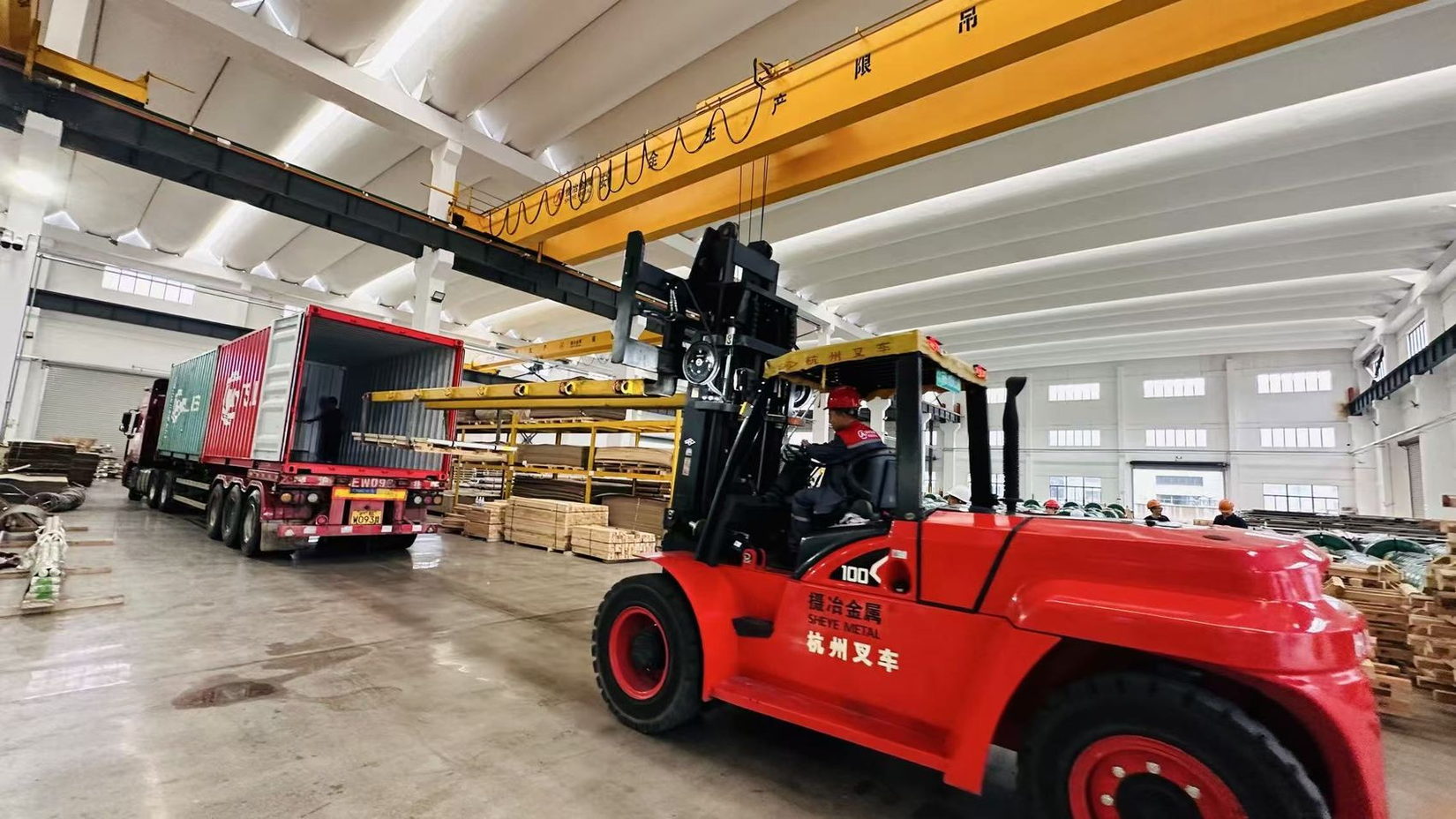
A 2000 × 6000 mm sheet needs support over a large area. Sheye Metal commonly uses galvanized steel frames for these wide and long sheets, with protective wrapping and straps. The frames support the pack and make lifting and unloading easier to plan. Packing and lifting arrangements should suit the sheet size, pack weight and the receiving customer’s equipment.
The order photographs show the packed material in the workshop, with supported stacks ready for the next handling stage. Packing requirements can be specified alongside the material order through our export packing service.
304 2B stainless steel sheet 2000 x 6000 price enquiries
For a quotation, send the required grade, thickness, quantity and destination port. A 3 mm sheet and a 6 mm sheet of the same width and length require different quantities of material, and the final price also depends on the finish, film, cutting requirements and packing.
Include the material standard and certificate requirements, dimensional tolerances, preferred film and whether steel-frame packing is required. If you are comparing an extra wide stainless steel sheet with a narrower format, a cutting drawing helps assess the usable yield and the number of joints for your parts.
Contact Sheye Metal for 2000mm wide stainless steel sheet availability and a quotation, including 304 2B in 3 × 2000 × 6000 mm for Australia and other export destinations.
Sheye Metal order and stock information; supplied TISCO parent-coil certificate, coil label, inspection photographs and processing video; verified Sheye Metal product, quality and packing pages.
View the source brochurePRODUCTS
Related products
RELATED CAPABILITY
Protection & export packing
Protect the surface. Support the load. Keep the order identifiable.
Explore the process