
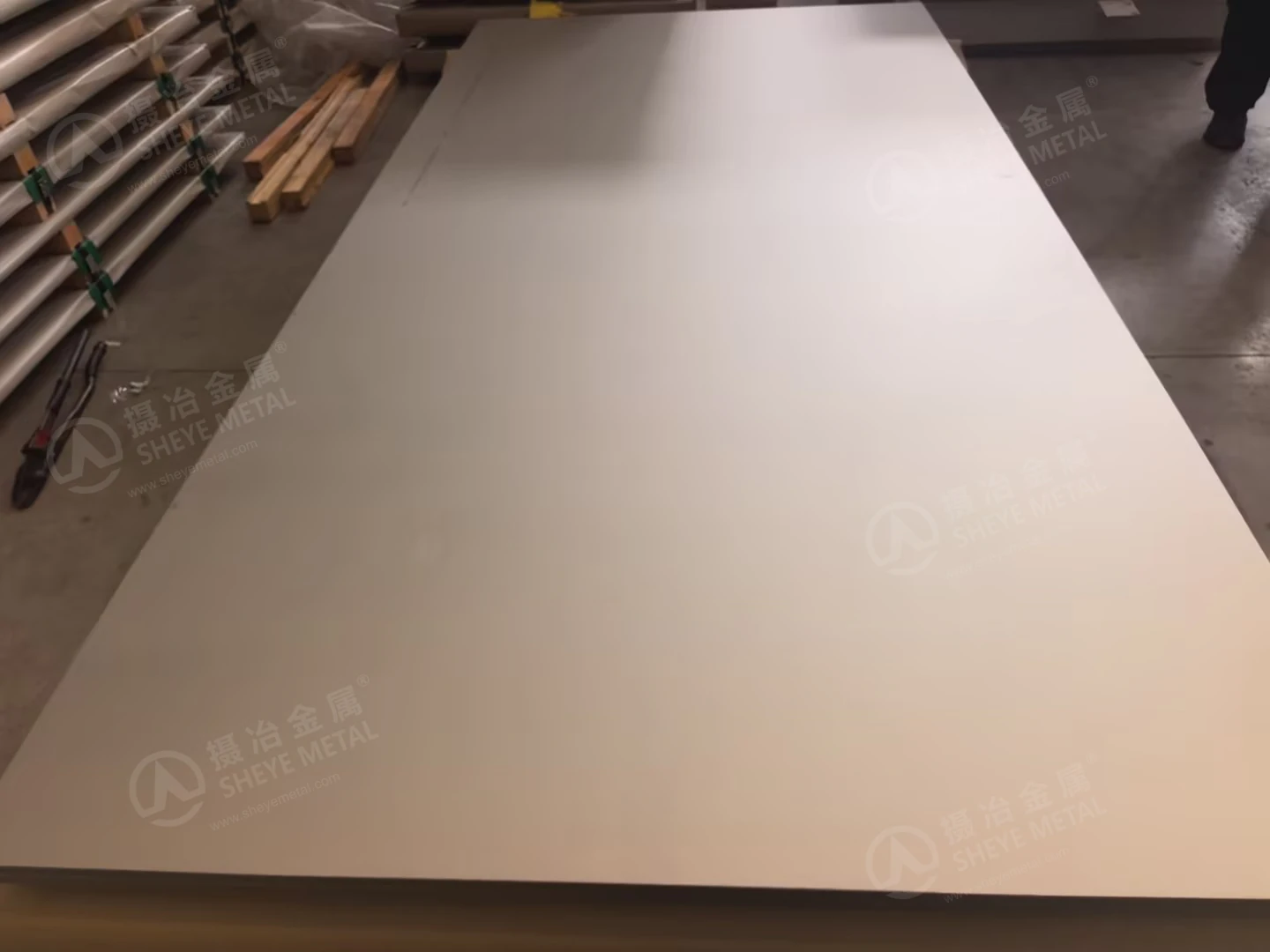
Sheye Metal supplied 304L No.1 stainless steel plate, 22 × 1500 × 3000 mm, for a customer in Australia. The order called for controlled dimensional tolerances and flatness, a consistent surface without visible pits or cracks, and traceability back to the producing mill. Solution treatment and a satisfactory ASTM A262 Practice E intergranular corrosion test result were also specified.
Before dispatch, our team visually inspected each plate, measured the dimensions, checked the plate marking and carried out PMI screening. These checks form part of Sheye Metal’s routine inspection process. Our digital records also identify the people who purchased, received, inspected, labelled and packed the material.
The Australian customer’s purchasing requirements
| Item | Requirement |
|---|---|
| Grade and surface | 304L stainless steel plate with a No.1 finish |
| Nominal size | 22 mm thick × 1500 mm wide × 3000 mm long |
| Dimensions and flatness | Meet the limits and measurement requirements agreed for the order |
| Surface condition | Consistent appearance, with no visible pits or cracks |
| Heat treatment and corrosion testing | Solution treatment and a satisfactory ASTM A262 Practice E result |
| Identification | Traceable mill, batch and heat information, supported by handling and inspection records |
Solution treatment and ASTM A262 Practice E
Solution annealing helps dissolve chromium-rich carbides. Rapid cooling after treatment limits their re-formation, helping preserve resistance to intergranular corrosion, as explained in Outokumpu’s corrosion guidance. The low carbon content of 304L reduces its susceptibility to sensitisation, but the grade designation alone does not establish the heat treatment history or the result of a corrosion test.
ASTM A262 Practice E uses a copper-copper sulfate-sulfuric acid test to detect susceptibility to intergranular attack in austenitic stainless steels. It addresses a specific form of attack; it does not establish resistance to every corrosive service environment. For an order with this requirement, the test report must be matched to the supplied material and the agreed acceptance criteria.
Pre-shipment inspection of the 304L 22 × 1500 × 3000 mm plates
Each plate’s surface and dimensions
The visual check covers the exposed plate surface and edges, looking for visible pits, cracks and damage, as well as uneven surface appearance. Flatness is a separate measurement requirement governed by the order specification.
The three photographed thickness readings are 22.001 mm, 21.972 mm and 22.035 mm. These are local readings on a nominal 22mm plate. The inspection record and agreed tolerance determine acceptance for the order.
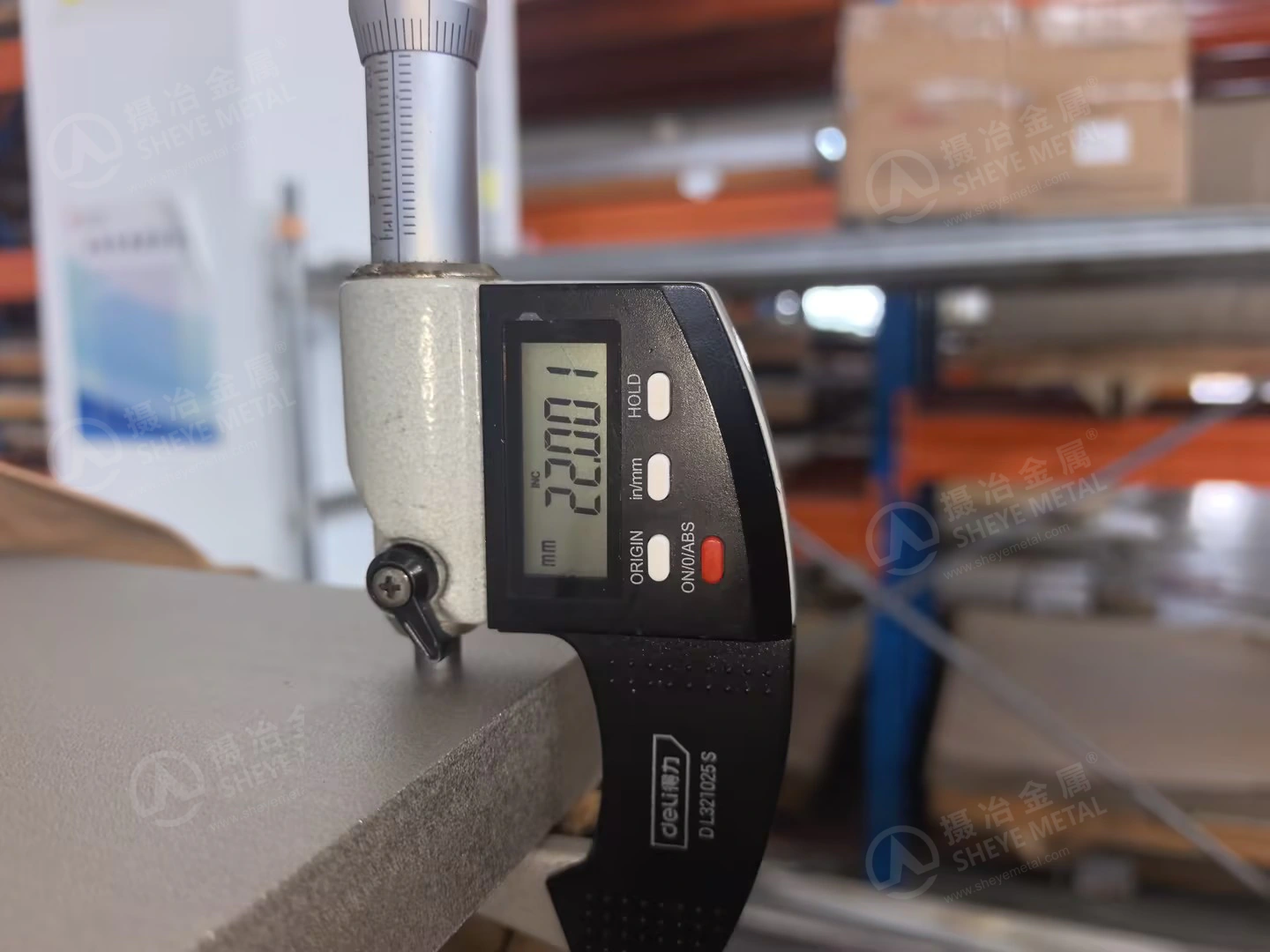
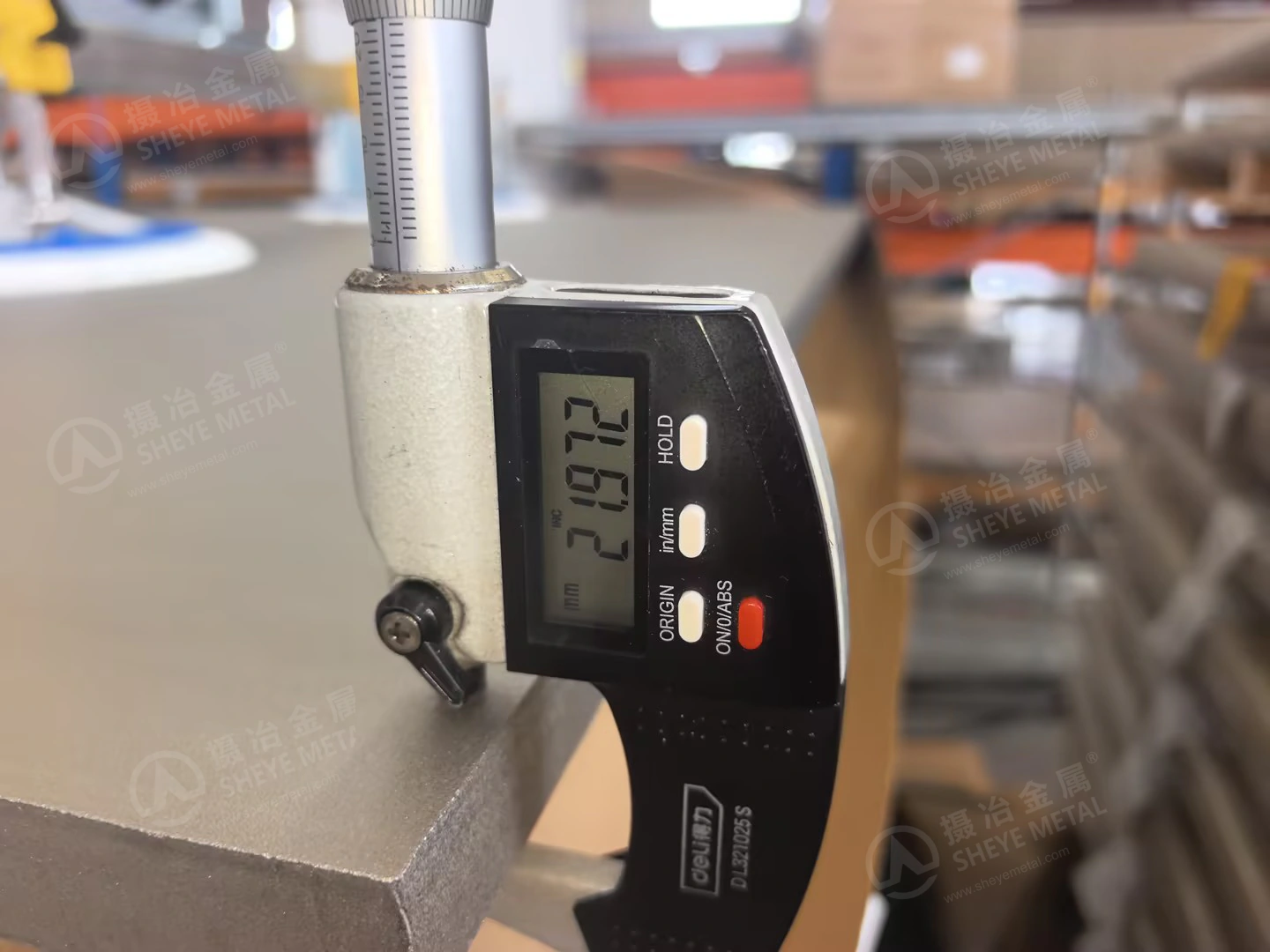
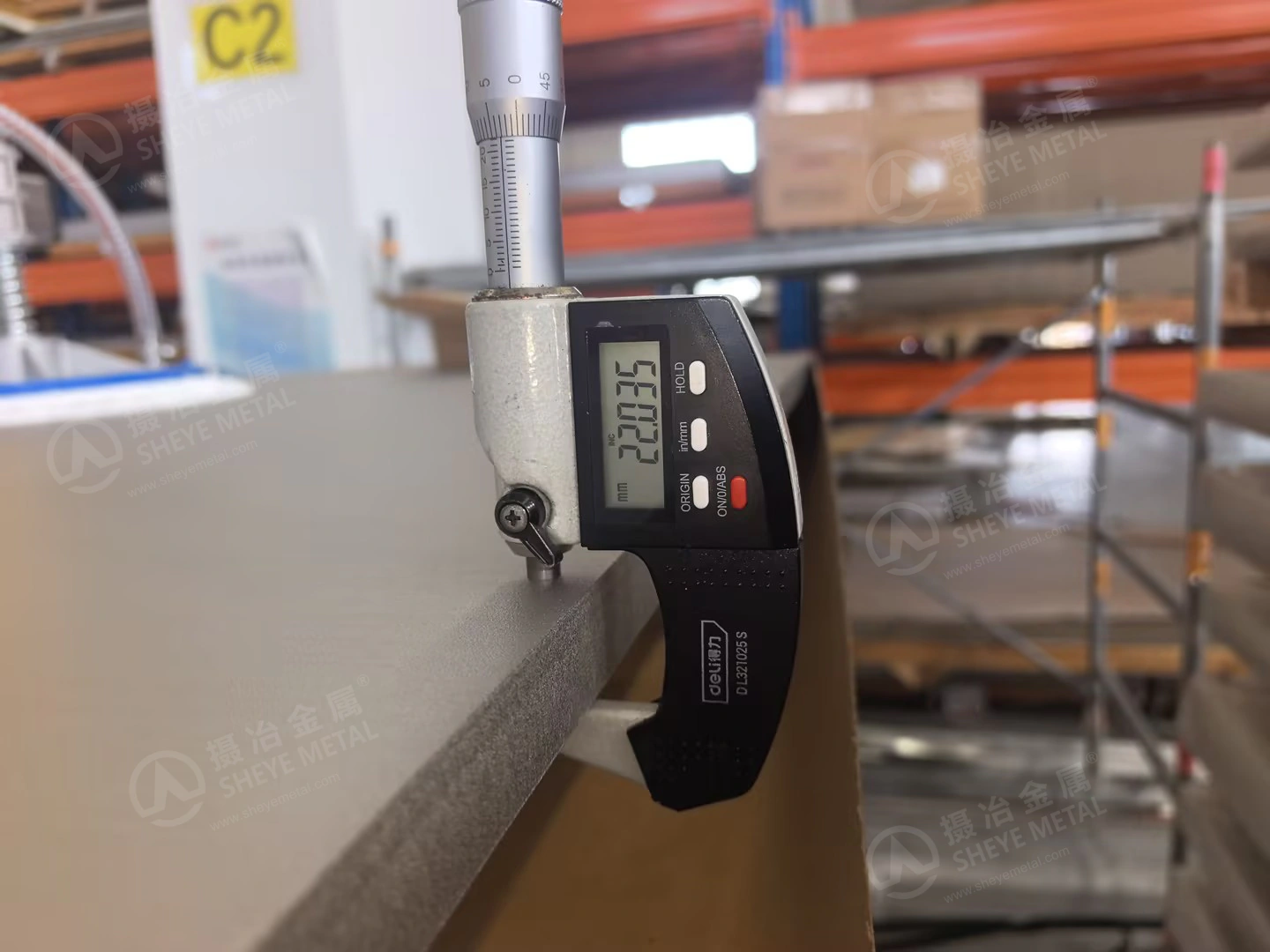
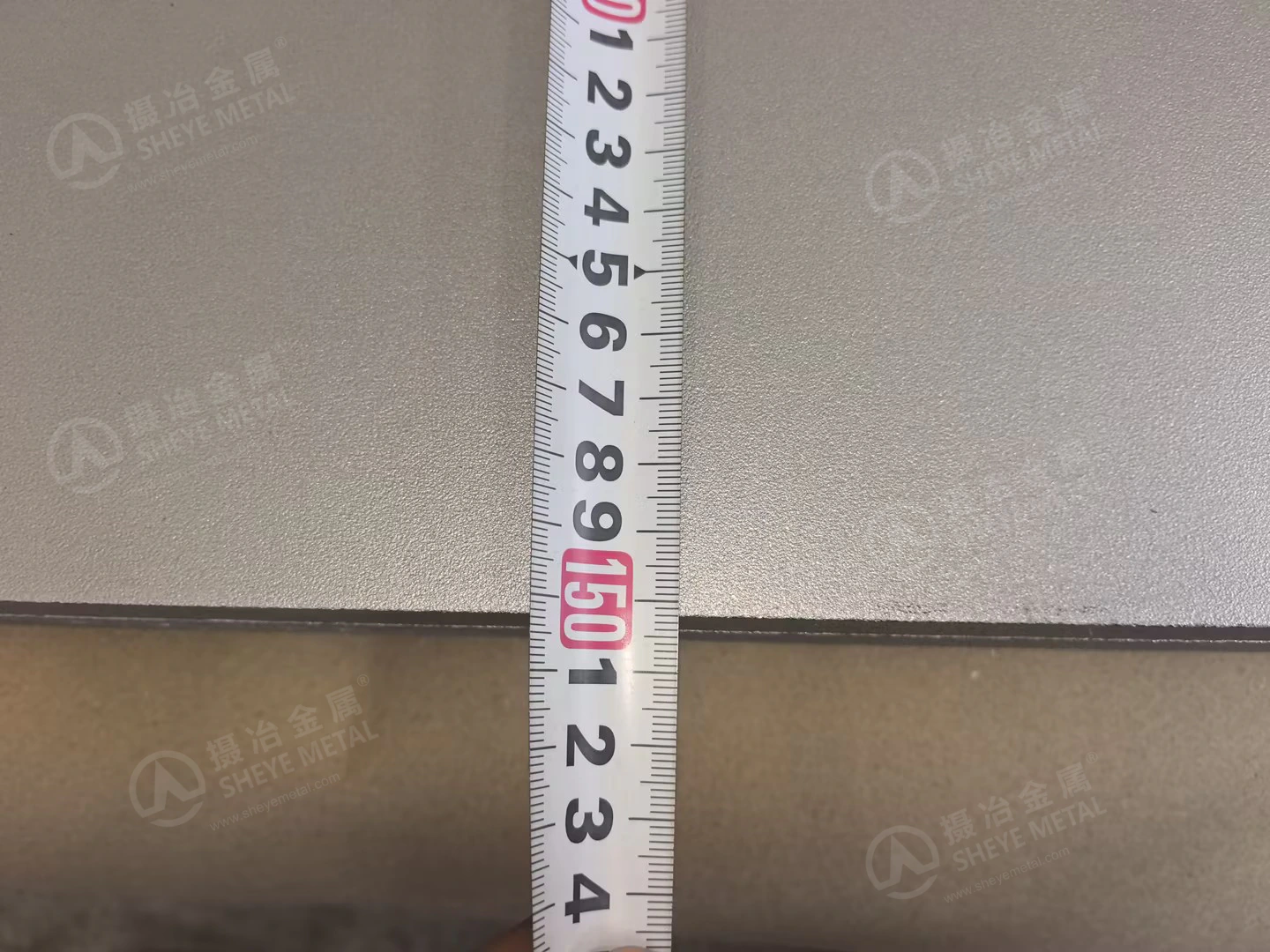
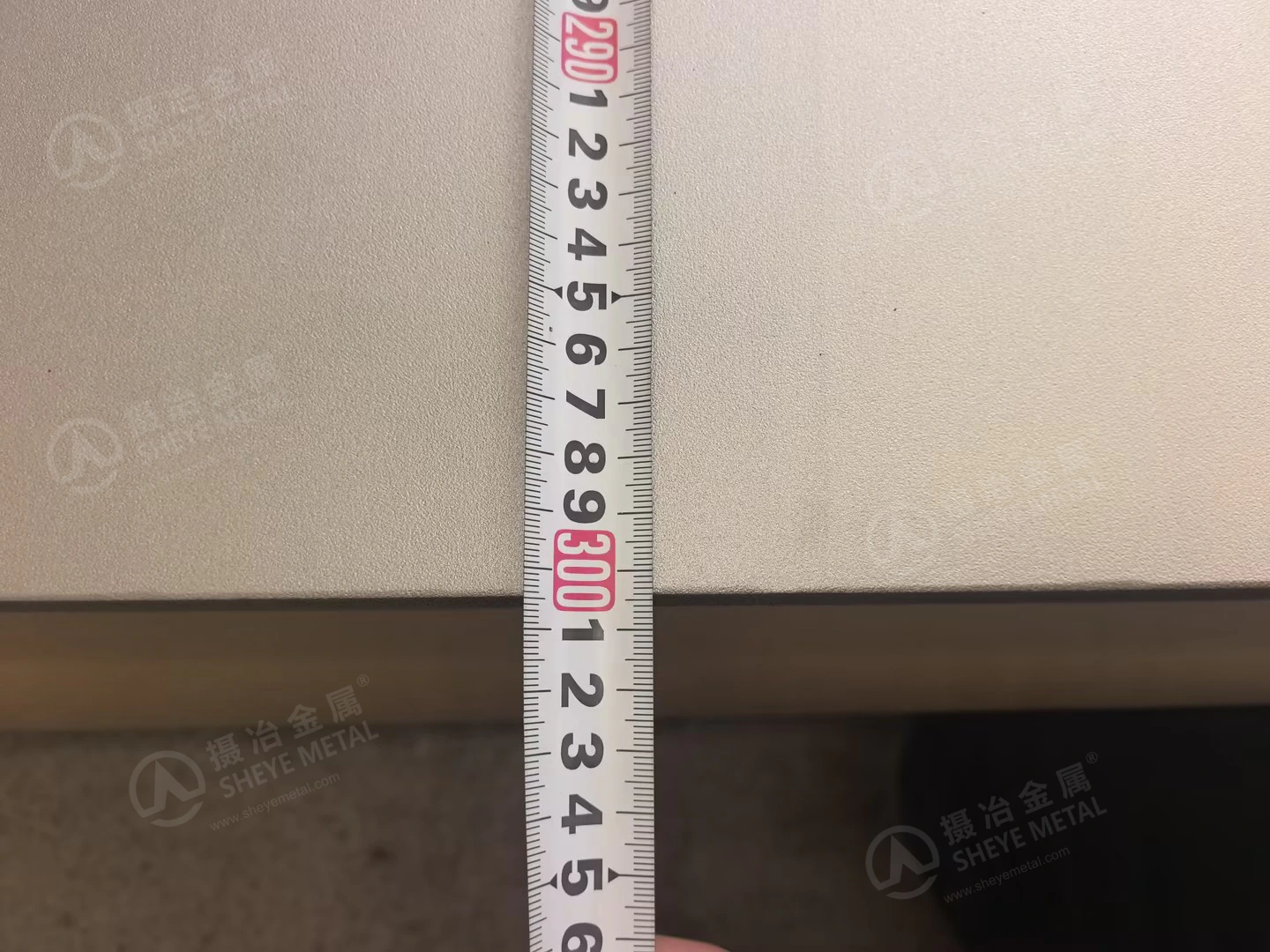
Width and length are checked against the nominal 1500 × 3000 mm size. The close-up photographs show the plate edges near the 150 cm and 300 cm tape graduations. They record the measurement activity, while the inspection record holds the acceptance measurements.
Marking and PMI
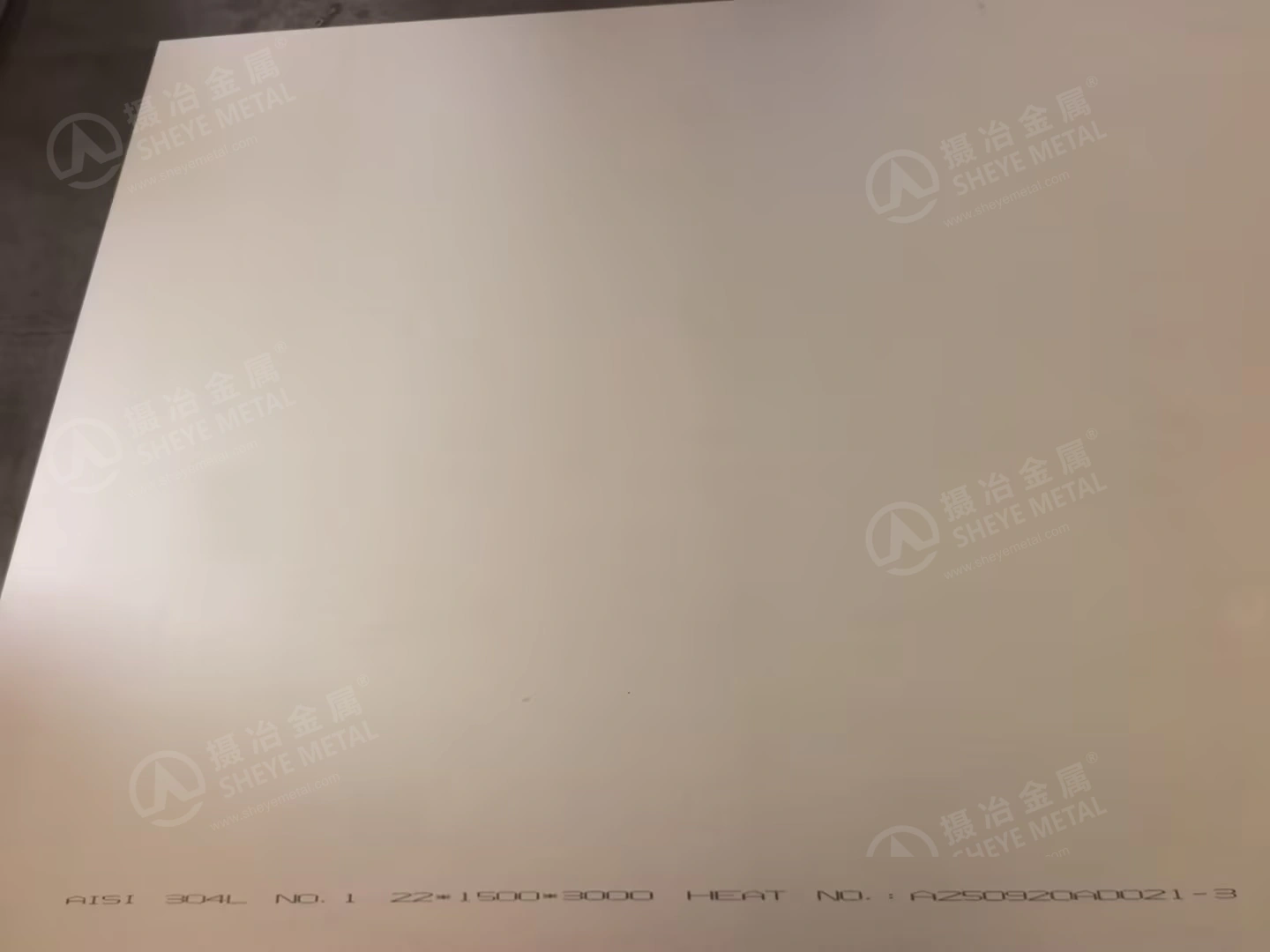
The plate marking identifies AISI 304L, No.1 finish, the nominal 22 × 1500 × 3000 mm dimensions and a heat number. Checking this marking helps connect the physical plate to its material documents and order records.
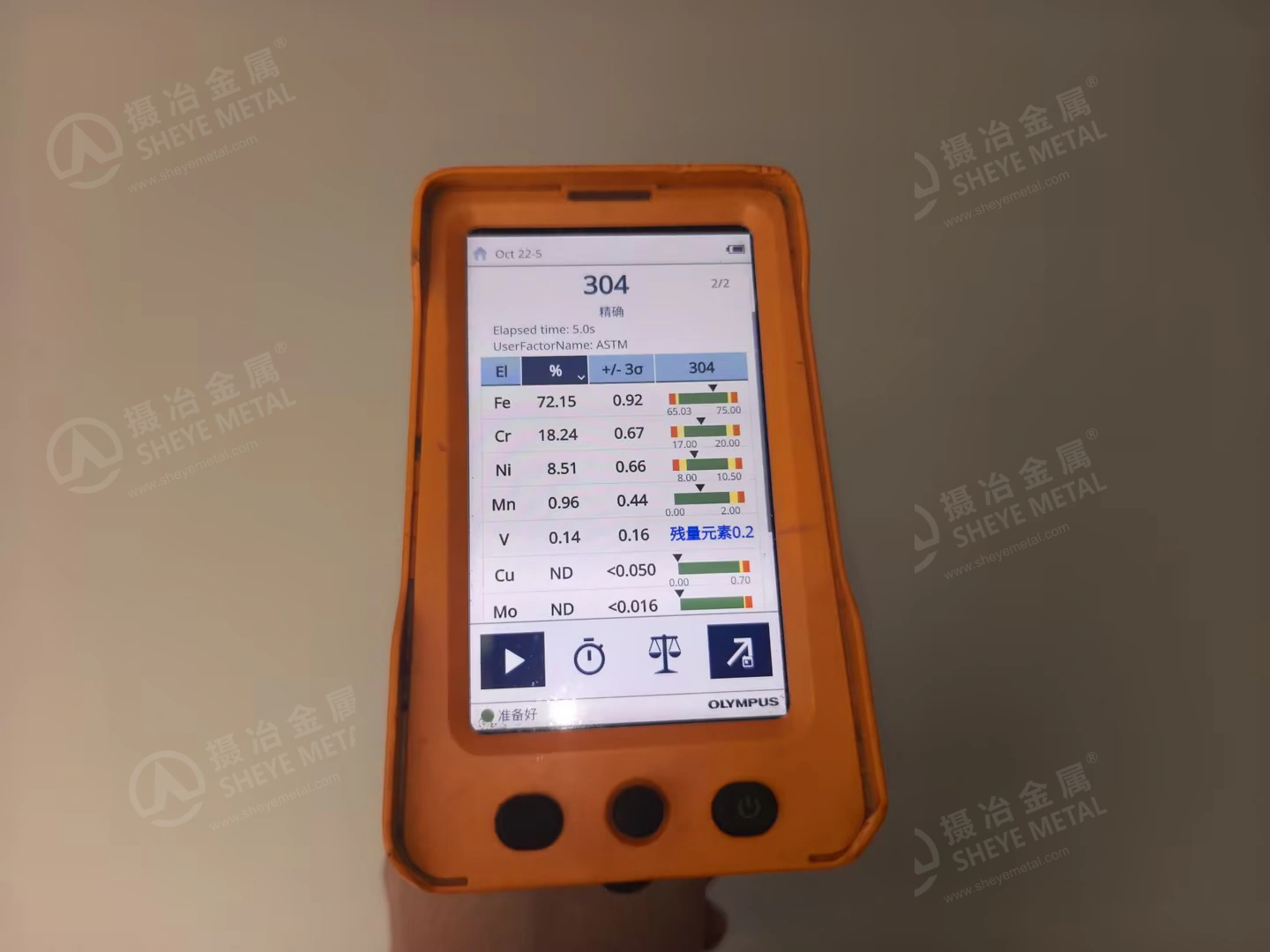
The handheld PMI screen shows a 304 identification, with chromium at 18.24% and nickel at 8.51%. XRF screening checks the measured alloying elements. Handheld XRF does not measure carbon, so it cannot distinguish 304 from low-carbon 304L on its own. Verification of the L grade relies on the heat-linked mill certificate and its carbon analysis; additional carbon testing can be specified.
Keeping the marking, PMI record and material documents together supports the receiving customer’s own checks. Further details of our inspection process are available on the quality and export delivery page.
Tracing a finished plate through production and handling
The Australian customer specifically requested traceability. Sheye Metal’s digital system records both the origin of the material and the staff responsible for its handling. A question about a packed plate can be followed back through inspection, warehouse receipt and purchasing to the mill, batch and heat.
| Stage | Recorded information | What it helps identify |
|---|---|---|
| Mill production | Producing mill, batch, heat number and production date | The material’s manufacturing origin |
| Purchasing | Responsible purchaser and purchase date | Who arranged the supply and when |
| Warehouse receipt | Entry date and personnel responsible for receiving and unloading | When the material entered stock and who handled it |
| Quality inspection | Responsible inspector and the associated inspection record | Who performed the checks and which material was checked |
| Labelling and packing | Personnel responsible for applying labels and packing | Who prepared the finished product for dispatch |
This level of detail is useful when a buyer needs to investigate a particular plate or reconcile a delivery with its records. The heat number provides a material reference; the handling records identify the work performed within Sheye Metal.
22mm 304L stainless steel plate supplier for Australian orders
Sheye Metal supplies 22mm-thick 304L stainless steel plate from China for overseas customers, including Australia. Our 304L stainless steel plate page provides the broader supply information.
If you are looking for 22mm 304L stainless steel plate in stock, send the required quantity and finished dimensions so we can check current availability. For a 304L No.1 22mm stainless steel plate order, include the thickness tolerance, flatness limits, surface acceptance requirements and delivery destination. Specify solution treatment, ASTM A262 Practice E and any required documents at the quotation stage.
For a 22 × 1500 × 3000 mm plate enquiry, contact sales@sheyemetal.com or send your specification through our enquiry page.
PRODUCTS