
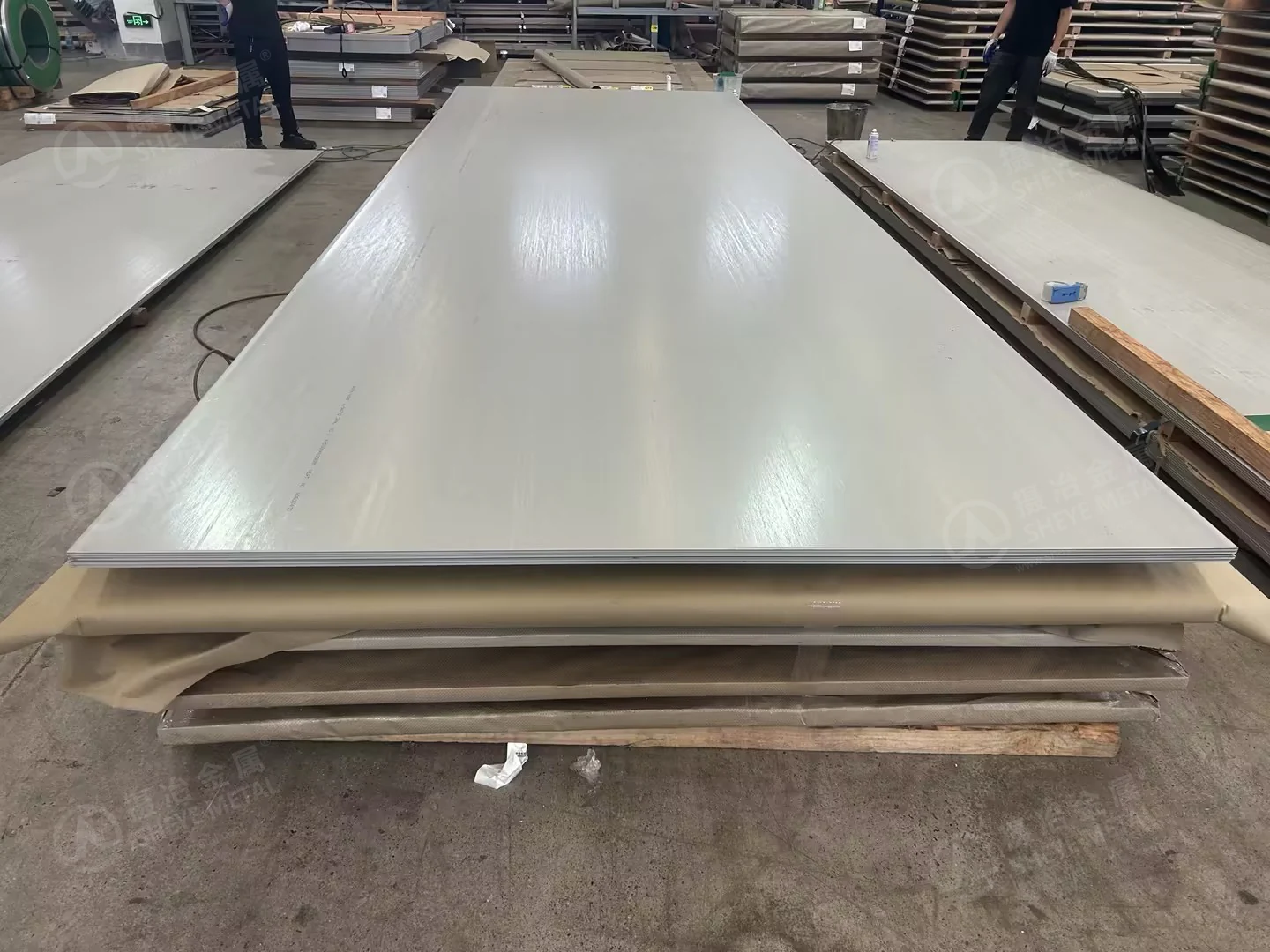
An industrial equipment manufacturer in Puchong, Malaysia, needed TISCO 304L 8 × 2000 × 6096 mm hot-rolled stainless steel plate with a No.1 finish. The 2000 mm width was a practical choice: where the equipment layout allows a panel to be cut from one wider plate, the fabricator can avoid a joint that would otherwise require welding. Sheye Metal prepared the plates with dimensional checks, surface inspection and protective packing before release.
304L 8 mm plate, 2000 mm wide, for equipment fabrication
The order combines a nominal 8 mm thickness with a 2000 mm width and 6096 mm cut length. For a manufacturer planning equipment panels or shells, the useful dimensions are those that remain after any required edge preparation and trimming. Sheye reviews these requirements with the ordered 304L stainless steel plate specification before processing.
| Material and mill | TISCO 304L hot-rolled stainless steel |
|---|---|
| Nominal finished size | 8 × 2000 × 6096 mm |
| Finish | No.1 |
| Customer | Industrial equipment manufacturer, Puchong, Malaysia |
| Sheye service | Cut-to-length processing, inspection and protective packing |
What the extra 500 mm can change
A panel wider than 1500 mm may require a main plate and an added strip when made from 1500 mm stock. If the same panel fits within the usable width of a 2000 mm plate, it can be cut in one piece. Removing that joint also removes its edge preparation, fit-up and welding work, together with the associated finishing and inspection.
Fewer joints give the fabricator fewer welded areas to manage for distortion and corrosion protection. The savings depend on the drawings, joint design and nesting plan; width alone does not establish a cost saving. Narrower parts also deserve a separate layout check. A 2000 mm plate can be economical when several parts fit across it, while a different stock width may leave less scrap for another job.
Why low-carbon 304L suits many welded assemblies
Lower carbon reduces the tendency for chromium carbides to form during welding, improving resistance to intergranular corrosion. This is useful for suitable welded equipment that will not receive a complete solution treatment after fabrication. Chemical processing and food equipment are among the applications where this distinction matters. Outokumpu’s 304L technical reference explains the low-carbon effect.
The process medium, operating temperature and welding procedure still govern material selection. Surface cleaning and removal of harmful weld oxides remain necessary. For a closer comparison, see 304 and 304L: welding and certification differences.
Reading the TISCO mill certificate
The TISCO EN 10204 3.1 certificate supplied as a technical reference covers an 8 × 2000 mm hot-rolled parent coil, in solution-annealed and pickled condition with a 1D/No.1 finish. It lists S30403, 1.4307 and 304L with GB/T 713.7-2023, EN 10028-7:2016 and ASME SA-240/SA-240M-2025. These are the designations printed on this certificate; a purchase order still needs its applicable standard and delivery requirements.
| C | Si | Mn | P | S | Cr | Ni | N |
|---|---|---|---|---|---|---|---|
| 0.021 | 0.55 | 1.55 | 0.032 | 0.004 | 18.09 | 8.00 | 0.060 |
| Property | Certificate result |
|---|---|
| 0.2% proof strength, Rp0.2 | 287 MPa |
| 1.0% proof strength, Rp1.0 | 333 MPa |
| Tensile strength, Rm | 663 MPa |
| Elongation, A5 | 54.5% |
| Elongation, A50 | 57.0% |
| Brinell hardness | 178 and 178 HBW |
Tensile results are reported at room temperature in the transverse direction. A5 uses L0 = 5.65√S0; A50 uses a 50 mm gauge length. The certificate records the longitudinal intergranular-corrosion test as OK under ASTM A262 E and GB/T 4334 E.
These are reported mill test values for the parent coil. The 6096 mm finished length belongs to the cut-plate order; the certificate is not a separate test report for every finished plate. Identifying commercial details have been removed from the public reference copy.
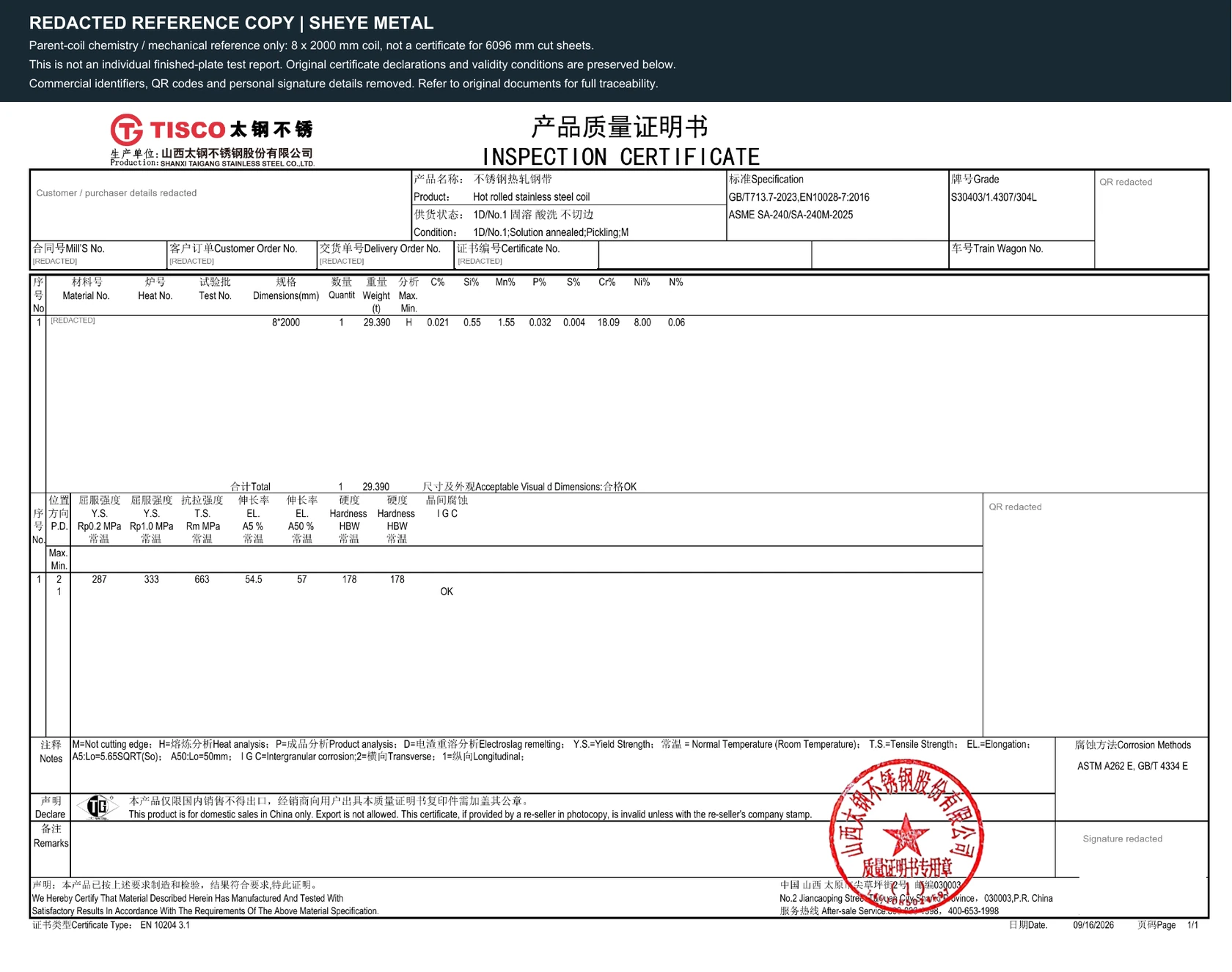
View or download the redacted TISCO parent-coil certificate (PDF).
PMI and dimensional checks on the factory floor
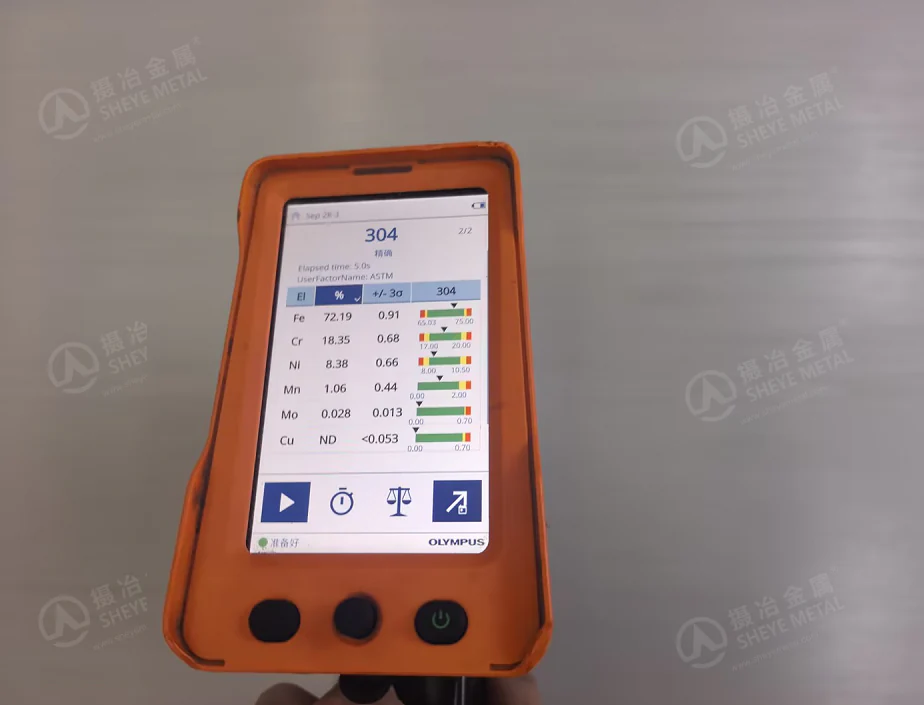
The photographed PMI analyser displays a 304 alloy match. It checks alloying elements such as chromium and nickel; conventional handheld XRF cannot measure carbon. The low-carbon designation therefore requires mill documentation or an appropriate carbon analysis, rather than the PMI grade label alone. Evident explains this measurement limit.
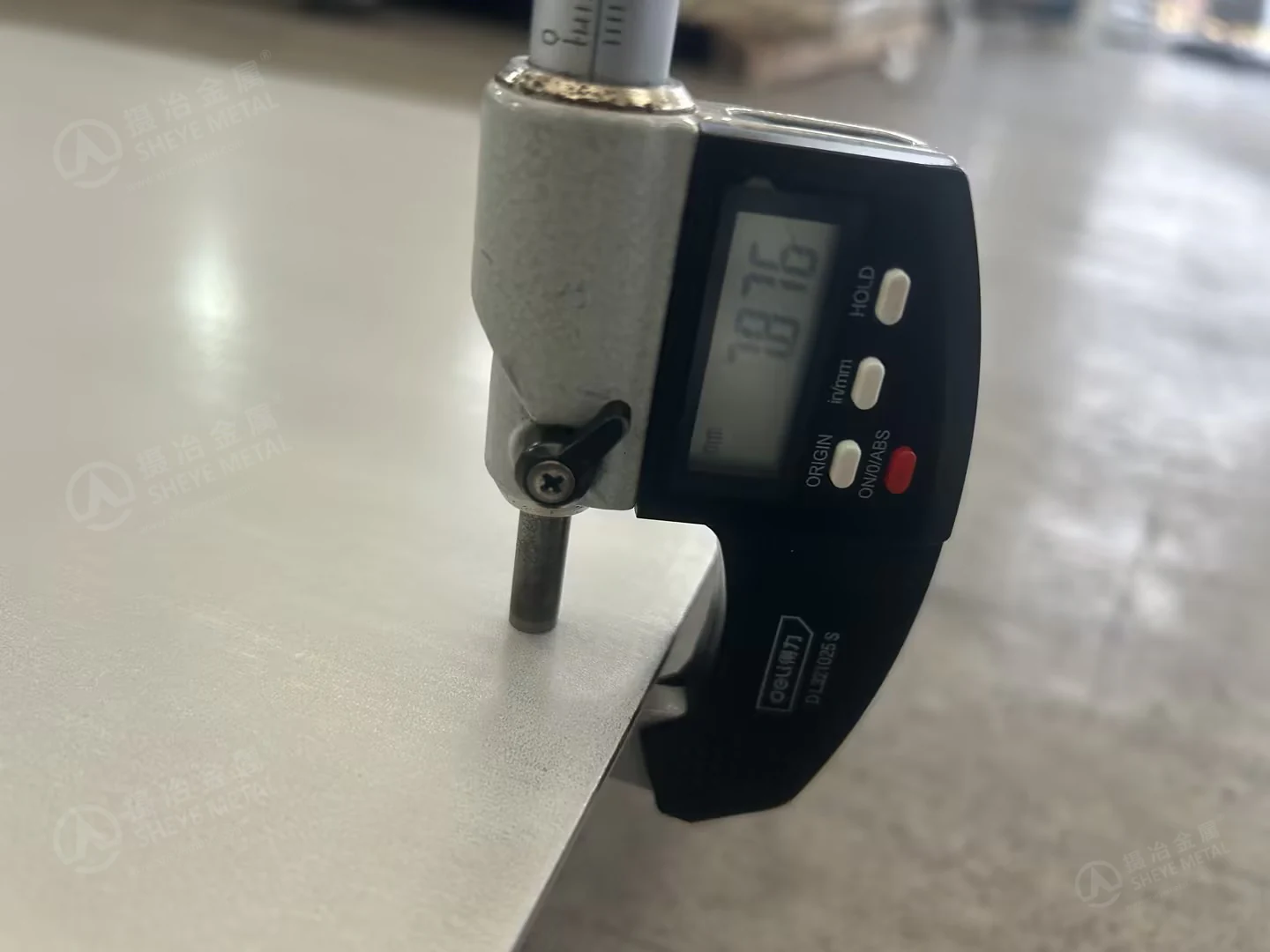
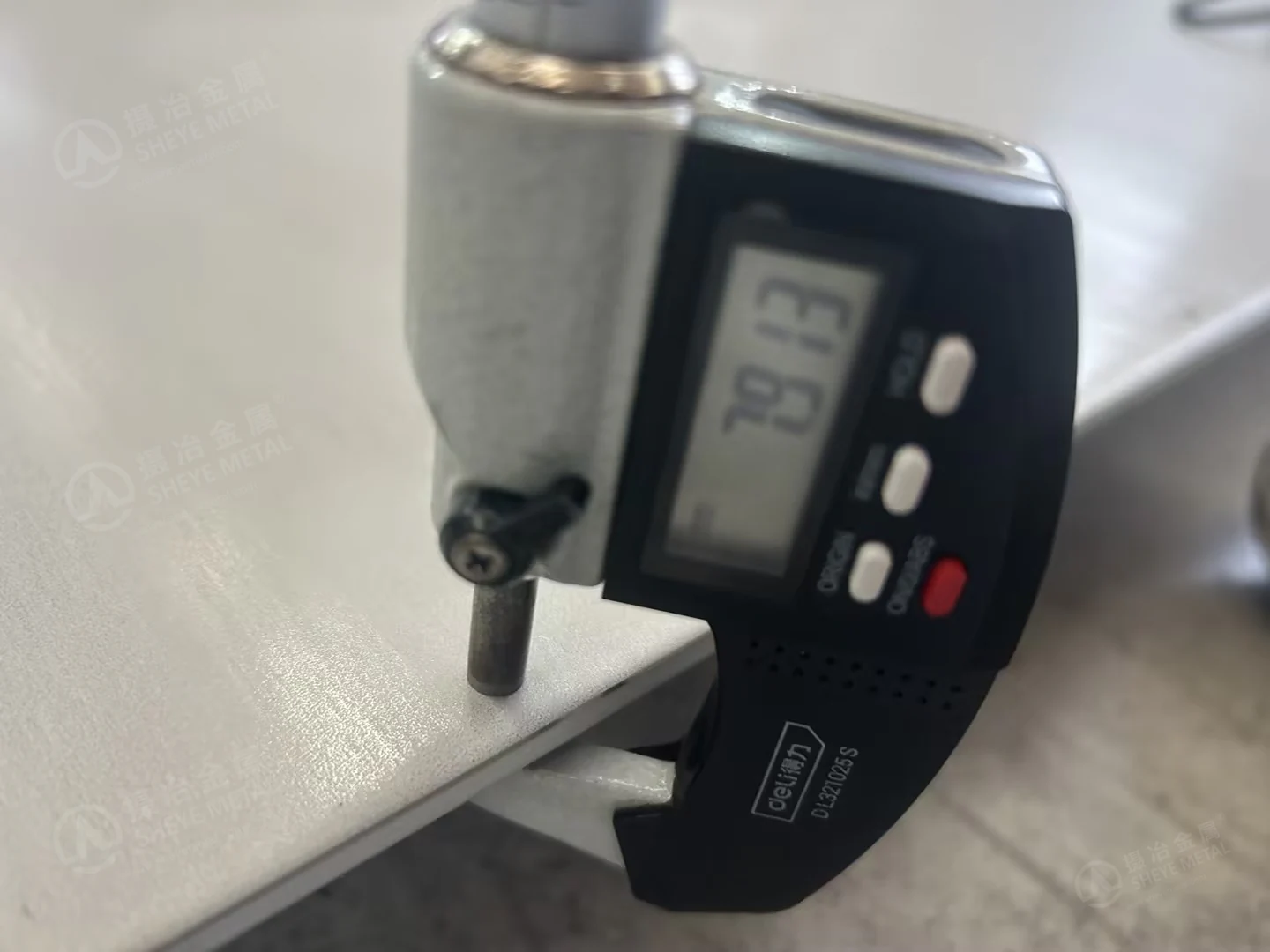
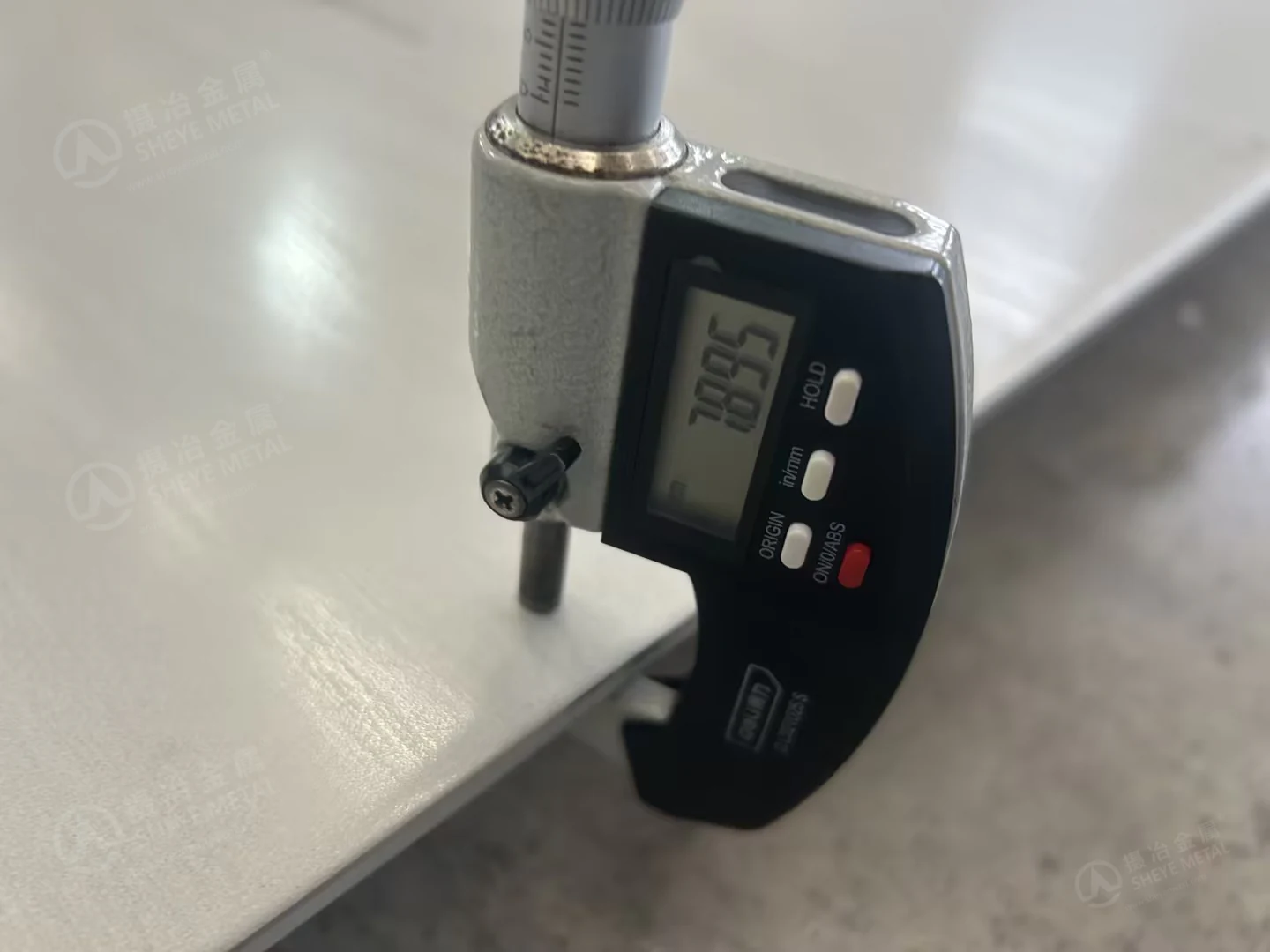
Three photographed thickness checks read 7.876, 7.913 and 7.895 mm on nominal 8 mm plate. Each is a local reading. Acceptance depends on the agreed dimensional standard, tolerances and inspection procedure.
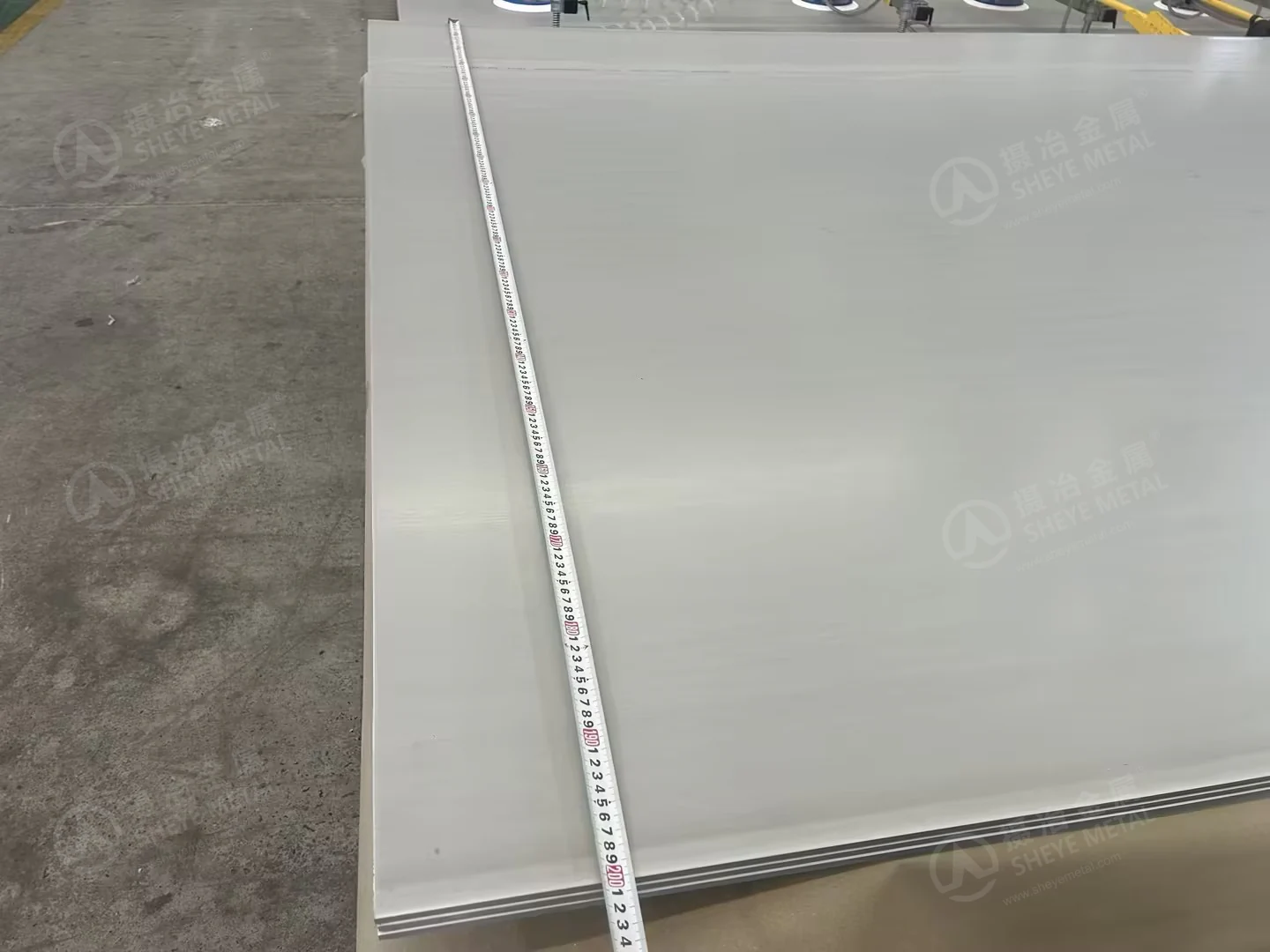
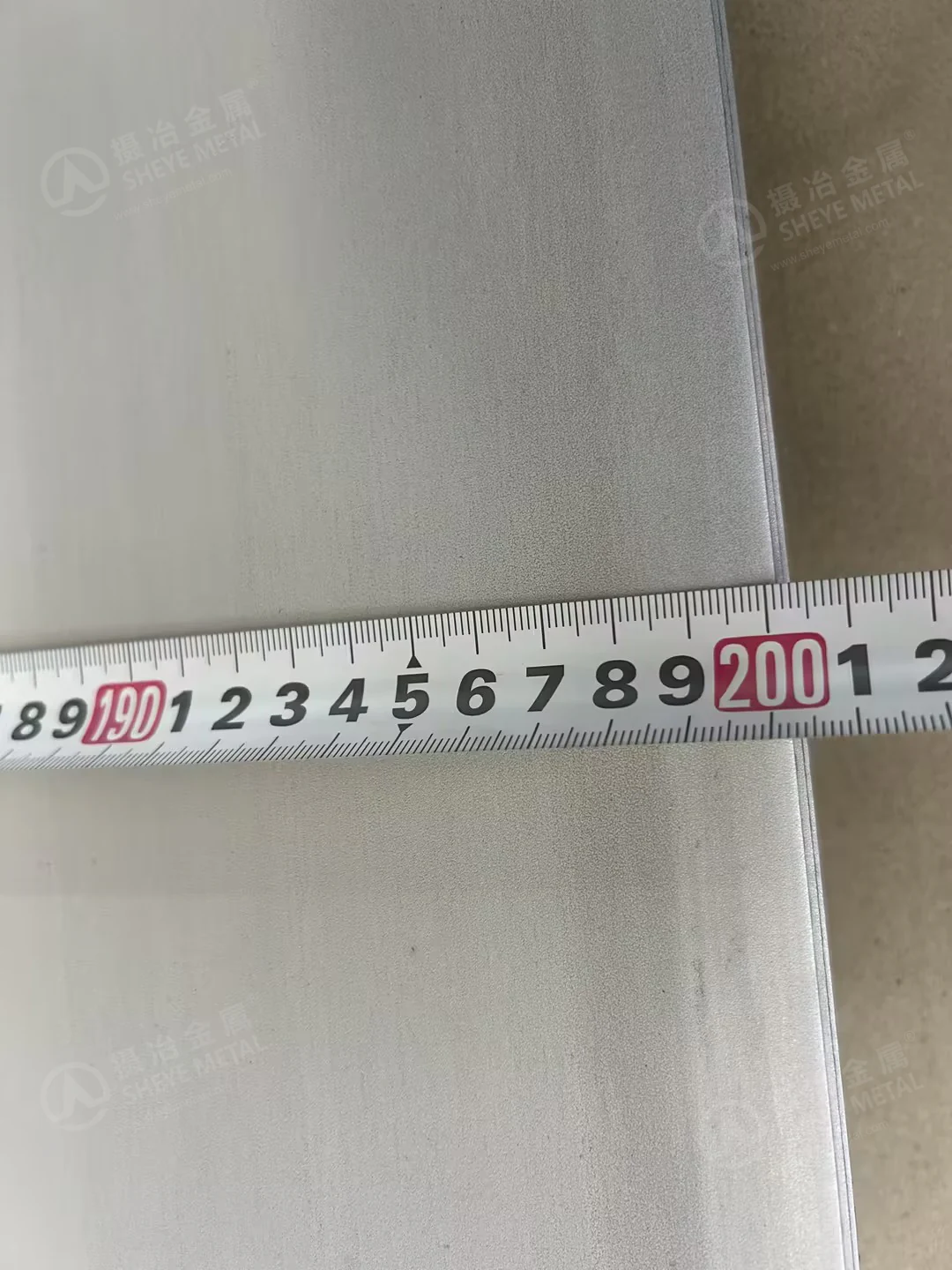
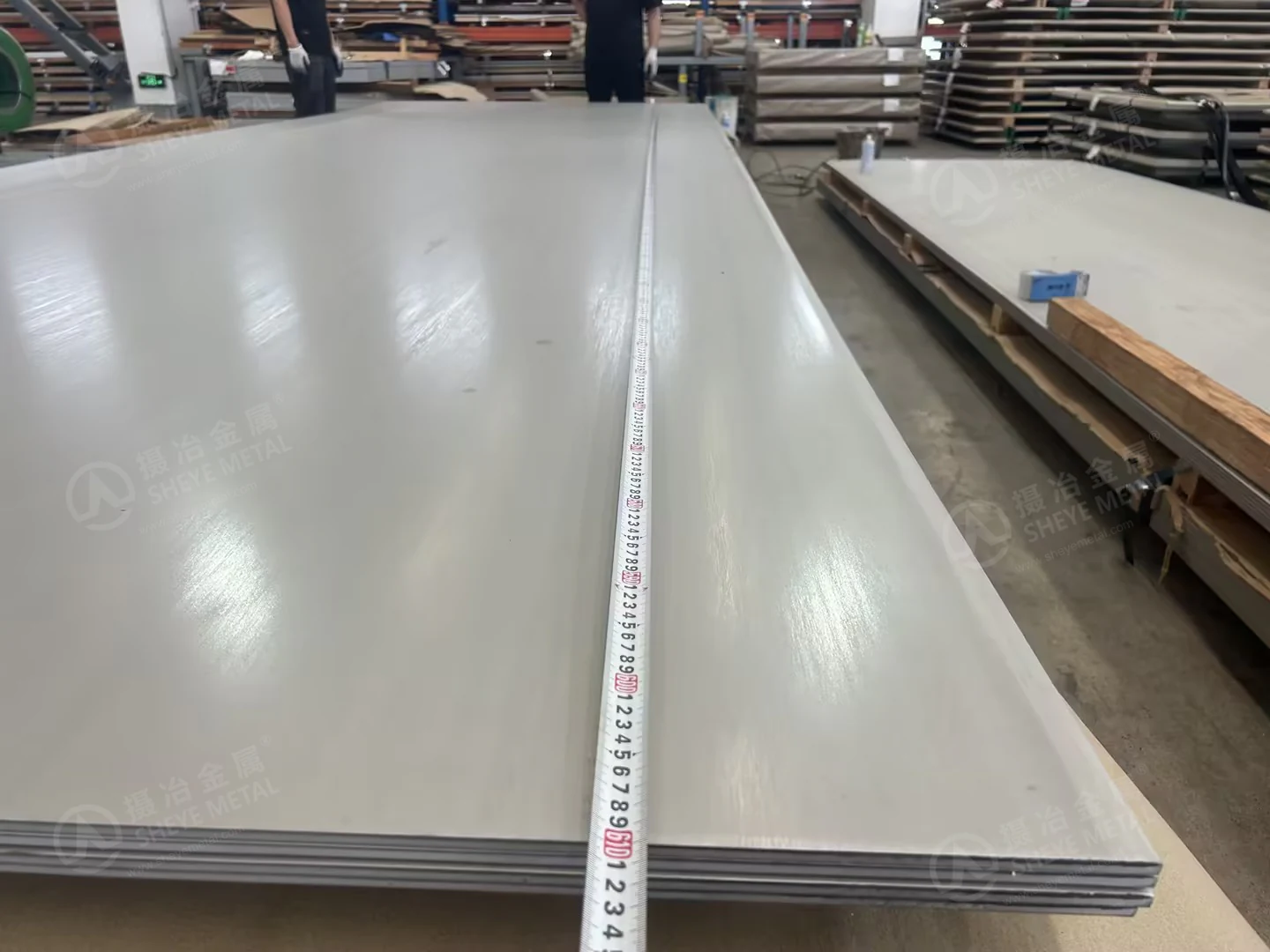
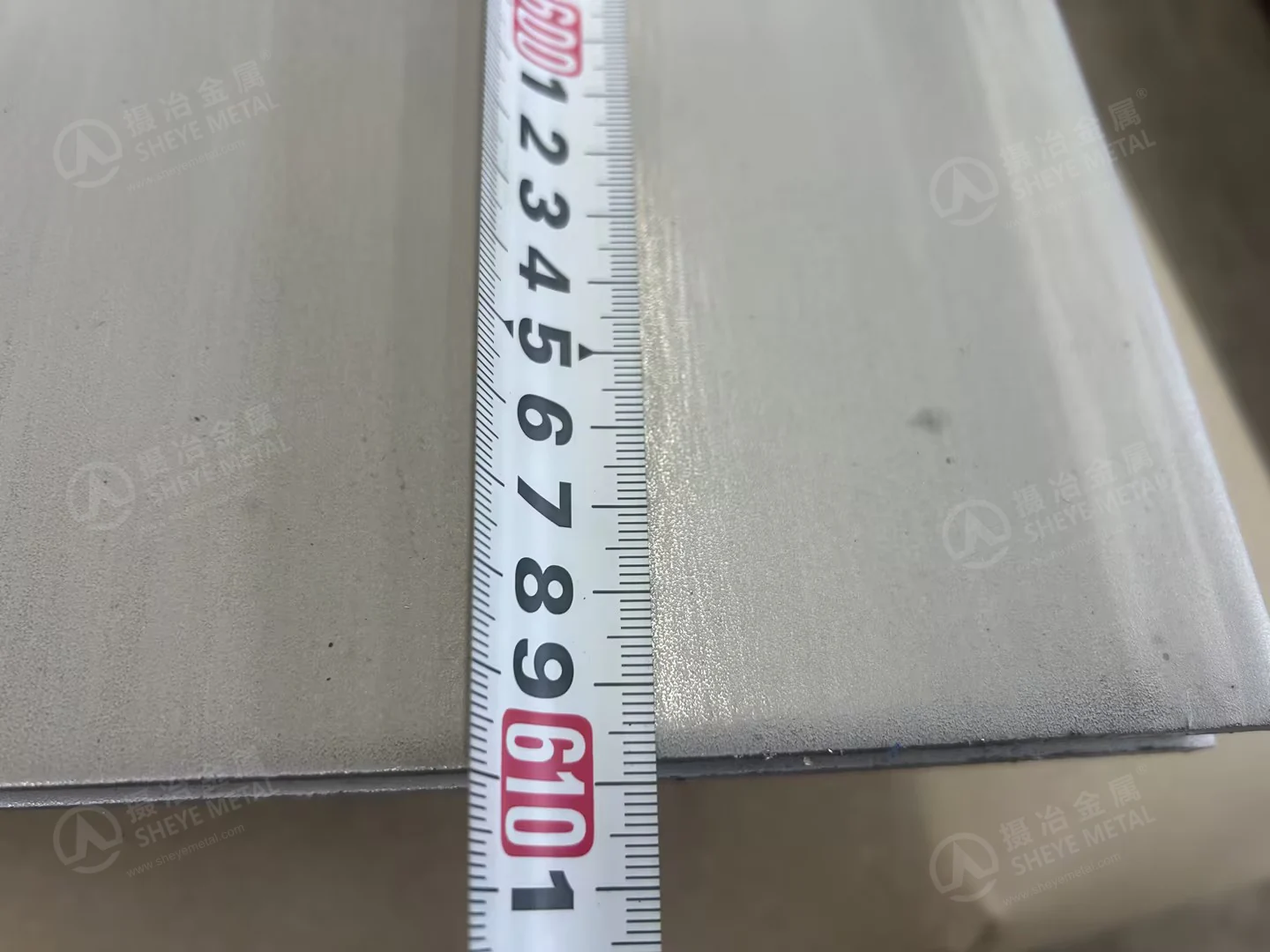
The width and length photographs document the measuring setup for the nominal 2000 × 6096 mm plates. They complement the checks made during cut-to-length processing; the camera angles are not a basis for claiming additional millimetre precision.
Five delivery details that protect the plate
Wide plate needs careful support during levelling, lifting and stacking. Sheye’s inspection and delivery controls address surface damage and handling problems before the customer opens the pack.
- Inspect each plate before release, with cleaning or reprocessing where needed and nonconforming material kept separate.
- Transfer plates individually with vacuum lifting equipment and clean protective sleeves on the pads to reduce contact marks and contamination.
- Apply consistent marking so the agreed grade, dimensions and traceability information are easy to find.
- Align each plate in the stack to reduce protruding edges and contact damage between adjacent plates.
- Use protective export packing, including corrugated sheets, planned supports and pads at strap turns, as detailed in the quality guide.
The guide shows these practices across Sheye’s hot-rolled plate work. The main photograph for this order shows aligned plates on protective material while packing is still in progress.
Stock resources and small-order supply
Sheye Metal is a Chinese supplier, stockist and distributor of 304L hot-rolled stainless steel plate, with factory processing for specified dimensions. Supply draws on parent-coil stocks and available TISCO material. For 2000 mm wide 304L plate, thickness enquiries include 4, 5, 6, 8, 10, 12, 14, 16, 18, 20, 25, 30, 32, 45 and 50 mm. Thicker sizes require a suitable plate supply route; the full range is not described as coil-cut stock.
For small orders with matching stock and processing requirements confirmed, Sheye can arrange factory dispatch within one week. International transport and customs time are additional. Availability for S30403 or 1.4307 requirements is checked against the requested standard and certification.
Send the grade, standard, thickness, width, length, quantity and destination with your enquiry. Include any edge, flatness, marking or packing requirements. Our 304L plate product page is the starting point for a quotation. For another wide-plate application, read the 2000 mm wide 316L plate case for Indonesian equipment.
Sheye Metal order photographs, inspection records and a redacted TISCO parent-coil technical reference.
View the source brochurePRODUCTS
Related products
RELATED CAPABILITY
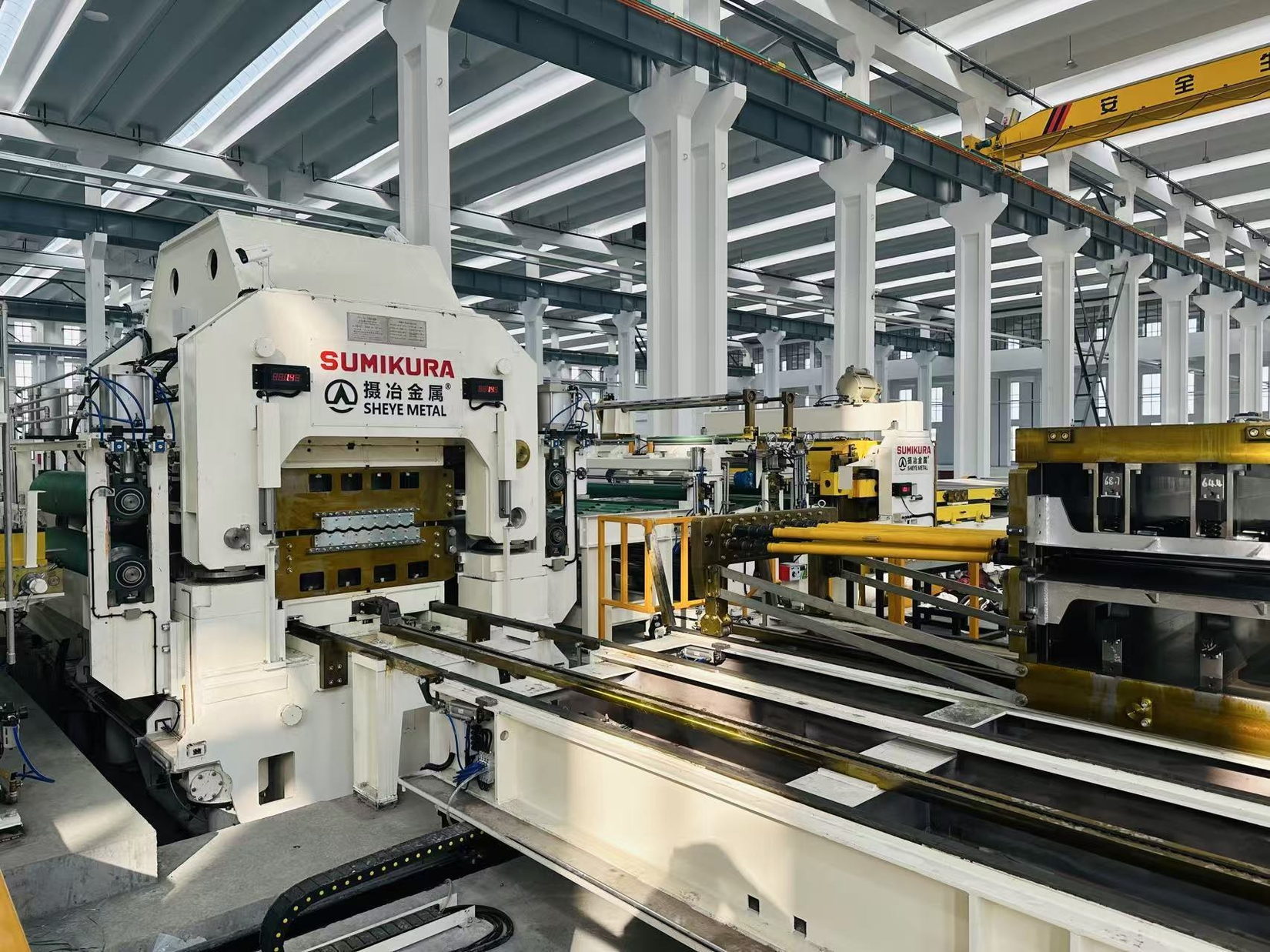
Precision cut-to-length
From coil to accurately cut, levelled and protected sheet.
Explore the process