
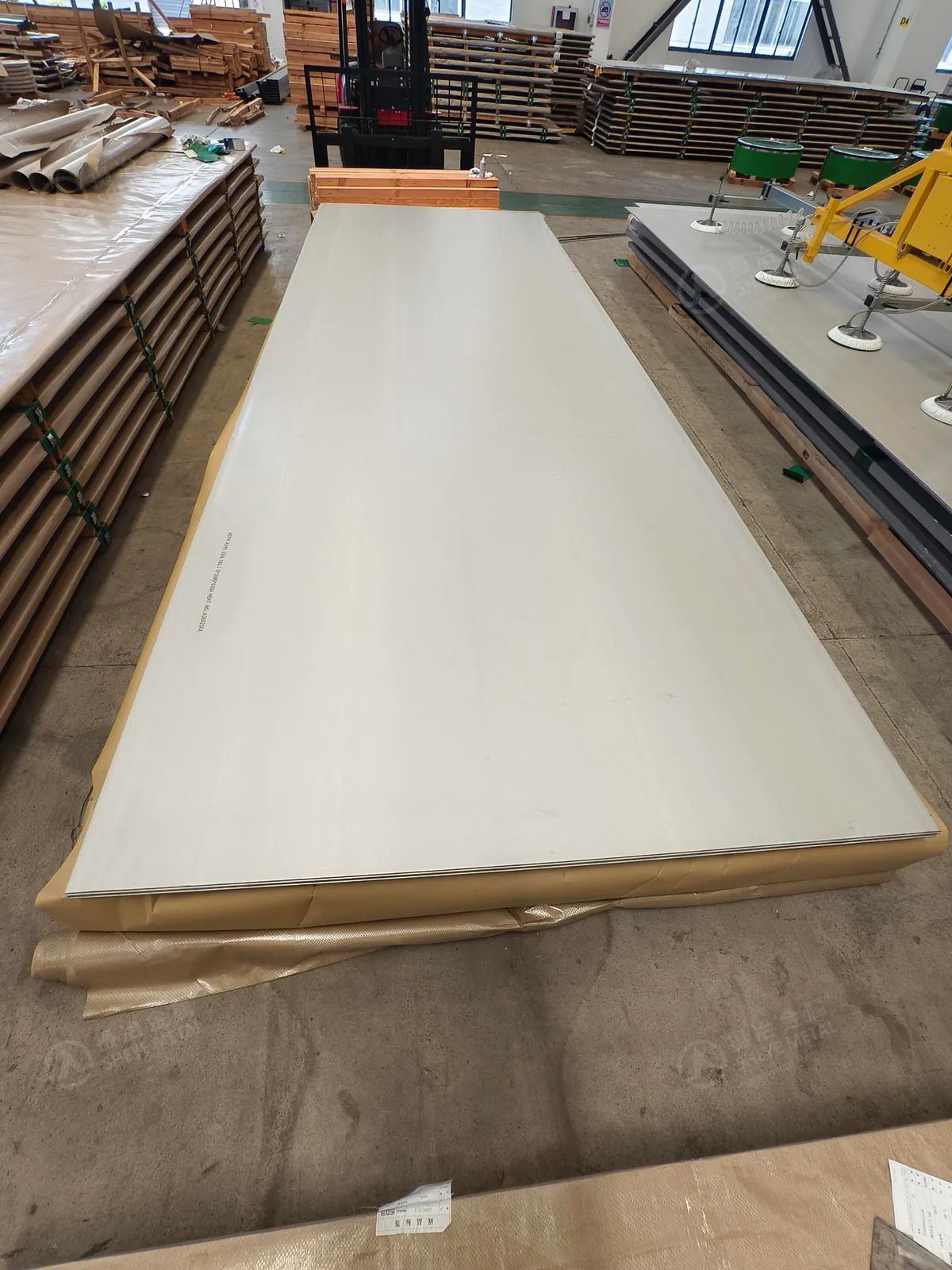
For an Indonesian customer building chemical equipment and a desulfurization tower, plate width was a fabrication decision. The customer selected TISCO 316L No.1 hot-rolled stainless steel plate in 8 × 2000 × 6000 mm to reduce the amount of joining required in its planned layout. At Sheye Metal, the order passed through pre-dispatch inspection covering identification, dimensions and surface condition.
This case follows a 316L 2000 mm wide stainless steel plate from its traceable parent-coil certificate to the inspection photographs. It also explains when the extra width earns its place in a cutting plan—and when another format may be more economical.
The order: TISCO 316L, 8 × 2000 × 6000 mm
| Material | 316L stainless steel; TISCO parent-coil material |
|---|---|
| Surface and nominal size | No.1 hot-rolled plate, 8 × 2000 × 6000 mm |
| Customer application | Chemical equipment and a desulfurization tower in Indonesia |
| Heat identification | A2602561, visible on the plate and recorded on the parent-coil certificate |
| Inspection illustrated | PMI screening, thickness checks, width and length checks, plate identification and surface overview |
As a first-tier core TISCO agent, Sheye combines hot-rolled material sourcing with inspection and export preparation. Buyers comparing specifications can start with our 316L stainless steel plate supply and 316L grade guide.
What can 2000 mm width save over a 1500 mm plate?
Consider a finished panel requiring approximately 2000 × 6000 mm before any trimming allowance. A 1500 mm wide starting plate cannot supply that width alone. A layout using a 1500 mm panel plus an additional strip introduces a longitudinal joint; a suitable 2000 mm plate can provide the blank in one piece. In that specific comparison, the wider plate can eliminate one seam running approximately six metres.
The saving extends beyond welding time. Depending on the fabrication specification, that joint may require edge preparation, beveling, fit-up, filler metal, welding labour, grinding, post-weld cleaning, nondestructive examination and distortion correction. Fewer joints also leave fewer seams to finish on a tank wall or equipment shell. The actual benefit depends on the drawing, forming direction, cutting allowances and approved joint arrangement.
Weld quality still matters. The low carbon content of 316L reduces susceptibility to sensitization and intergranular corrosion after welding, as explained in Outokumpu’s Supra grade guidance. However, heat tint and surface contamination need appropriate control and removal; see its post-fabrication treatment guidance. Reducing joint length reduces fabrication and inspection work; it does not make an assembly automatically leak-proof or corrosion-proof.
For desulfurization equipment, the customer’s design must account for the actual process chemistry, chloride content, temperature and operating conditions. Plate width is one part of that design decision. Fewer welds can reduce opportunities for welding distortion, but width alone does not establish better incoming plate flatness.
Choose width from the cutting plan
A 2000 mm wide 316L stainless steel plate is especially useful when the required blank is wider than 1500 mm. Wider material is not automatically the best-value choice for every part.
| Required blank width | What to consider |
|---|---|
| 1800–2000 mm | A 2000 mm parent width may permit a one-piece blank; allow for the specified edge condition and trimming. |
| 1000 mm | Two blanks nominally total 2000 mm. Check cutting loss and edge allowances before assuming two finished 1000 mm pieces will fit. |
| 1250 or 1500 mm | A matching parent width may reduce offcut. Compare the full nest, including whether the remaining strip has another use. |
The same purchasing principle appears in our 2500 mm wide 304 plate case for Australia: choose a format that supports the part layout, handling and fabrication plan.
Traceability: connect the plate marking, PMI and mill certificate
The marking photographed on this order reads ASTM A240 316L No.1 8 × 2000 × 6000, heat A2602561. The supplied TISCO certificate records the same heat for the parent hot-rolled coil, with nominal thickness 8 mm and width 2000 mm. Its reported heat analysis includes carbon 0.021%, chromium 16.50%, nickel 10.11% and molybdenum 2.04%.
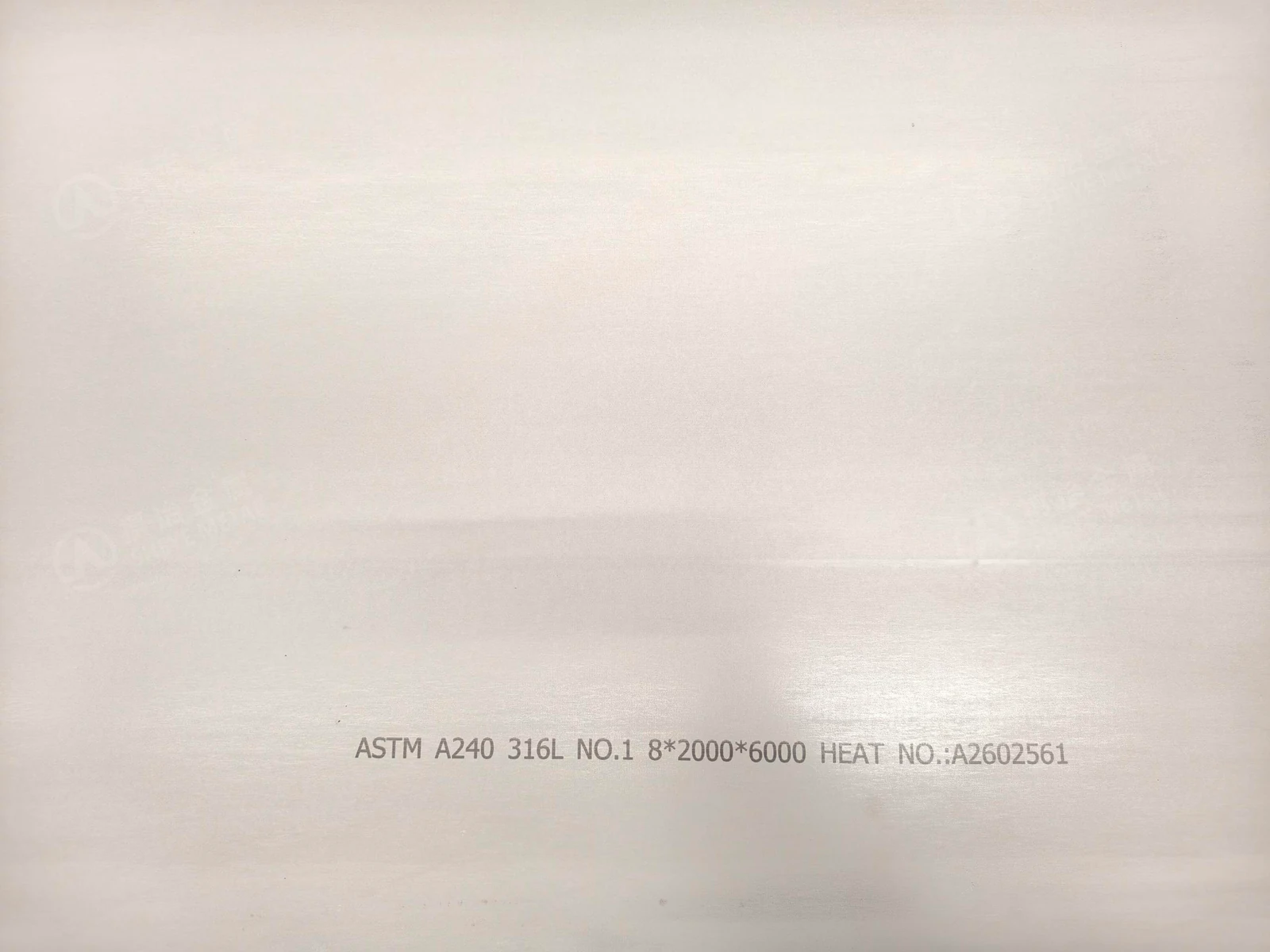
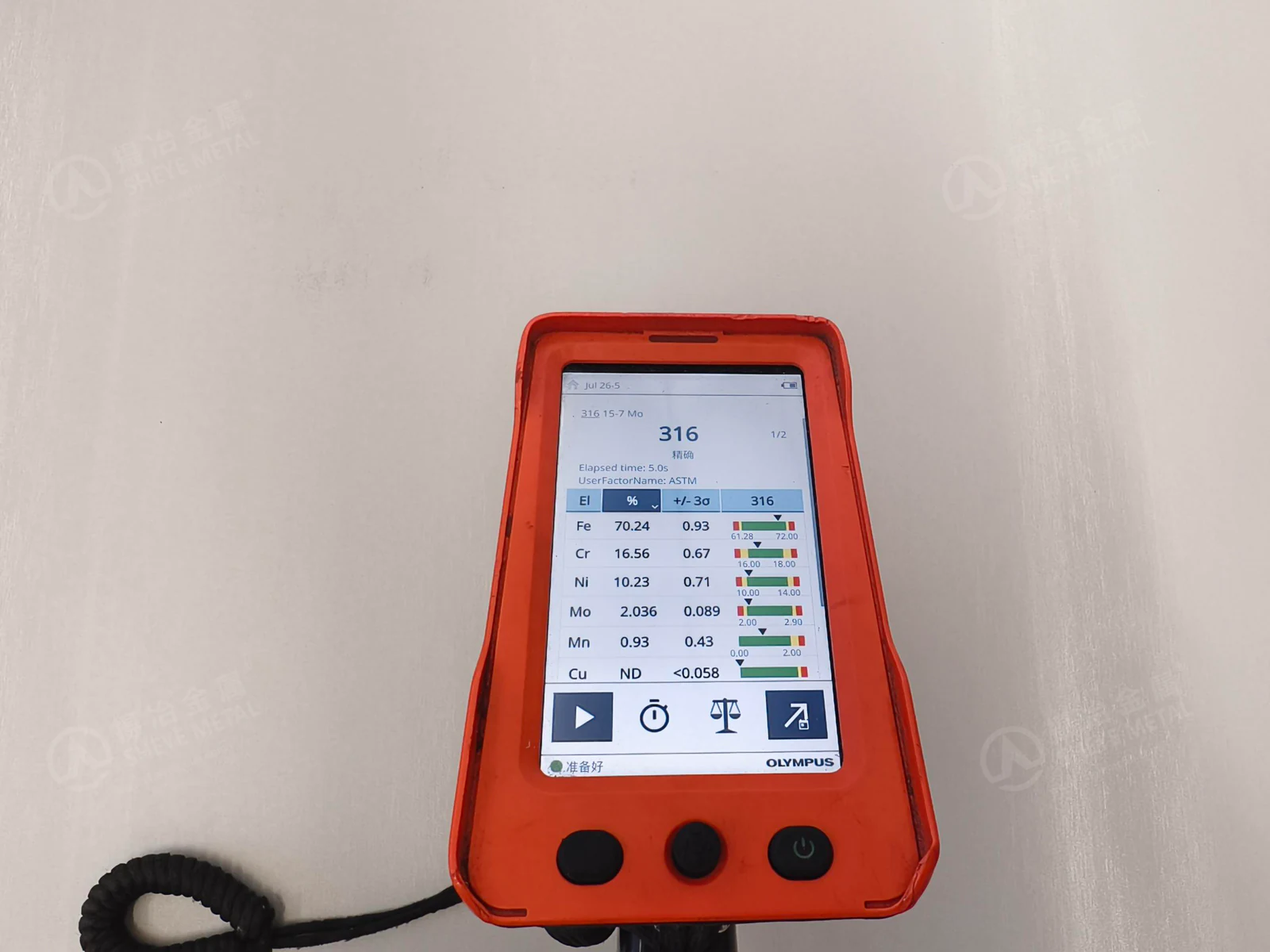
The handheld PMI photograph displays a 316 alloy-family match, with chromium, nickel and molybdenum readings consistent with that screening purpose. Handheld XRF does not directly measure carbon, so this screen alone cannot distinguish 316 from low-carbon 316L. Evident’s XRF PMI guidance explains that limitation. Here, the low-carbon evidence comes from the matching parent-coil certificate, while the plate marking maintains the heat reference.
View the TISCO parent-coil certificate for heat A2602561 (PDF). This reference copy has private commercial details redacted and retains the original certificate conditions. It documents the parent material; finished plate length and dimensional checks are documented separately.
Close-up inspection of nominal 8 mm hot-rolled plate
Sheye inspects each plate before dispatch. The photographs below show examples of the dimensional checks associated with this order, together with the wider view of the No.1 surface. Our quality and delivery approach keeps the ordered specification, physical plate and identifying records connected.
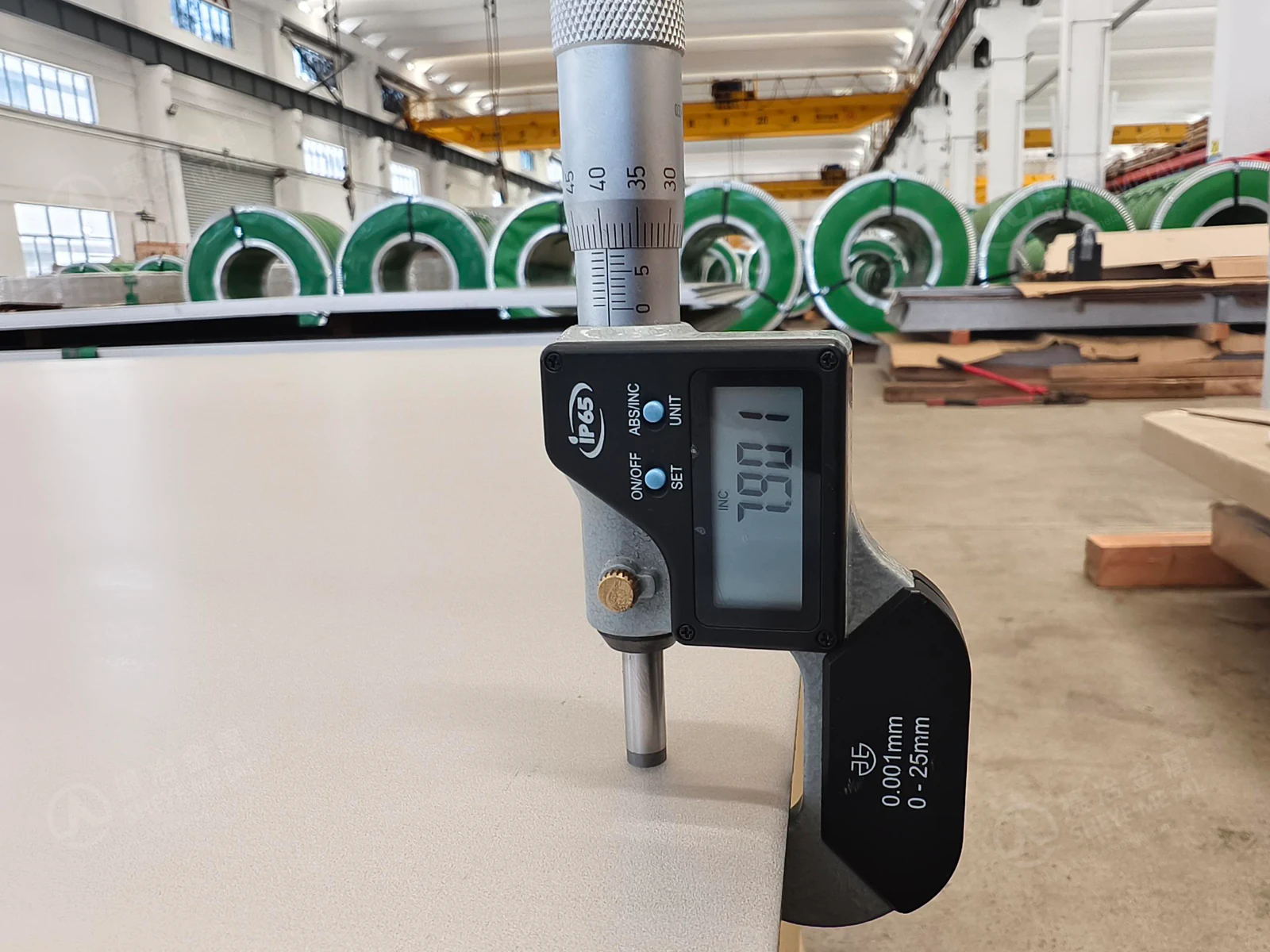
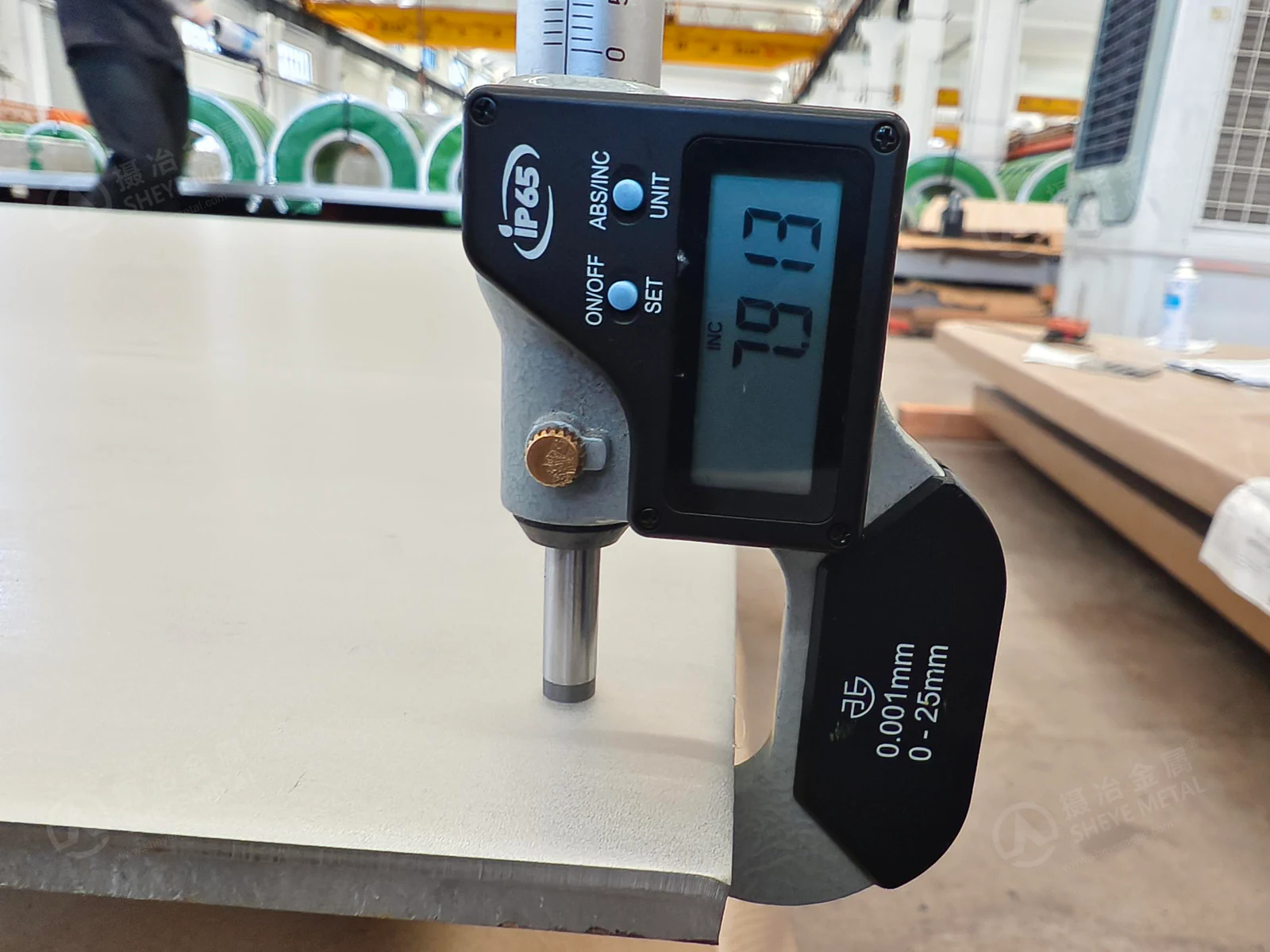
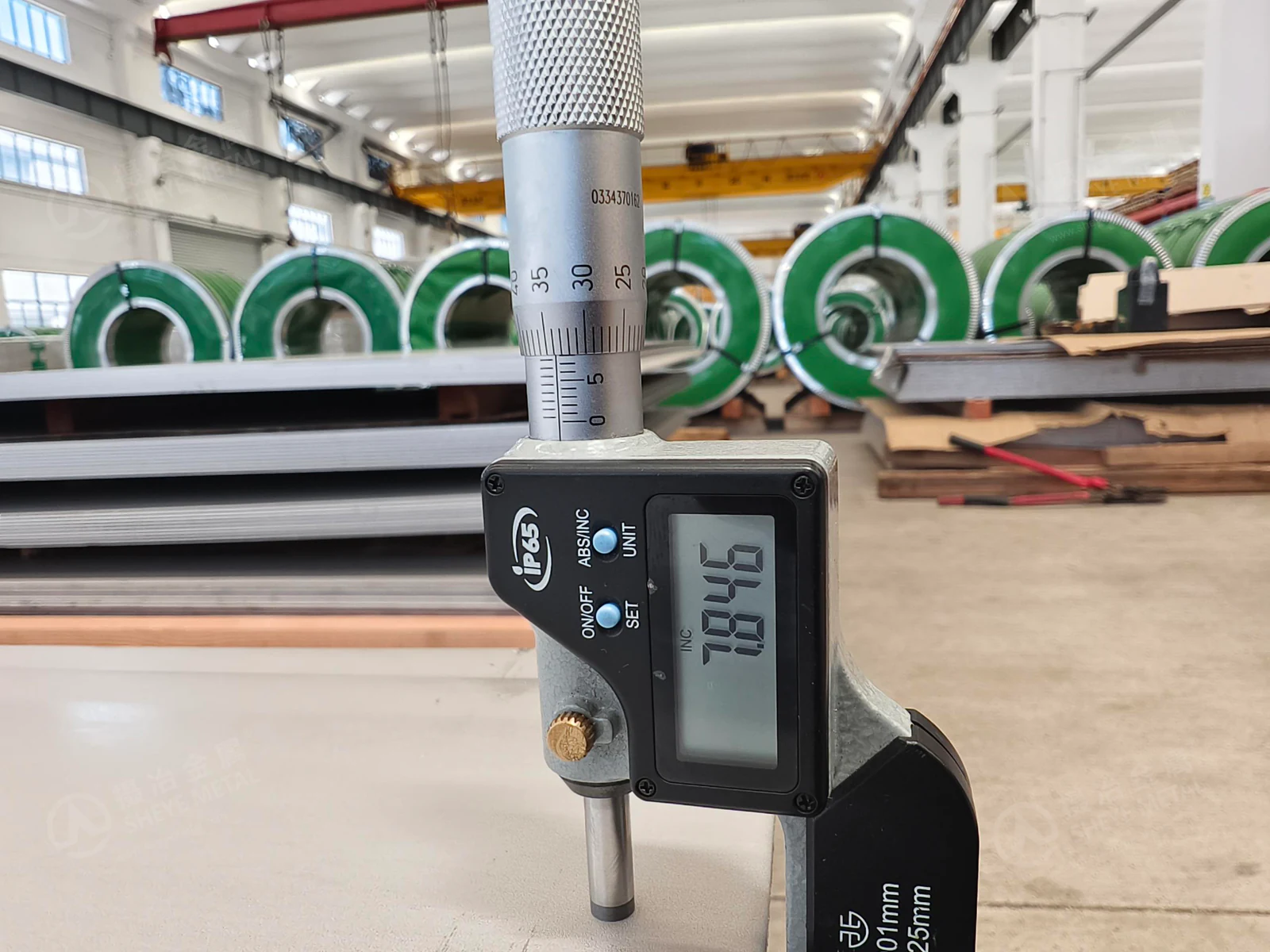
The three photographed micrometer displays read 7.901 mm, 7.913 mm and 7.846 mm. These are individual spot observations on nominal 8 mm material. Acceptance is assessed against the agreed purchase specification and applicable dimensional tolerances; photographs of selected readings do not replace the complete inspection record.
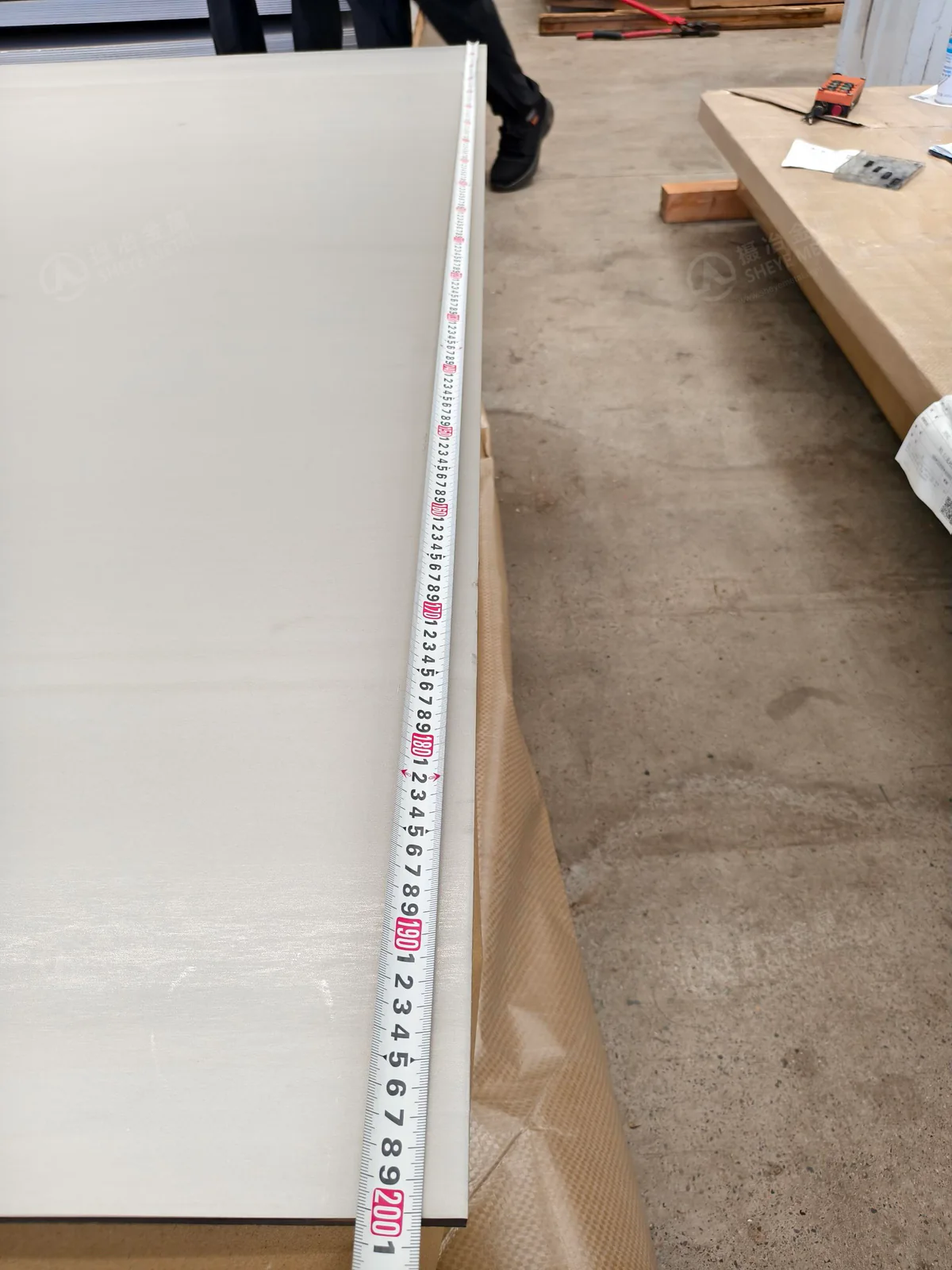
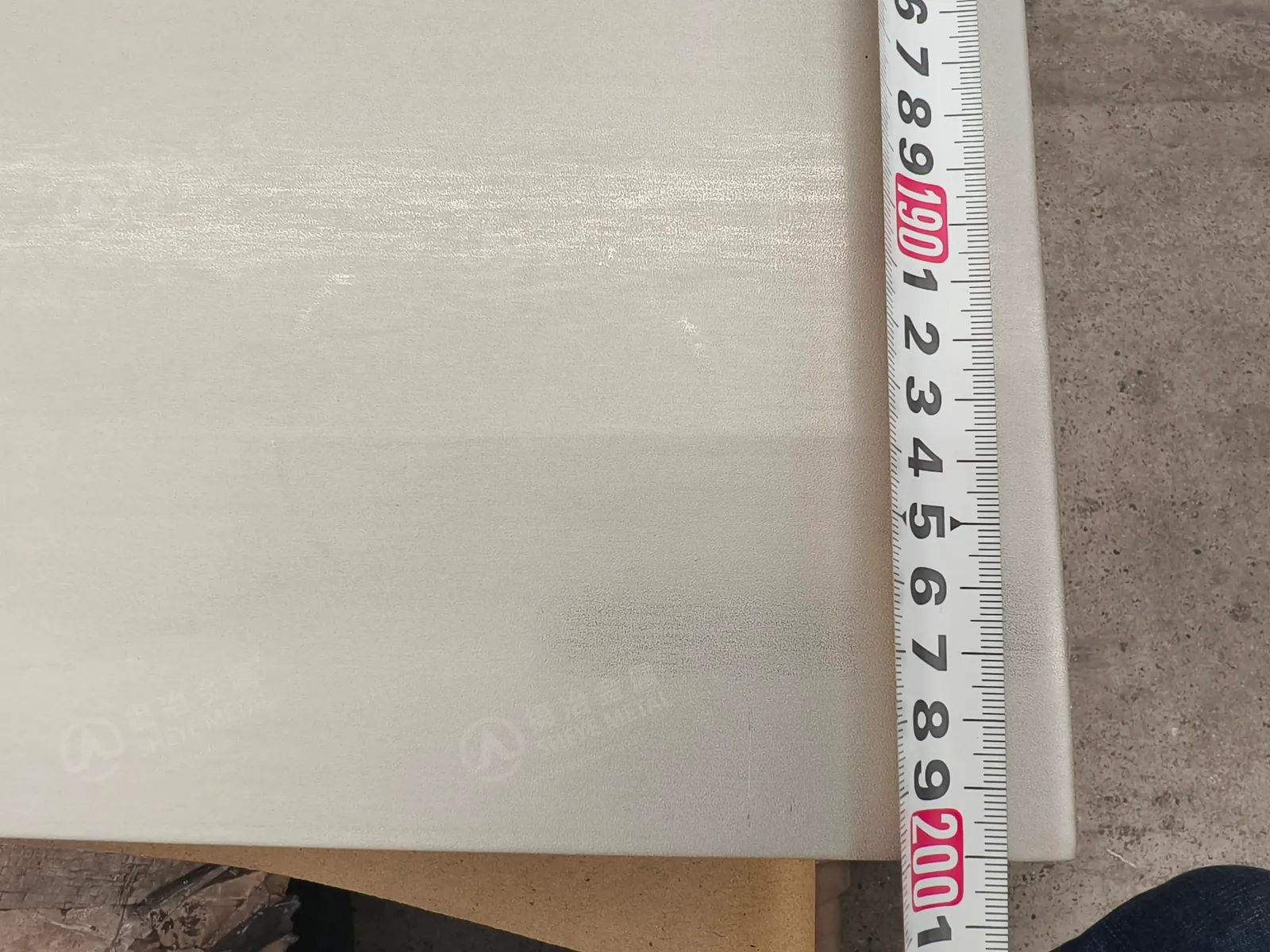
The width photographs show both the measurement arrangement and the tape near the plate edge. The nominal order width is 2000 mm. Keeping an overview alongside a close-up makes the inspection easier to understand without assigning unjustified decimal precision to an angled tape photograph.
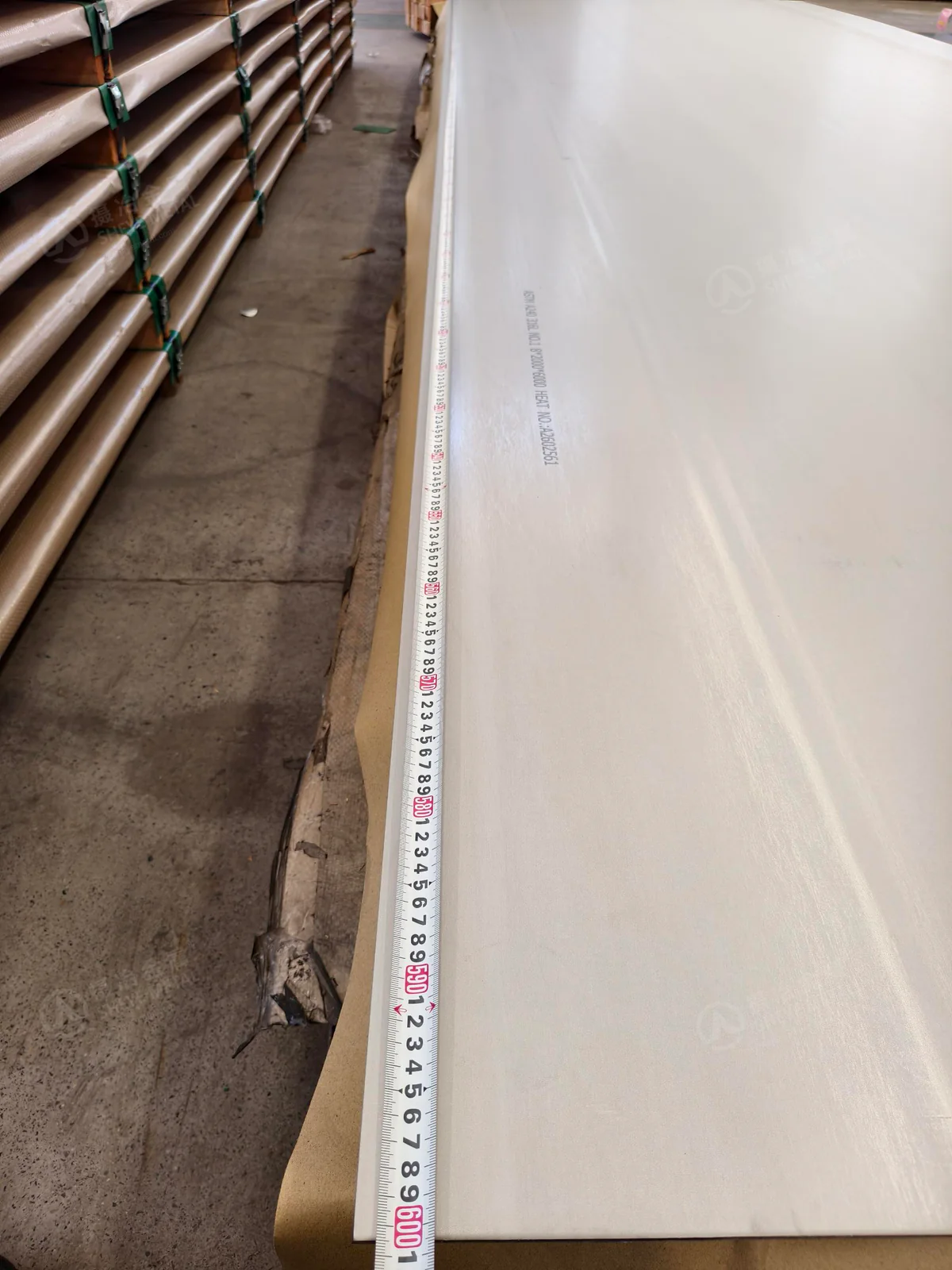
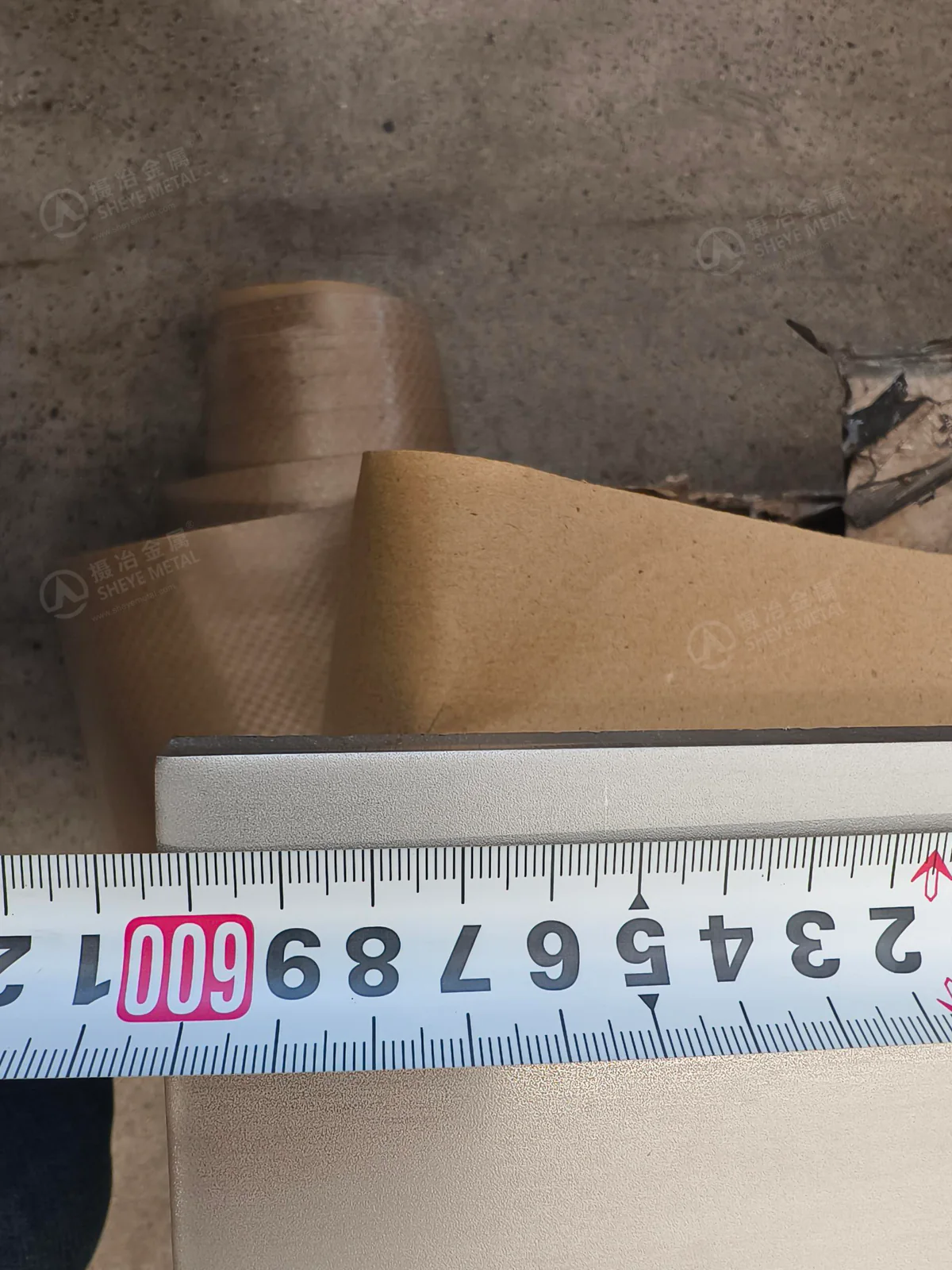
The length views document the check along the 6000 mm nominal plate. After inspection, handling and export packing protect the material and preserve its identification through shipment preparation.
2000 mm wide 316L plate supply for smaller orders
As a 316L 2000 mm wide stainless steel plate supplier in China, Sheye draws on stocked parent coils and coordinated TISCO material resources. The thicknesses covered by its 2000 mm wide supply programme include 6, 8, 10, 12, 14, 16, 18, 20, 25, 30, 32, 45 and 50 mm. The production route depends on thickness and specification: coil-derived cut plate and discrete plate are separate supply options.
For small orders with confirmed available stock and agreed processing, Sheye can arrange dispatch within one week. This refers to preparation and dispatch at origin; the quotation confirms the applicable schedule, with international transport time considered separately. Send the required thickness, quantity, length, tolerances and certificate requirements when asking about 316L 2000 mm wide stainless steel plate in stock.
Sheye’s processing factory supports international buyers who need the material format and inspection plan to fit the job. For another wide-plate project, explore our 2000 mm wide 2507 plate case for Vietnamese FGD equipment; that case uses a different alloy and does not imply automatic interchangeability with 316L.
To discuss 316L 8 × 2000 × 6000 mm hot-rolled stainless steel plate, contact sales@sheyemetal.com or Sheye Metal on WhatsApp. Share the cutting plan as well as the plate size so that supply, inspection and delivery can be planned together.
Sheye Metal · 2000 mm wide 316L plate sourcing and inspection case
View the source brochurePRODUCTS
Related products
RELATED CAPABILITY
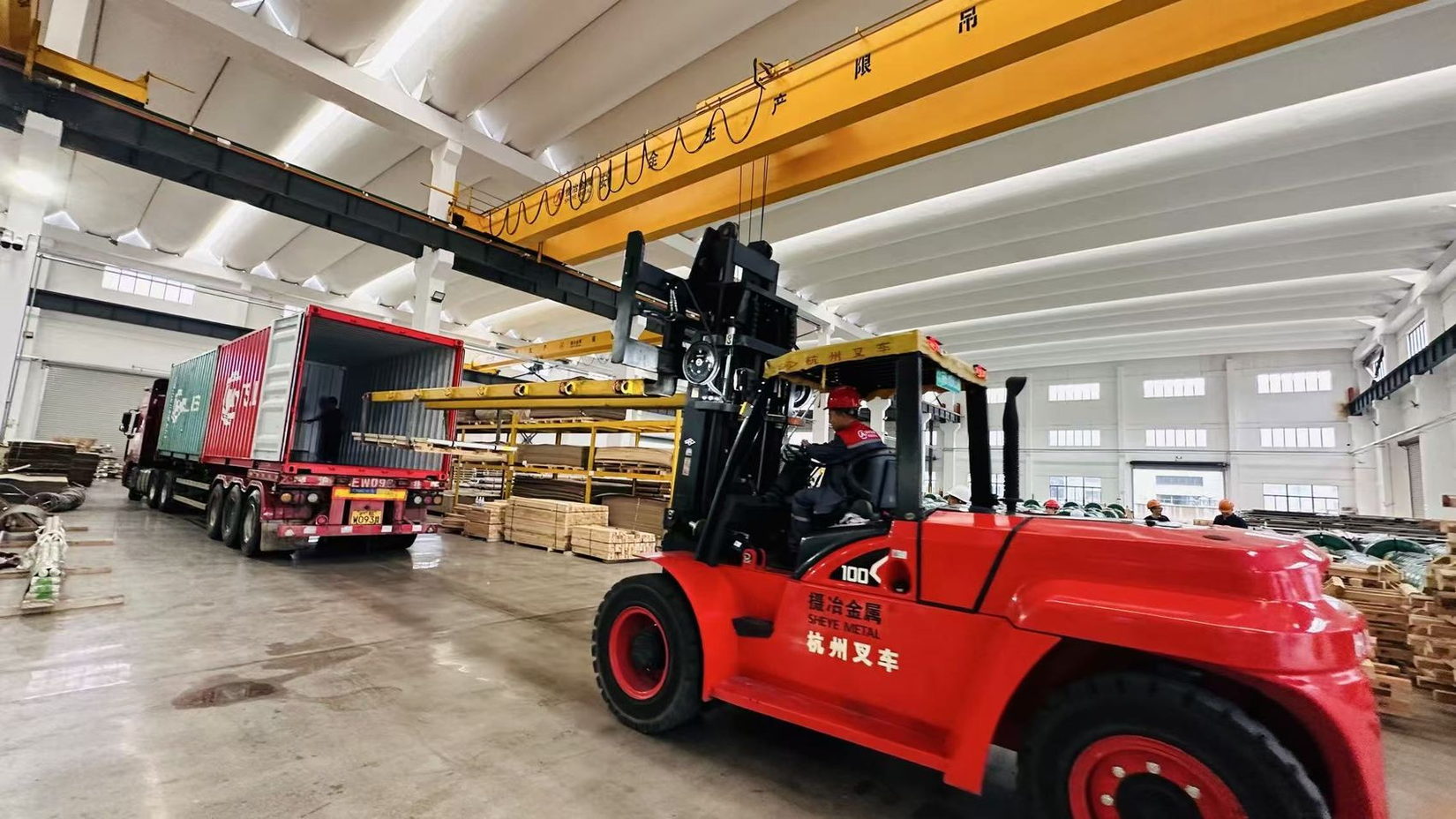
Protection & export packing
Protect the surface. Support the load. Keep the order identifiable.
Explore the process