
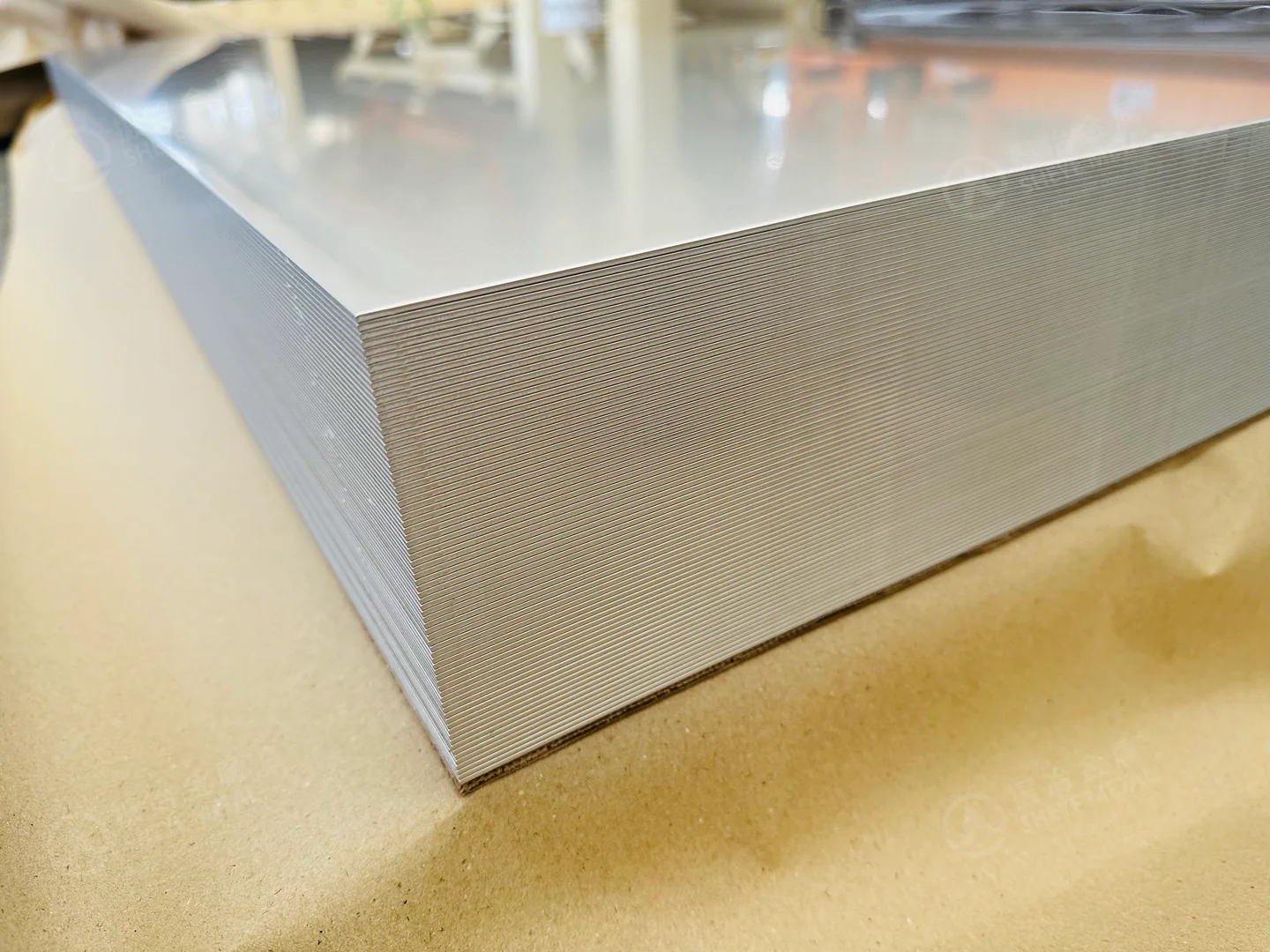
A close look at a finished stack reveals the care between the sheets. For this order to Chile, Sheye Metal processed 304L 2B paper interleaved stainless steel sheet in a nominal size of 1.5 × 1000 × 2000 mm. Fresh interleaving paper, controlled placement and orderly stacking were central to protecting the sheet surfaces.
The photograph and accompanying workshop video bring those details into view: closely aligned sheet edges and thin layers of paper arranged through the stack. The presentation reflects a practical processing priority—keeping the protective layer flat and in position for the handling that follows.
304L 2B sheets in 1.5 × 1000 × 2000 mm for Chile
| Item | Order requirement |
|---|---|
| Customer destination | Chile |
| Material designation | 304L stainless steel |
| Specified finish | 2B |
| Nominal thickness | 1.5 mm |
| Nominal width × length | 1000 × 2000 mm |
| Processing | Levelling, cutting to length and stacking |
| Surface protection | New paper interleaving, with paper heating and dedicated electrostatic charging |
These are the specified order details. Buyers considering the same format can use our 304L stainless steel sheet page to discuss material requirements alongside the protection needed for their next operation.
New paper, laid evenly between the sheets
Paper interleaving provides a separating layer between adjacent steel faces. Its condition matters: a fold, bunch or overlapping lump creates a local increase in thickness. Under the weight of a stack, that uneven area can concentrate contact pressure and increase the risk of an imprint.
For this order, Sheye used new paper and controlled its placement to avoid bunched or tangled interleaving. Keeping the paper clean, flat and aligned supports consistent separation. It also makes the pack easier to inspect visually: orderly paper edges and sheet edges allow irregular placement to be noticed during stacking.
Heated paper and controlled electrostatic attraction
The paper is heated as part of this process, and a dedicated electrostatic generator applies the charge. These are separate functions. Paper conditioning can help manage moisture; electrostatic charging provides the temporary attraction that helps hold the paper against the steel.
In general, an electrostatic system places charge on an insulating material such as paper. A conductive metal surface can respond through charge redistribution, creating attraction across the interface. This helps the lightweight paper remain in contact and reduces its tendency to shift during handling. Simco-Ion’s charging fundamentals describes this temporary pinning principle and its use in interleaving.
Moisture affects how quickly charge leaks away, as explained in Sappi’s paper and static electricity guide, so paper condition and charging control work together. The effect is temporary, rather than an adhesive bond. It assists placement; clean paper, an even feed and careful stacking still provide the foundation for surface protection.
See the paper interleaving at close range
In the workshop footage, a hand gently separates the interleaving paper at the edge of a raised top sheet to show how the paper sits against the steel. The orderly layers below remain visible throughout this close-up demonstration. Watch the paper’s contact with the sheet and the regular arrangement of the stack edges.
Read the video scene description
At the stacking station, a hand gently separates the interleaving paper at the edge of a lifted top sheet, demonstrating close contact and the ability to lift the paper. The aligned sheet edges remain visible below. The clip does not show the paper heater or electrostatic generator.
Sheye’s cut-to-length processing brings levelling, sheet-length preparation and stacking together. For an interleaved order, paper placement is part of that workflow. The next stage is to plan suitable export packing around the protected stack and the customer’s handling requirements.
Ordering paper interleaved 304L 2B stainless steel sheet
As a 304L 2B stainless steel sheet supplier, Sheye combines material supply with factory processing and surface protection. Our manufacturing role here is converting coil into the requested sheet format. For stockist enquiries, we check availability against the required thickness, width, length and quantity before confirming supply.
To request 1.5 × 1000 × 2000 mm paper interleaved 304L 2B sheets, send your quantity, required tolerances, packing needs and destination to sales@sheyemetal.com. Include any requirements for paper quality or downstream handling so these can be considered from the start.
Questions about paper interleaved sheets
Why does orderly interleaving matter?
Flat paper separates the sheet faces without introducing the concentrated thickness of bunched or folded material. Careful placement helps reduce local contact pressure and surface-marking risks.
Does static charging permanently attach the paper?
No. Electrostatic attraction is temporary and depends on material condition and the charging arrangement. It helps position the paper without treating it as a permanent adhesive layer.
Can I request paper interleaving for other sheet orders?
Yes—share the grade, finish, dimensions and quantity for review. Our 304 stainless steel sheet range is another starting point for discussing a suitable supply and processing plan.
For related workshop examples, see paper interleaved 304 BA sheets for England and our 304/304L 2B sheet inspection case.
Sheye Metal · Paper interleaving and cut-to-length processing case
View the source brochurePRODUCTS
Related products
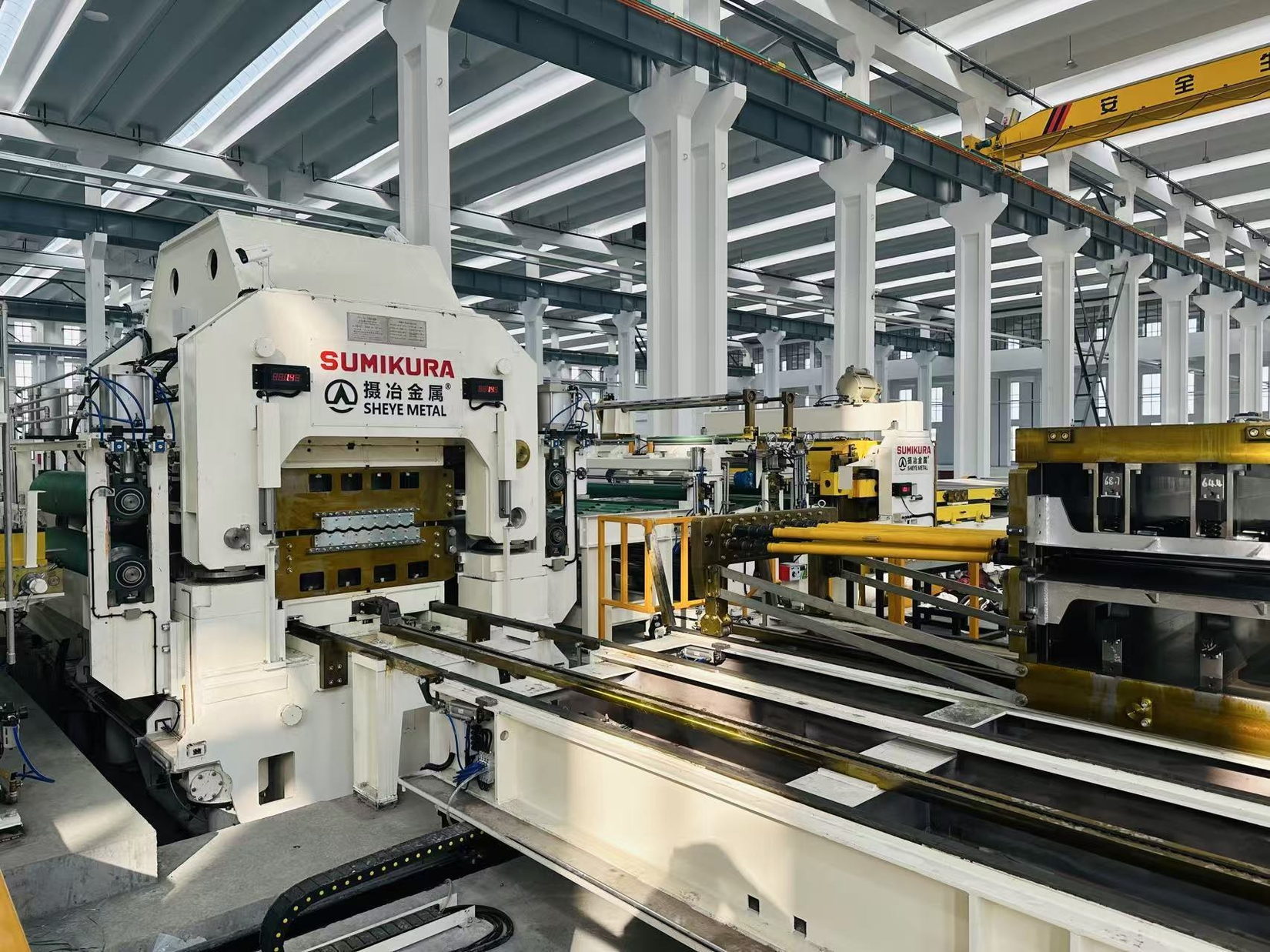
RELATED CAPABILITY
Precision cut-to-length
From coil to accurately cut, levelled and protected sheet.
Explore the process