
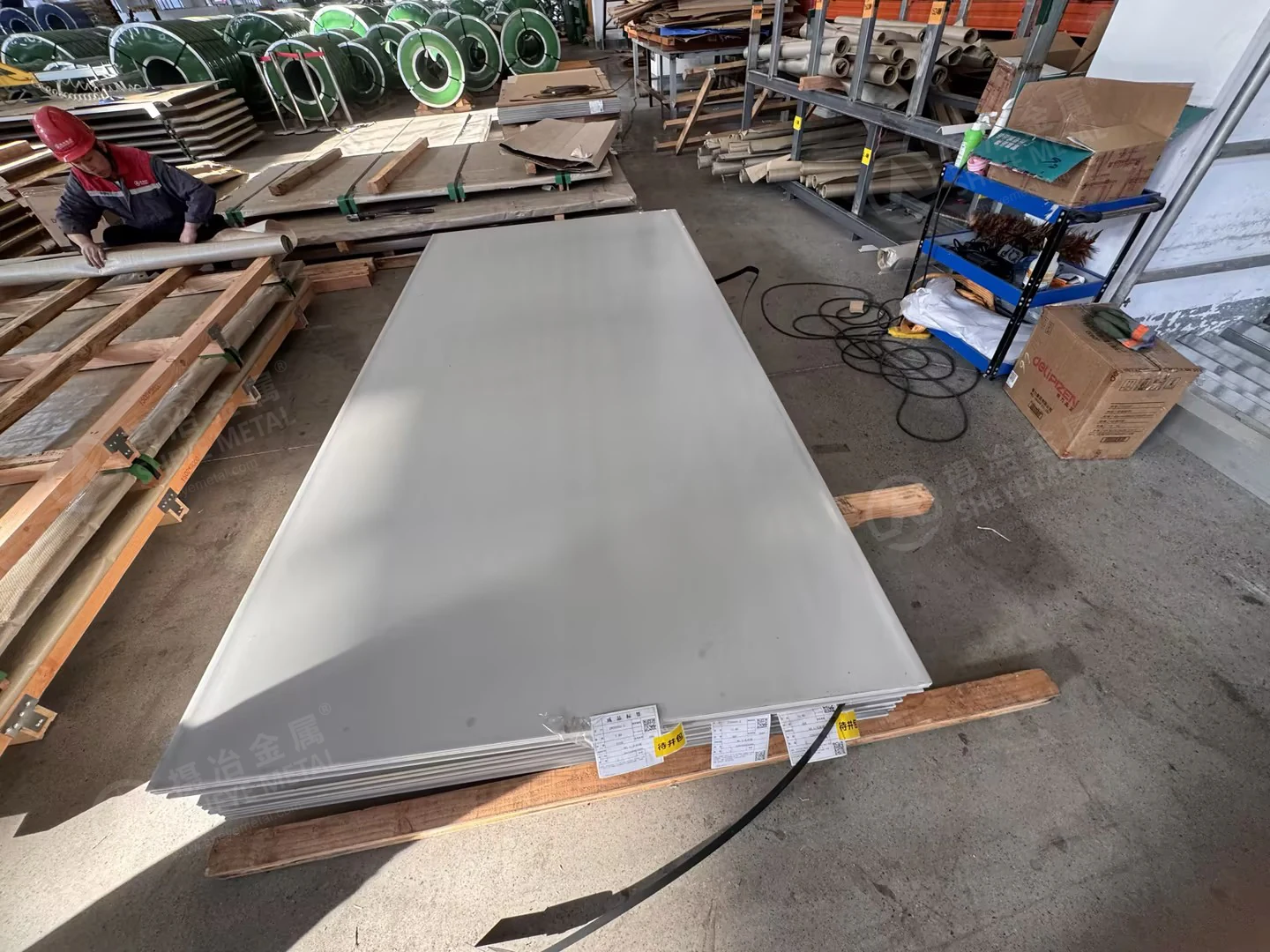
Sheye Metal supplied an Indonesian factory with TISCO 310S stainless steel plate in the nominal size of 12 × 1500 × 3000 mm for industrial furnace and heat-treatment equipment. The order brought together a specified mill source, material documentation and checks on the plates prepared for supply. These details give the buyer a record to review before the material enters fabrication.
For a furnace operator, replacing a damaged component can involve cooling the equipment, removing the load and interrupting production. That makes material selection a question of operating conditions and maintenance planning as well as purchase price. This case shows the evidence behind the supply and the engineering questions that remain relevant when specifying 12mm 310S stainless steel plate.
The 12 × 1500 × 3000 mm supply requirement
| Material | 310S stainless steel plate from TISCO |
|---|---|
| Nominal plate size | 12 mm thick × 1500 mm wide × 3000 mm long |
| Customer location | Indonesia |
| Intended use | Industrial furnace and heat-treatment equipment |
| Documents and photographs | Original mill certificate, handheld PMI screening, thickness readings and tape-measure checks |
| Supply contact | Sheye Metal, a first-tier TISCO distributor |
Sheye supplies TISCO heat-resistant stainless steel coils and plates to equipment manufacturers. For buyers comparing a 310S stainless steel plate 12mm supplier or stockist, the useful starting point is the required mill, finished dimensions and acceptance conditions. Available stock and delivery timing should be confirmed against the quantity required. Our 310S stainless steel plate product page provides the broader supply information.
Choosing 310S for furnace and heat-treatment service
310S is a chromium-nickel austenitic stainless steel used for high-temperature applications. Furnace components, trays, heat-treatment fixtures and supports are among the applications buyers consider. Other 310-family applications include burner parts and radiant tubing, although a tube application requires its own product specification and manufacturing route.
Temperature guidance needs its service conditions attached. For example, Outokumpu’s Therma guidance places its 310S/4845 grade at temperatures up to about 1050°C under mildly cyclic conditions. That is a reference for that producer’s material, not a temperature guarantee for this TISCO order. The permissible metal temperature must be selected for the furnace atmosphere, sustained load, thermal cycle and required life; a general oxidation-resistance temperature is not a safe-load rating.
A 12mm section can contribute to the stiffness and load capacity of a designed component. Its thickness alone does not establish a safe load or creep life at temperature. A support rail, tray or furnace structural part needs assessment of its span, geometry, welds, actual metal temperature and time under load. Repeated heating and cooling also introduce thermal expansion and distortion considerations.
Where sustained high-temperature loading is important, the designer should check the required carbon range and creep data for the specified grade. 310S and 310H have different carbon requirements; a general reference to “310” does not authorize substitution. Oxidation resistance, dimensional stability and creep strength need to be evaluated for the same proposed service conditions. ATI’s 309/310 alloy technical data sheet provides further grade-selection context.
Why a specified mill source matters to this purchase
Sheye’s supply approach focuses on keeping the requested mill source and its supporting records identifiable through the order. A buyer who has qualified TISCO material for an equipment design can then specify that source, review the certificate and agree how the delivered plates will be accepted.
For a large heat-treatment line or another installation where an unplanned shutdown is expensive, changing material sources can create a qualification burden. A comparable grade designation and an acceptable initial trial do not, on their own, establish equivalent performance after years of service. Relevant evidence may include creep data, oxidation testing under the intended atmosphere, fabrication trials and service records from similar equipment.
This is a practical reason to discuss source consistency with a TISCO 310S stainless steel plate supplier. The certificate below records the material tested by the mill. It does not measure years of thermal cycling or provide a comparative service-life result between steelmakers. The equipment designer and buyer can use it as part of a documented acceptance process.
What the TISCO mill certificate records
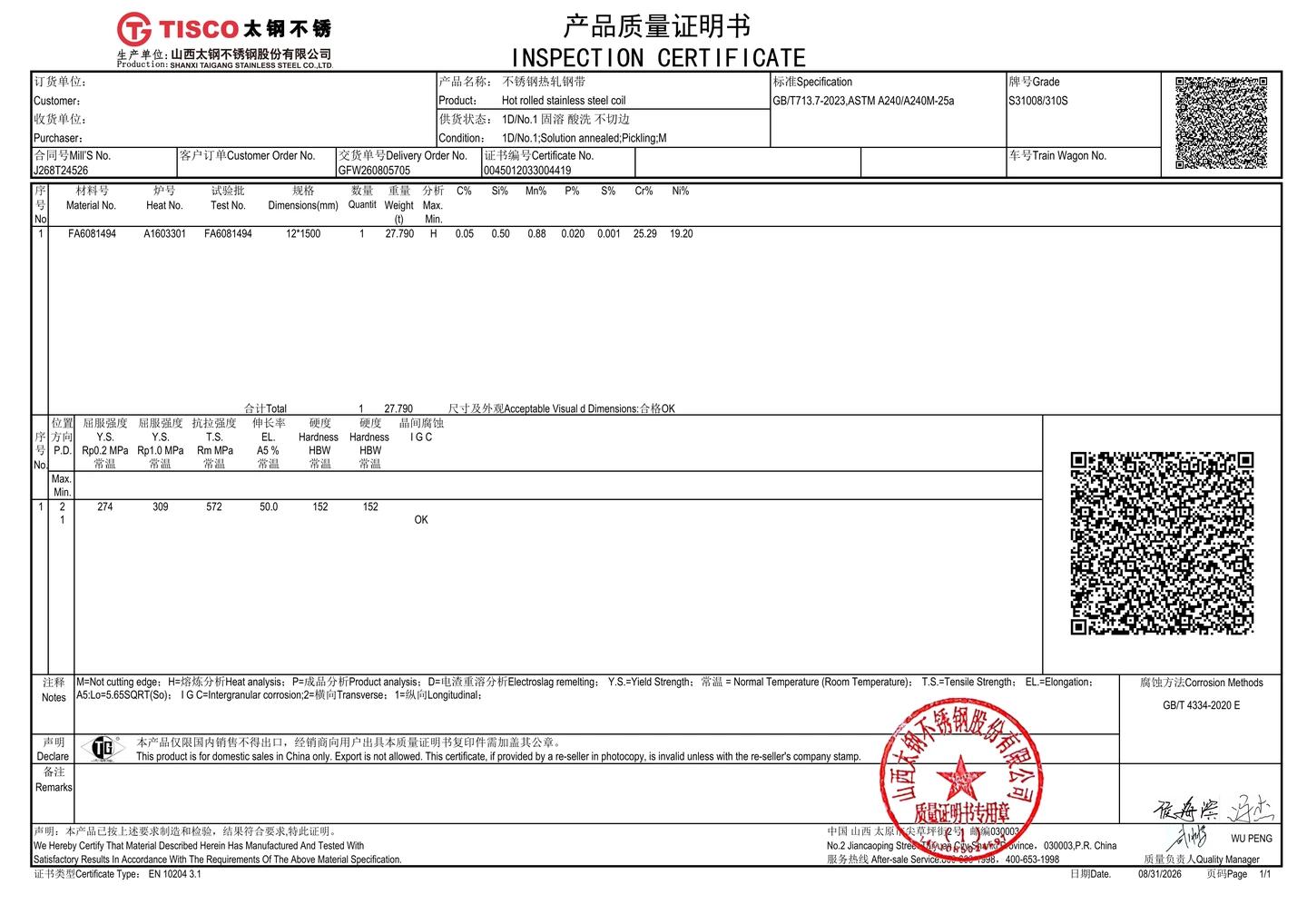
TISCO certificate 0045012033004419, dated 31 August 2026 and marked EN 10204 3.1, identifies a hot-rolled S31008/310S parent coil. It records material and test number FA6081494, heat A1603301, and the standards GB/T 713.7-2023 and ASTM A240/A240M-25a. The listed condition is 1D/No.1, solution annealed and pickled, with an untrimmed edge.
| C | 0.05 |
|---|---|
| Si | 0.50 |
| Mn | 0.88 |
| P | 0.020 |
| S | 0.001 |
| Cr | 25.29 |
| Ni | 19.20 |
| 0.2% proof strength, Rp0.2 | 274 MPa |
|---|---|
| 1.0% proof strength, Rp1.0 | 309 MPa |
| Tensile strength, Rm | 572 MPa |
| Elongation, A5 | 50.0% — gauge length L₀ = 5.65√S₀ |
| Brinell hardness, HBW | 152 / 152 |
The certificate separately records an intergranular corrosion test result of OK under GB/T 4334-2020 Method E.
The certificate covers a nominal 12 × 1500mm coil weighing 27.790 tonnes. That weight is the mill coil record, not the tonnage supplied in this order. The 3000mm plate length is documented separately by the finished-plate inspection photographs. Mechanical results are recorded in the transverse direction; the intergranular corrosion test is longitudinal. Transaction-party names have been removed in white from the public reference copy below.
PMI and dimensional checks on the plates
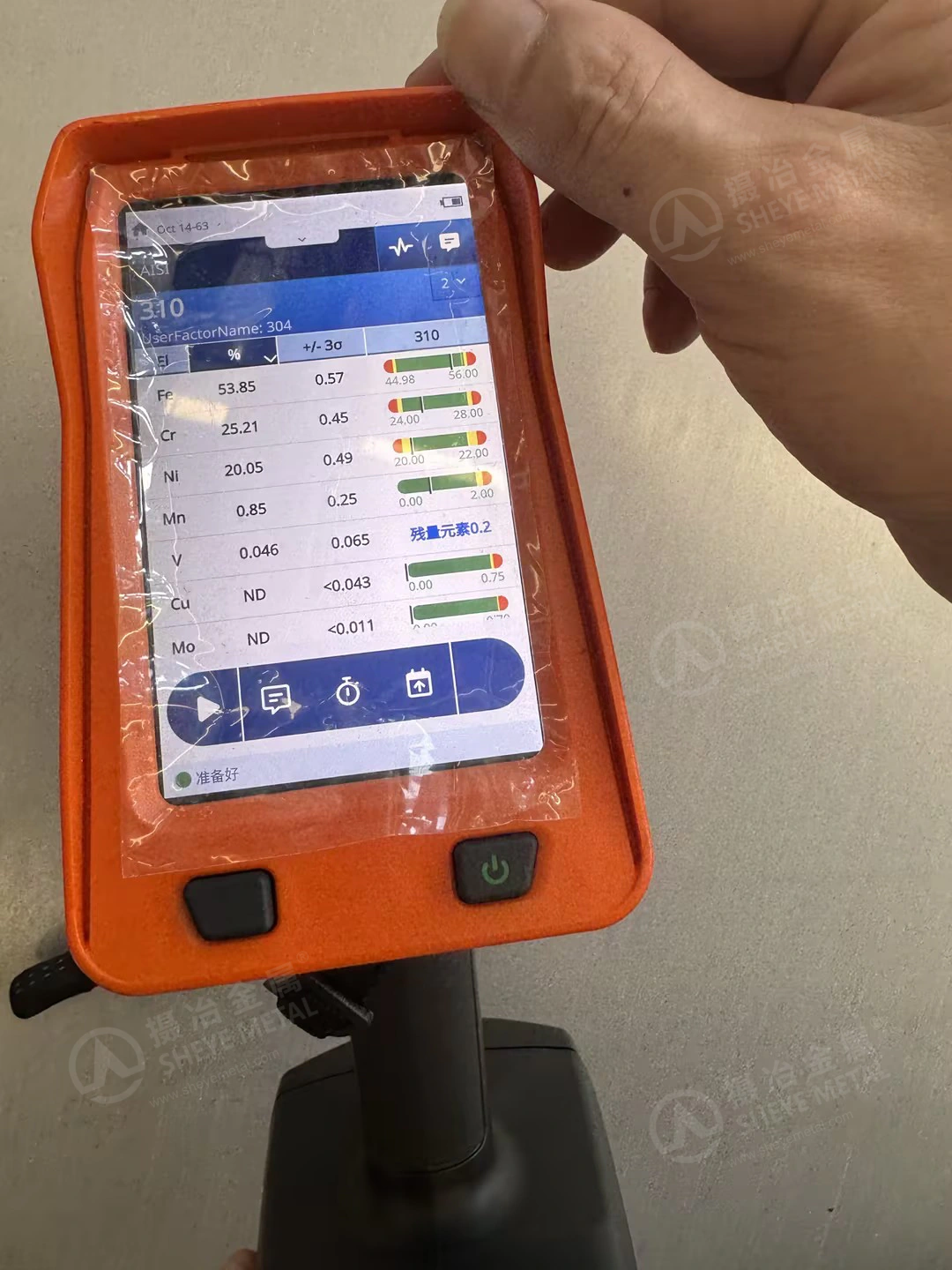
The photographed handheld analyzer displays a 310 grade identification, with chromium at 25.21% and nickel at 20.05%. Those readings provide a useful alloy-screening record. The low-carbon 310S designation also requires the mill’s carbon analysis and material traceability: conventional handheld XRF cannot determine carbon. Thermo Fisher’s comparison of PMI technologies explains this measurement limit.
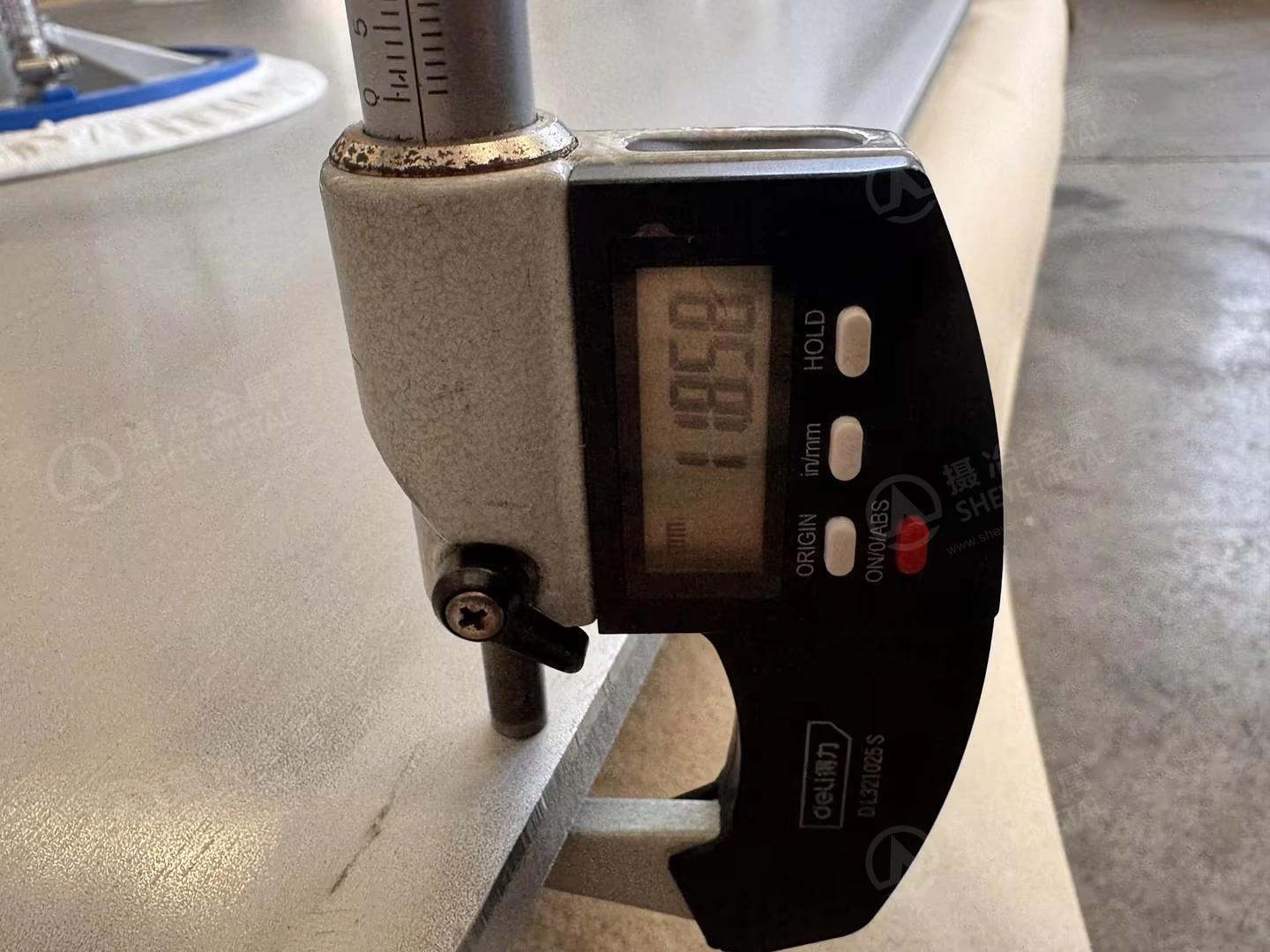
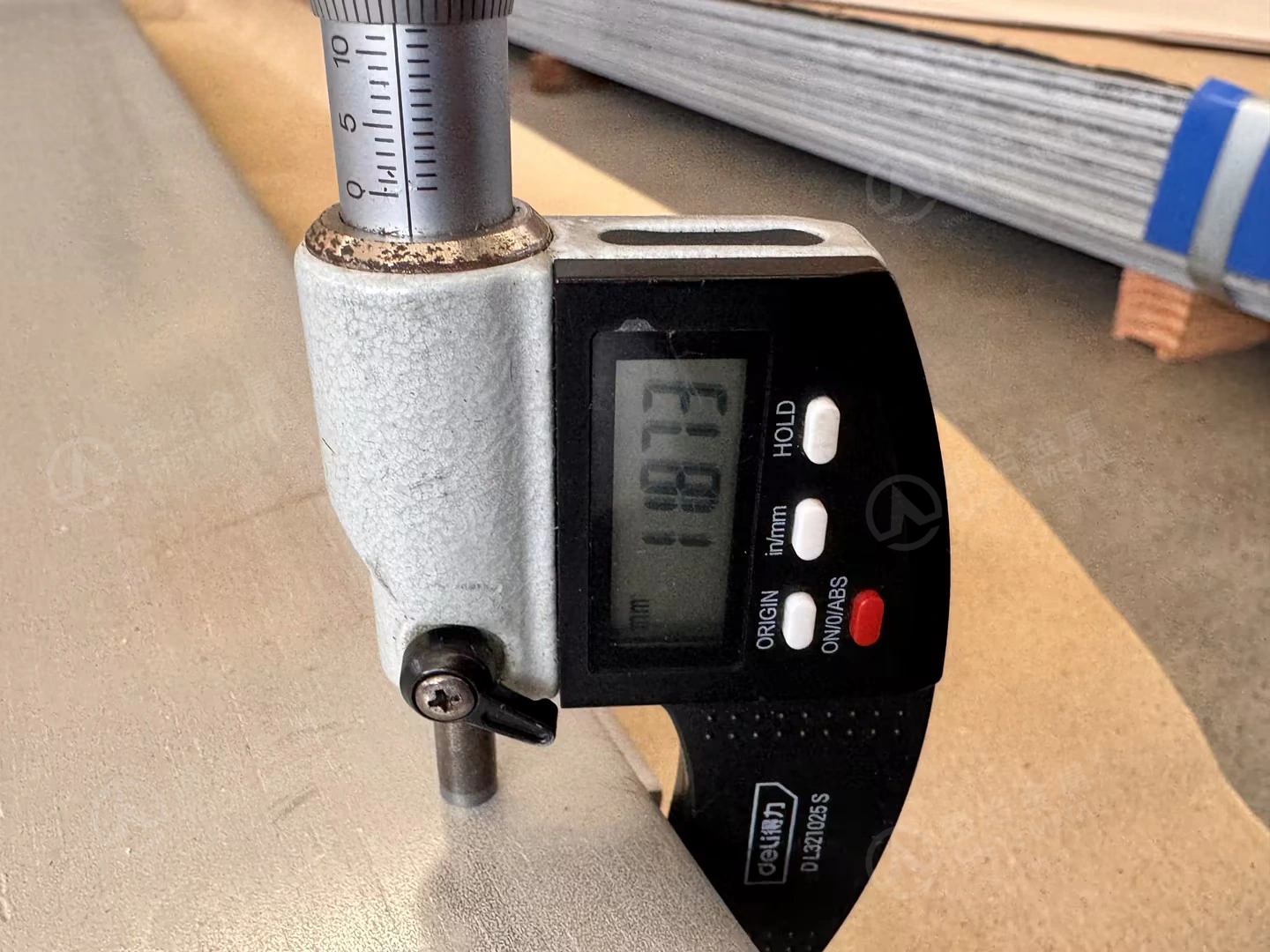
The three supplied thickness photographs show local readings of 11.858mm, 11.873mm and 11.807mm; two are reproduced below. The ordered thickness is nominally 12mm. These individual readings should be assessed against the agreed thickness tolerance and measurement procedure; they do not establish the minimum and maximum thickness of the entire batch.
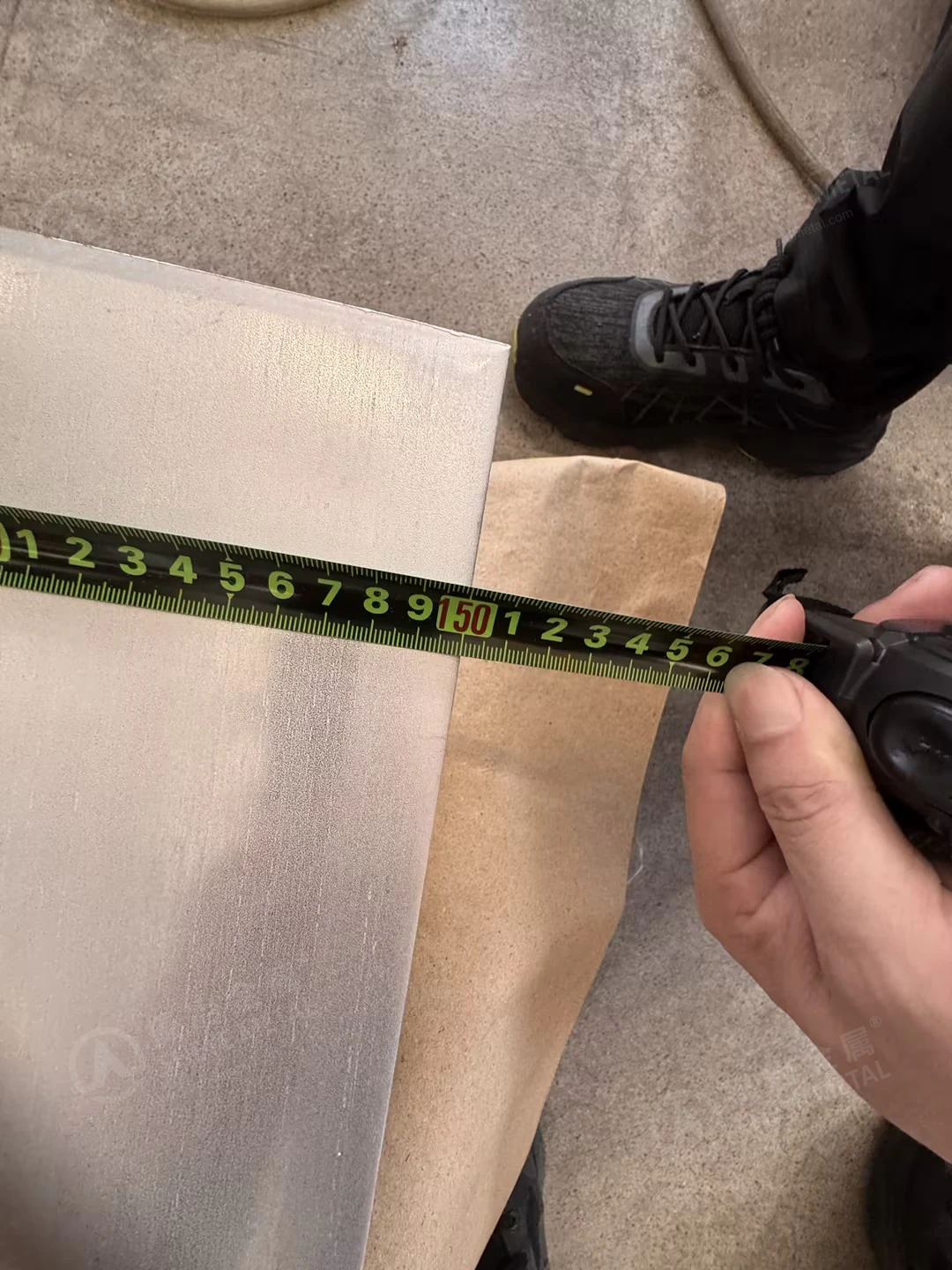
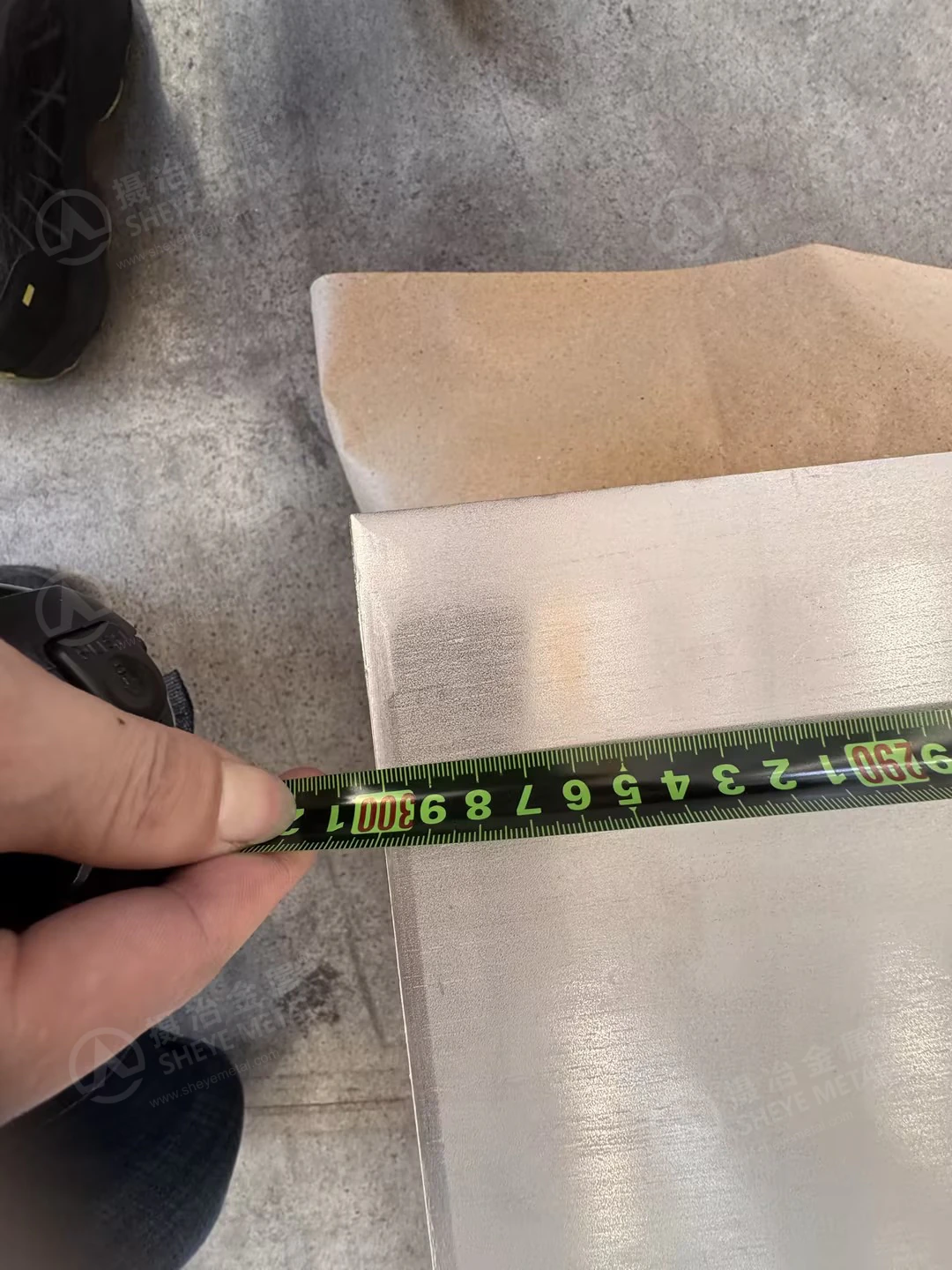
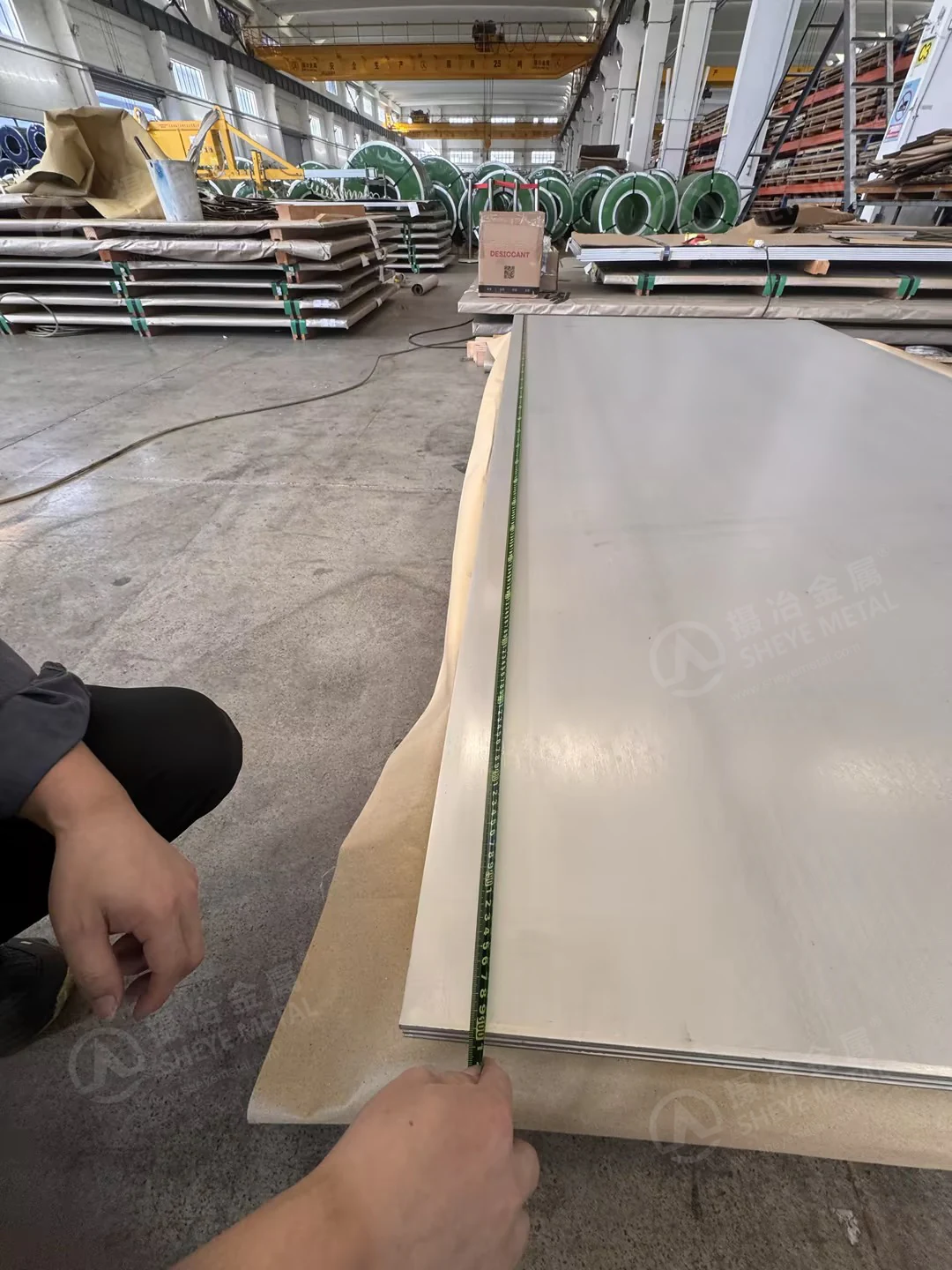
The tape-measure photographs show checks near the nominal 1500mm width and 3000mm length. They document the inspection positions and visible scale. Exact acceptance limits should be agreed in the purchase specification and checked against the complete inspection record.
These checks cover different parts of the receiving decision: alloy screening, local thickness and overall dimensions. The Sheye quality and delivery page explains the wider documentation and delivery process. No long-duration furnace performance test is claimed from these photographs.
Specify the duty when requesting 12mm 310S plate
For a quotation on 310S stainless steel plate 12 × 1500 × 3000mm, send the quantity, required mill and material standard together with the drawing or finished dimensions. Include the thickness tolerance, surface and edge requirements, and the documents needed at delivery.
For furnace service, also identify the normal and peak metal temperatures, atmosphere, load, heating cycle and intended maintenance interval. If the part requires creep or oxidation data beyond the routine mill certificate, list that requirement before material is ordered.
Sheye Metal is a supplier and processing factory serving international customers with TISCO stainless steel material. Buyers seeking a 310S stainless steel plate stockist can send an inquiry to Sheye Metal to confirm 12mm stock, processing requirements and delivery arrangements for their project.
PRODUCTS