
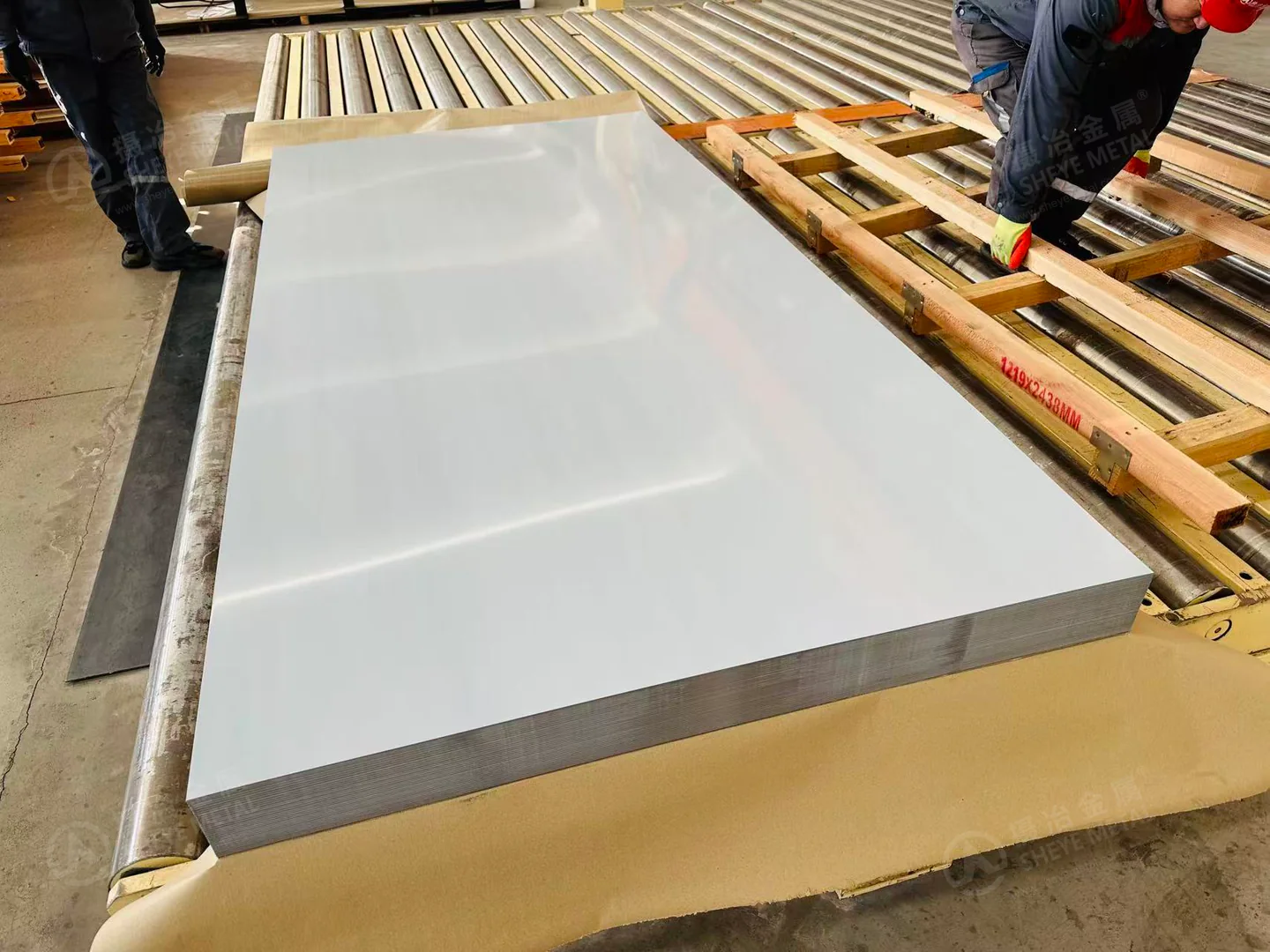
A protective film should make a stainless steel sheet easier to handle at its destination. For this Colombia order, Sheye Metal processed 430 BA stainless steel sheet in 0.9 × 1219 × 2438 mm with 70 μm black-and-white protective film. The film was applied on the processing line, then trimmed together with the steel to produce matching edges. Inline inkjet marking and orderly stacking completed the preparation.
The finished pack looks simple. Achieving that result involves coordinated processing, maintained rollers and a deliberate choice to prioritise surface protection over the recovery value of the edge scrap. Here is a closer look at those decisions.
430 BA sheets prepared for a Colombian customer
| Item | Requirement |
|---|---|
| Material | 430 stainless steel |
| Surface finish | BA, or bright annealed |
| Nominal sheet size | 0.9 × 1219 × 2438 mm |
| Protective film | 70 μm (0.07 mm) standard black-and-white film |
| Film application | Inline lamination during processing |
| Edge preparation | Steel and film trimmed together to matching width |
| Identification and presentation | Inline inkjet marking and aligned stacking |
| Customer destination | Colombia |
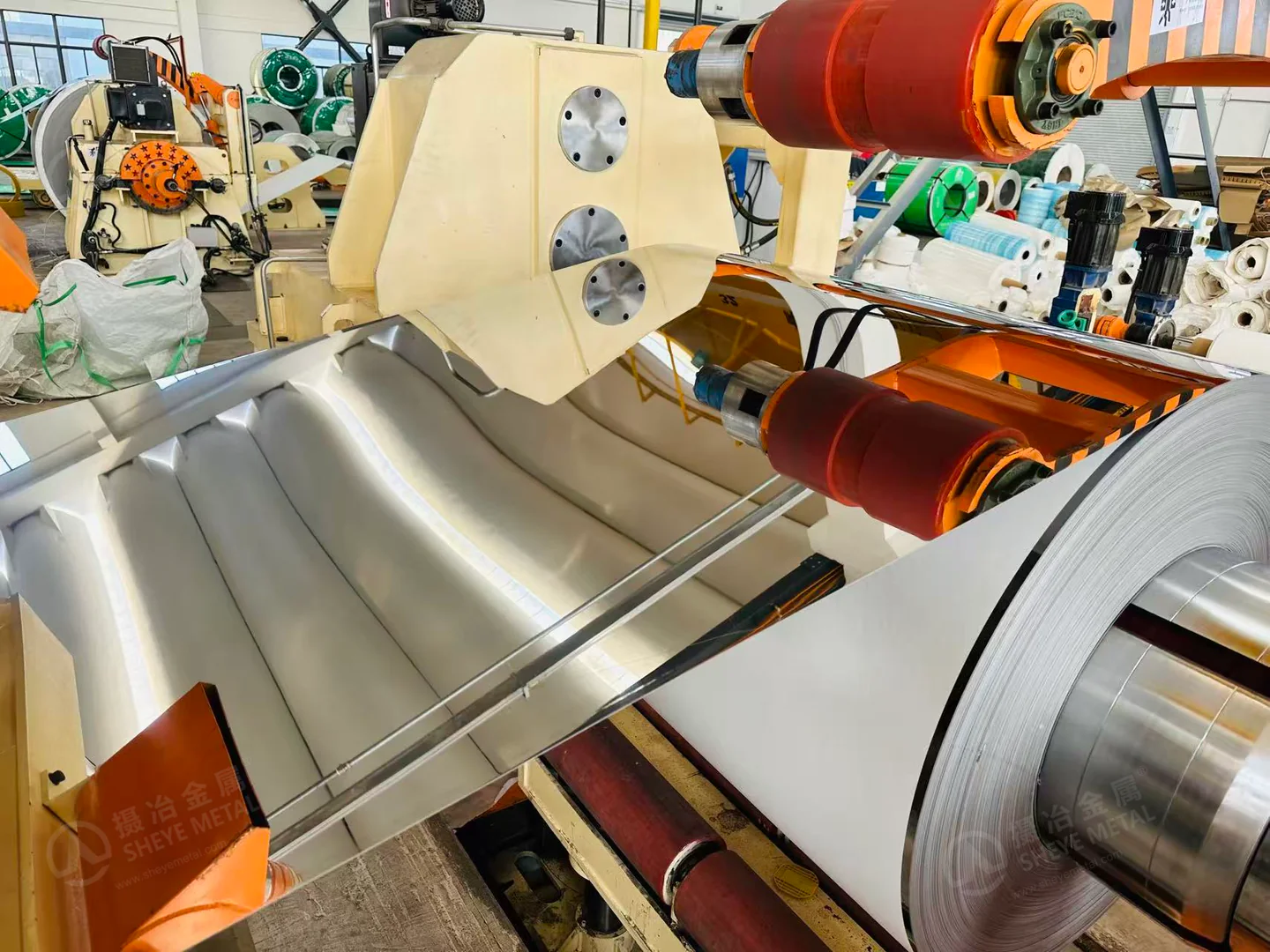
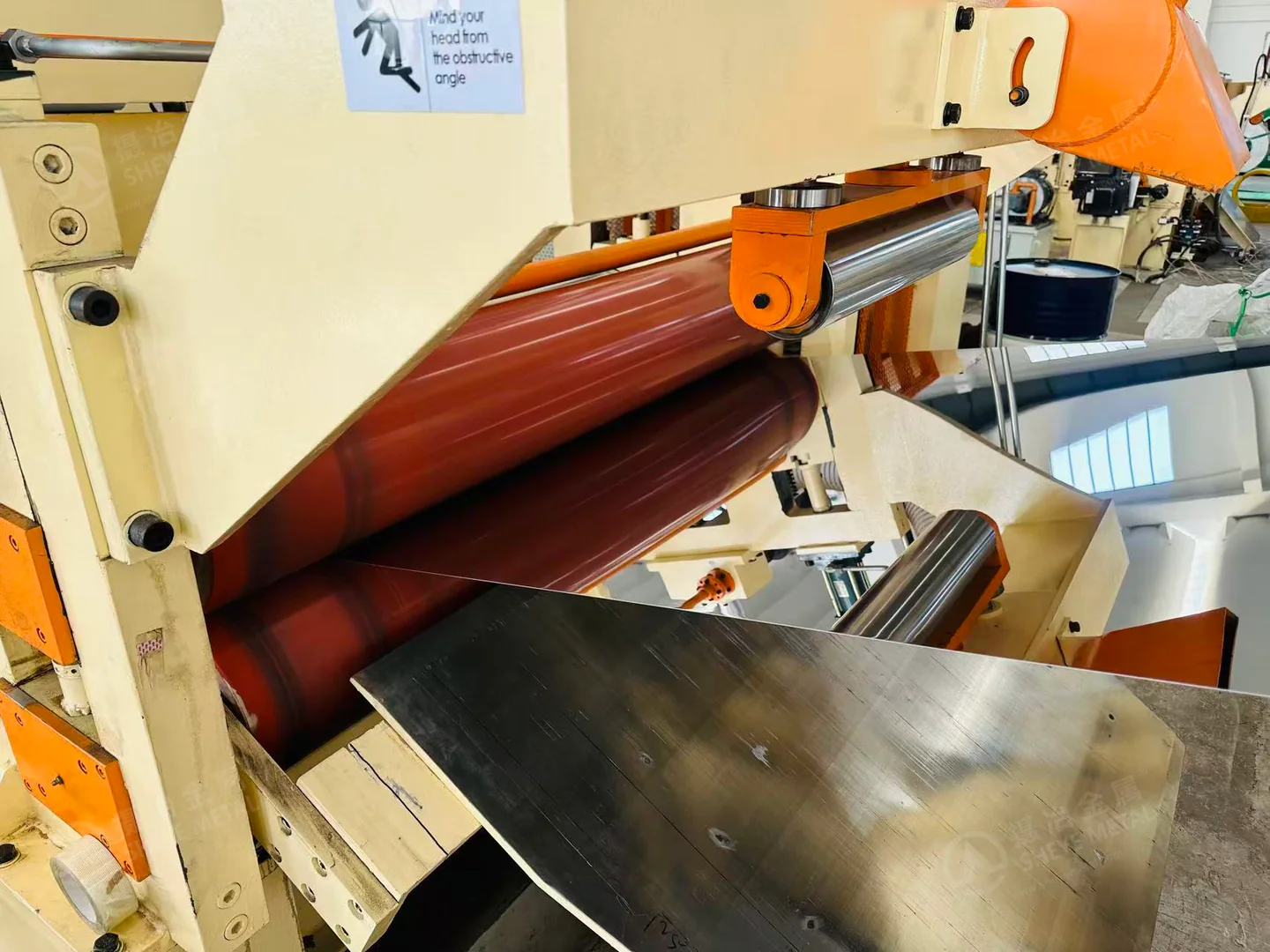
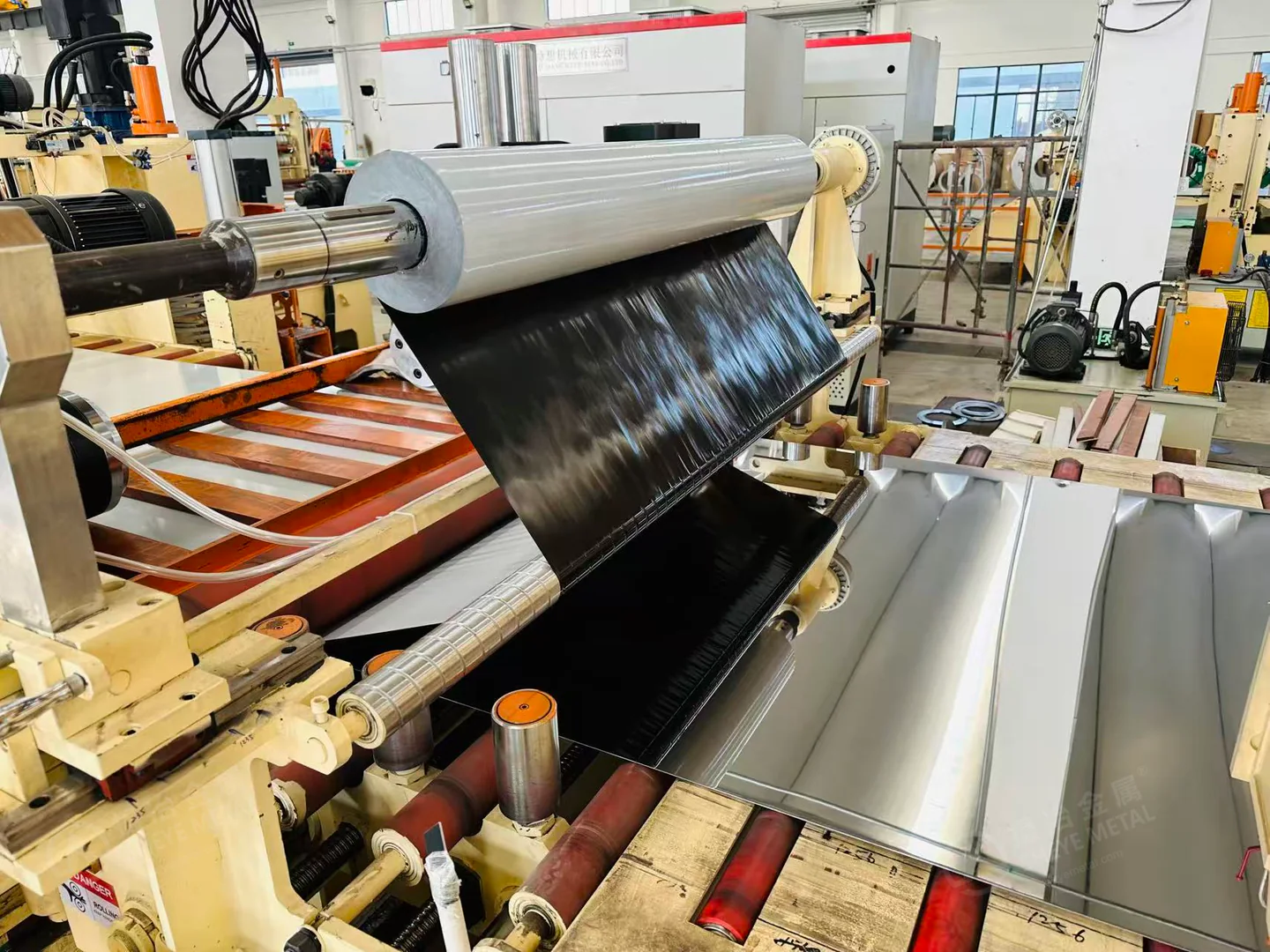
The photographs follow the coil into the line and show the reflective BA surface before protection, the film application station, edge trimming, marking and the completed stack. Buyers comparing material options can start with our 430 stainless steel sheet range and BA finish information.
Why can factories be reluctant to laminate film inline?
Inline lamination adds another operation that must stay in step with the moving steel. Film feed, tracking, tension and roller contact need to work together as the line runs. Poor coordination can introduce wrinkles, trapped air or uneven contact, so the process requires experienced operators and sound equipment.
The condition of the laminating rollers is particularly important. Clean, dry steel, undamaged contact surfaces and even pressure help apply the film smoothly. Contamination or a damaged roller can compromise contact and create marks or irregularities. Increasing pressure alone cannot compensate for poor roller condition.
For general application principles, Nitto’s lamination guidance discusses clean application and avoiding trapped air or excessive tension, while WALCO describes roller-contact and tension controls. These references explain the principles; they do not identify the film or equipment used for this order.
Sheye supports this work with equipment maintenance plans and system reminders for scheduled servicing. Roller condition is treated as part of surface quality control: known equipment problems should be corrected before processing continues. The aim is smooth film coverage without visible bubbles or creases, supported by checks during production.
These additional coordination and maintenance demands help explain why some processors may prefer a separate lamination step. For this order, Sheye integrated film application into its cut-to-length processing workflow to protect the BA face as preparation progressed.
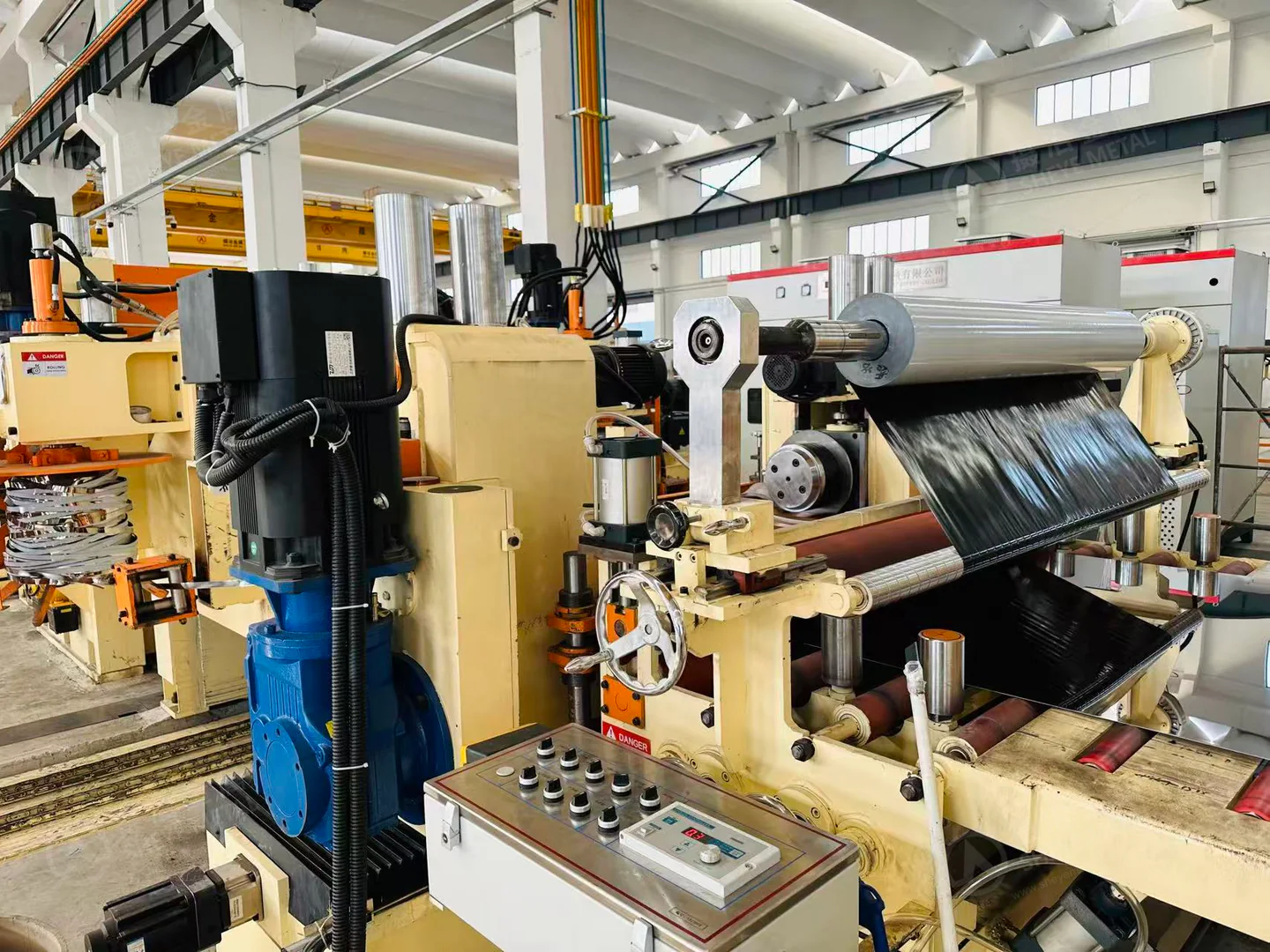
Why can trimming the steel and film together cost more?
Applying the film before edge trimming allows the steel and its protective layer to share the same final edge. It also means the removed edge strips carry film with them.
In Sheye’s scrap recovery arrangements, that attached film requires further separation during downstream recycling. Film-bearing edge scrap therefore has a lower sale value than comparable clean metal scrap. A lower scrap recovery credit increases the net cost of producing the finished sheets.
This is a practical cost trade-off. Sheye accepts the reduced recovery value to obtain the matched film-and-sheet width requested for this order. The benefit appears later, when the customer’s team separates the sheets and prepares them for use.
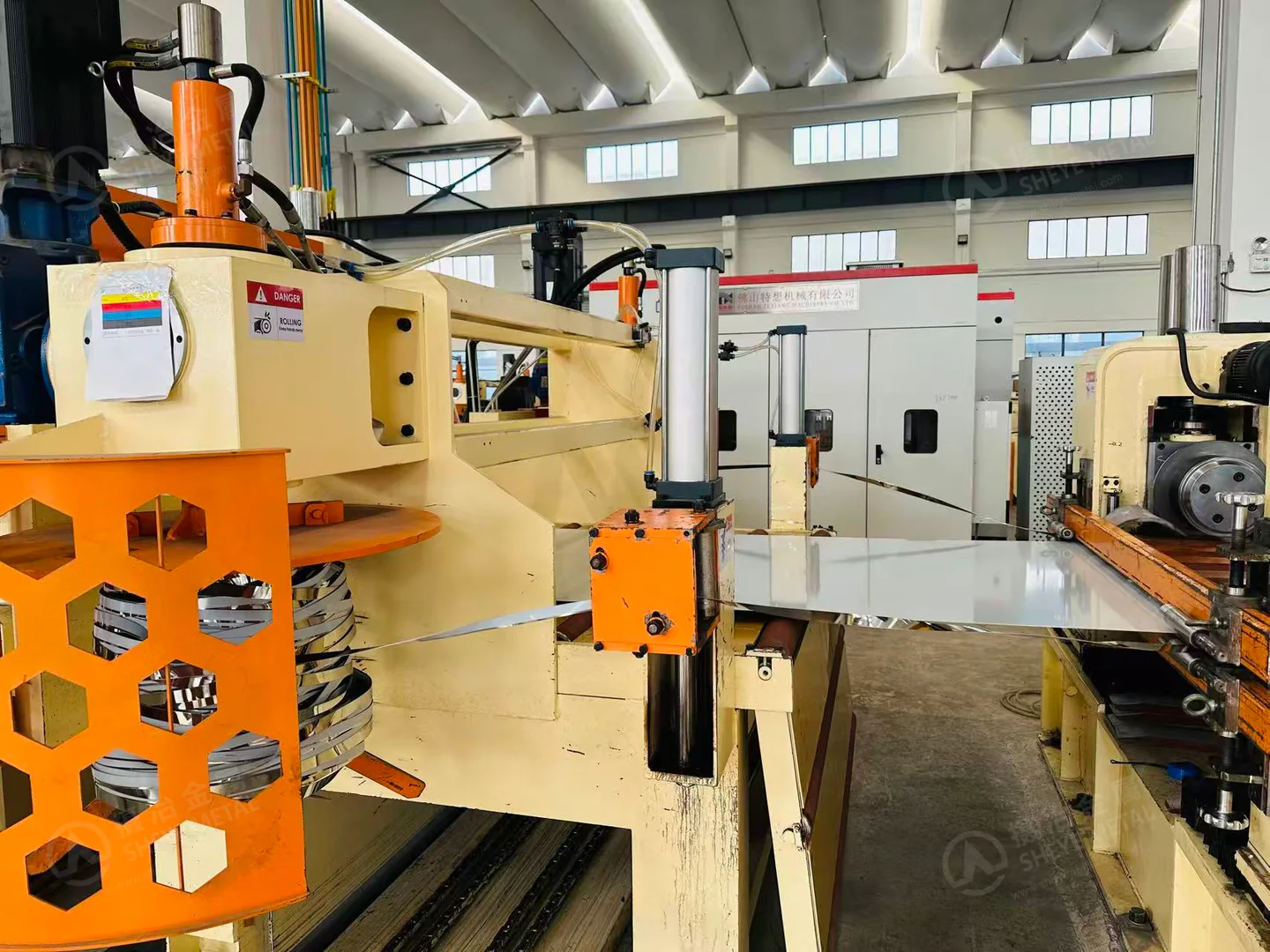
Why should the protective film match the sheet width?
Film width affects both protection and handling. A neat edge is valuable because it avoids two different problems:
| Film arrangement | Practical consequence |
|---|---|
| Film wider than the steel | Overhanging film can fold or stick to film on neighbouring sheets, making the sheets harder to separate cleanly. |
| Film narrower than the steel | Uncovered strips of the BA face remain exposed to dust and incidental contact, increasing the risk of scratches during handling. |
| Film trimmed with the steel | The protected face extends to the trimmed boundary without loose film overhang, supporting orderly stacking and easier separation. |
Matching the width is therefore more than a visual detail. It helps maintain coverage, reduces unnecessary handling and lowers the risk of avoidable surface damage. Protective film still needs careful handling; it does not replace suitable supports, clean working surfaces or export packing.
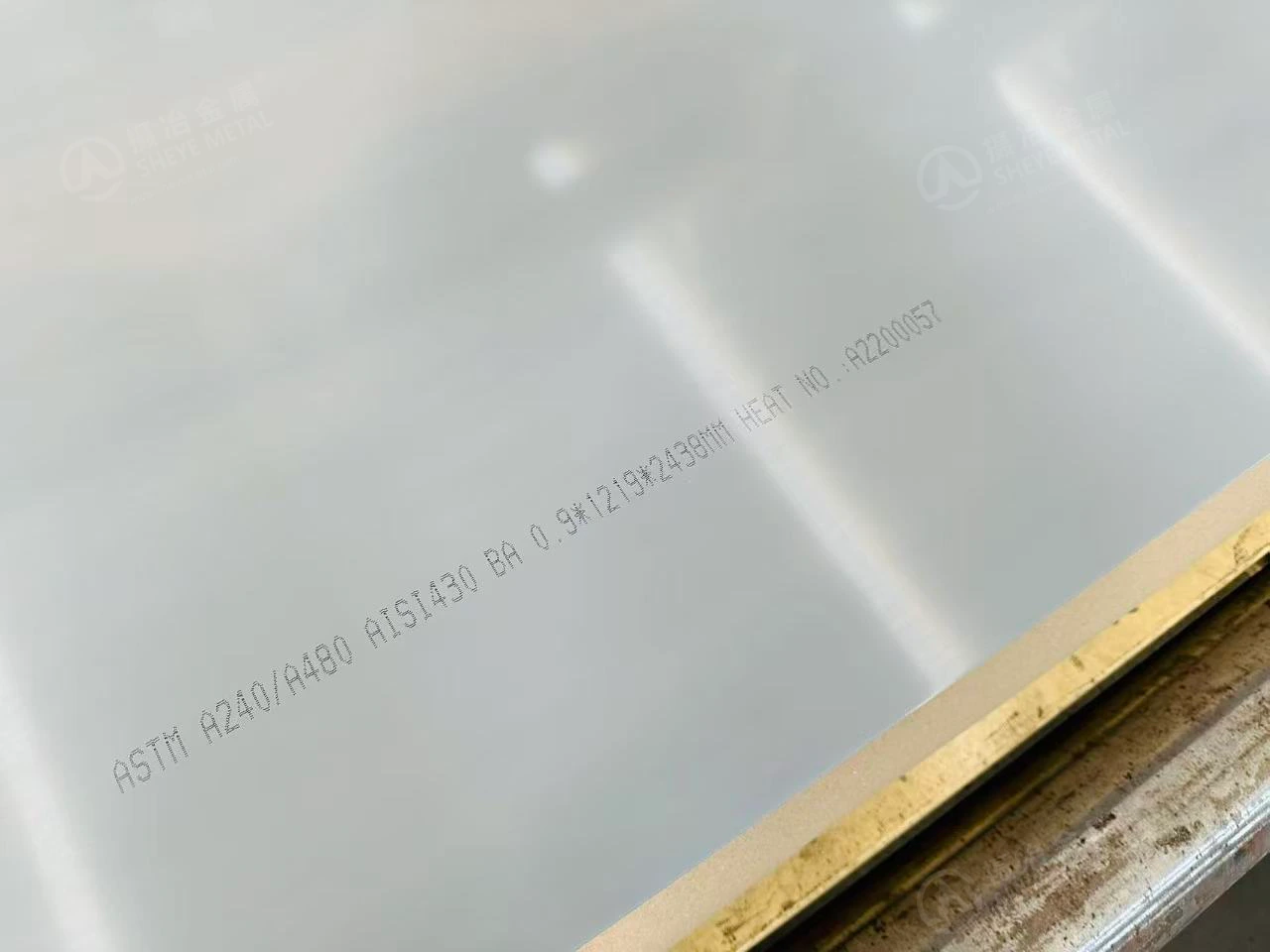
Inline marking and an orderly finished stack
The marking photograph shows the grade, finish, dimensions and heat-number information printed on the protected sheet. Readable identification helps the receiving team relate the material to order records without relying only on the appearance of a wrapped pack.
The finished-stack photograph shows aligned edges and a consistently covered top face. The white visible face is the protective film; the reflective BA steel is visible in the earlier feed photographs. Keeping that distinction clear matters when assessing surface protection from production images.
A China supplier and processing factory for 430 BA stainless steel sheet
Sheye supplies 430 BA stainless steel sheet from China with coil-to-sheet processing, protective film application and export preparation. Our processing factory brings these operations together around the specified sheet size and the customer’s handling requirements.
Looking for a 430 BA stainless steel sheet stockist or 430 BA stainless steel sheet in stock? Send the dimensions and quantity so we can confirm current material availability and the required processing. This Colombia case demonstrates the preparation route; availability for a new order is checked at the time of enquiry.
For 0.9 × 1219 × 2438 mm 430 BA sheets, contact sales@sheyemetal.com with your quantity, tolerances, film requirements and delivery destination. Specifying the protection details early helps us prepare sheets for the way your team will use them.
Explore two related approaches to surface care: NO.4 sheets with NOVACEL 4228 film for Canada and paper interleaved 304L 2B sheets for Chile.
Sheye Metal · Inline protective film and cut-to-length processing case
View the source brochurePRODUCTS
Related products
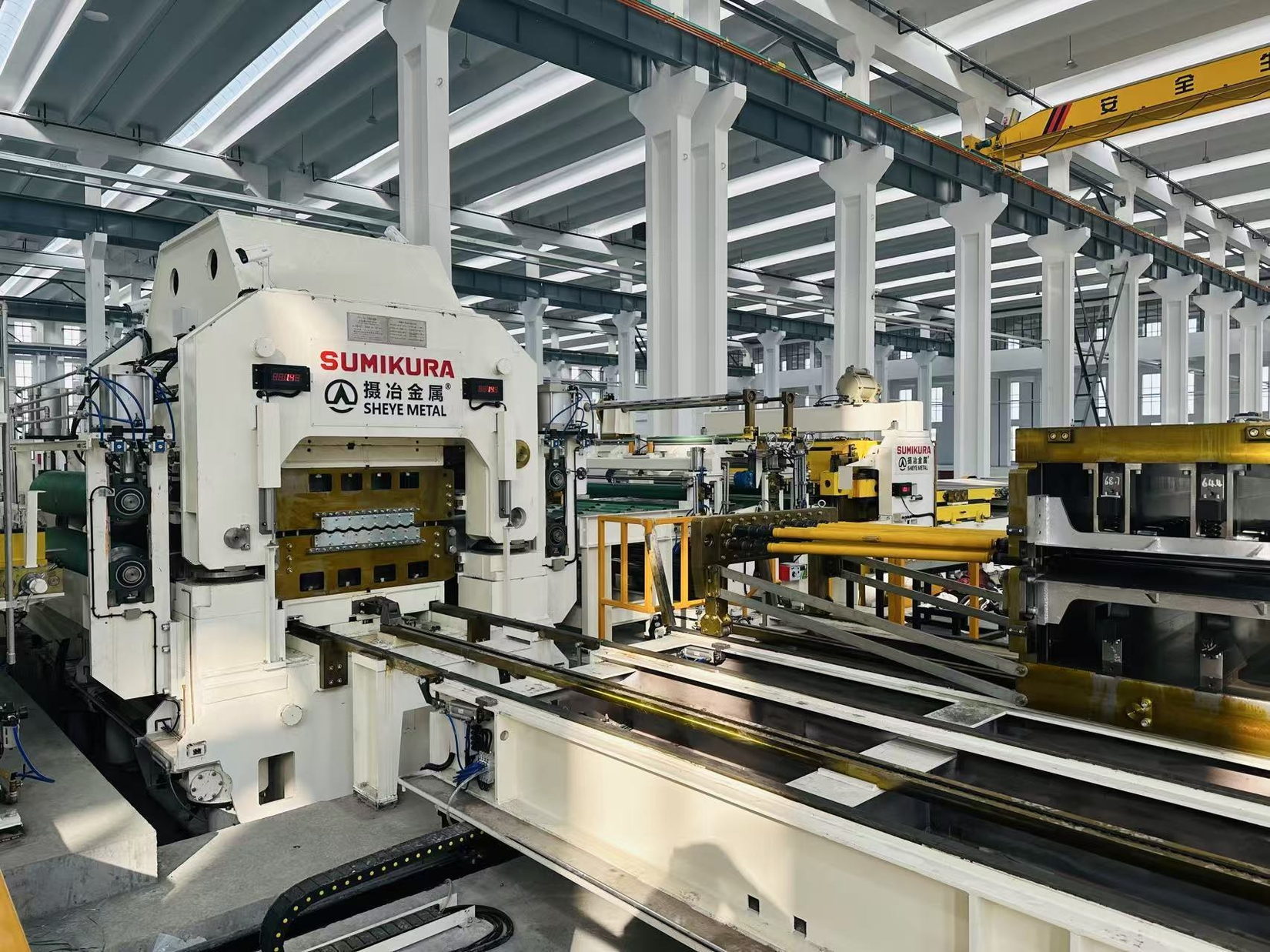
RELATED CAPABILITY
Precision cut-to-length
From coil to accurately cut, levelled and protected sheet.
Explore the process